



Tuesday, August 1, 2017
Japan: Risks Emerging from Real Estate?
From a new IMF report on Japan:
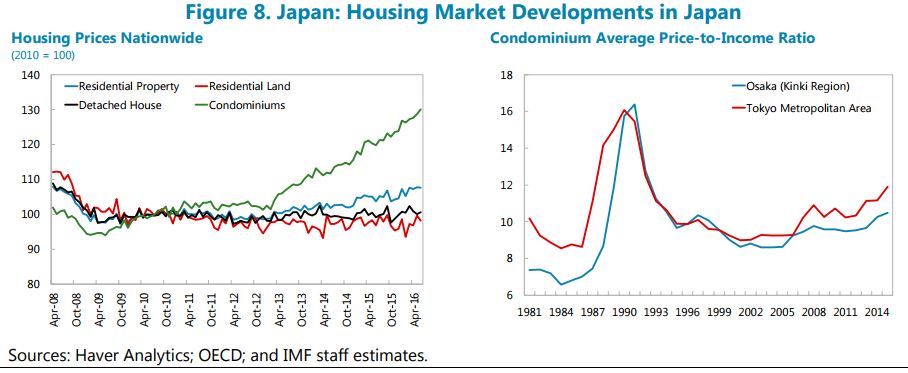
“Housing prices have been on the rise in some geographic areas and market segments, despite the declining population. Condominium prices have increased by 23 percent at the national level since 2013 (Figure 8). Historically low mortgage rates and recent changes in the inheritance tax are contributing to demand pressures, with little response in the number of new houses put on the market. Some overheating in the housing market is also indirectly suggested by house price-to-income ratios. Growth in real estate loans has been higher than other loans and the amount outstanding by domestic and Shinkin banks reached a record high at end-December 2016 (FSR, April 2017).”
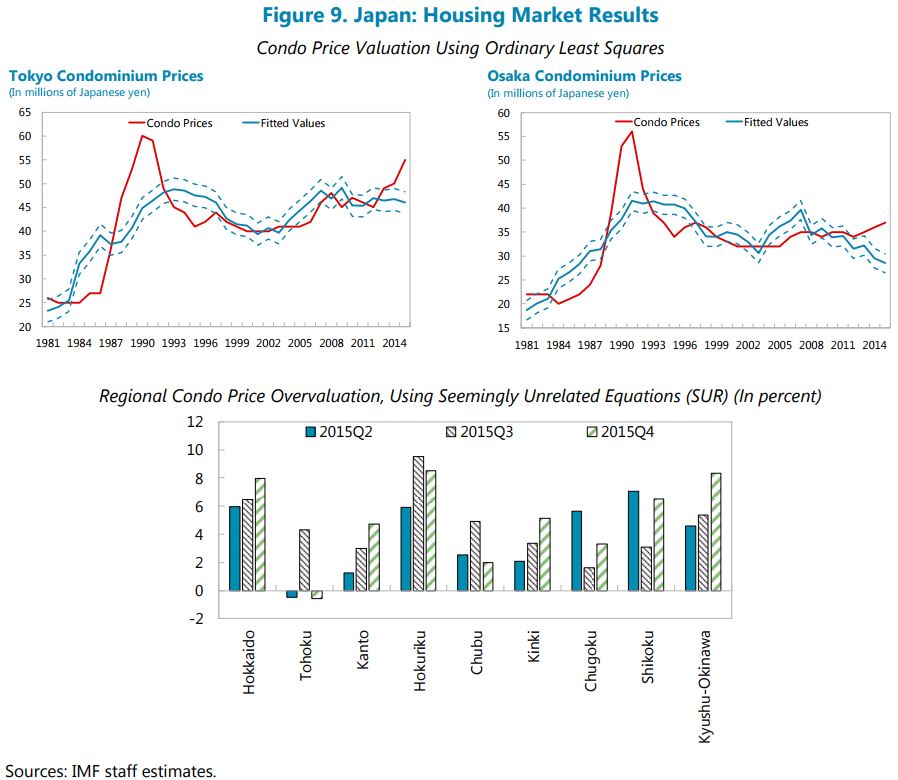
“Condominium prices appear to be moderately overvalued in Tokyo, Osaka, and several outer regions. While results should be interpreted with caution given data limitations and model uncertainty, an econometric analysis using city data shows that condominium prices in Tokyo and Osaka started exceeding values predicted by fundamentals in 2013, suggesting an overvaluation in the 15−20 percent range. A regional analysis also indicates that condominium prices may be moderately above their equilibrium values, with the degree of overvaluation in the 5−10 percent range (Figure 9).”
From a new IMF report on Japan:
“Housing prices have been on the rise in some geographic areas and market segments, despite the declining population. Condominium prices have increased by 23 percent at the national level since 2013 (Figure 8). Historically low mortgage rates and recent changes in the inheritance tax are contributing to demand pressures, with little response in the number of new houses put on the market. Some overheating in the housing market is also indirectly suggested by house price-to-income ratios.
Posted by at 9:22 AM
Labels: Global Housing Watch
Monday, July 31, 2017
Housing Market in Singapore
A new IMF report on Singapore says that: “In Singapore, property market stability is closely linked to macroeconomic and financial stability. Property is the largest component of household wealth, representing about half of total household assets. Mortgage loans account for some three-quarters of total household liabilities, and property-related loans form a substantial portion of banks’ loan books. In addition, housing affordability is a key concern for the Singapore public (Lum, 1996 and 2011; Phang, 2015; Phang and others, 2013). Therefore, when property prices rose rapidly shortly after the Global Financial Crisis (GFC), the Singapore authorities responded with a series of macroprudential measures, including fiscal-based measures, to promote a more stable and sustainable property market. ”
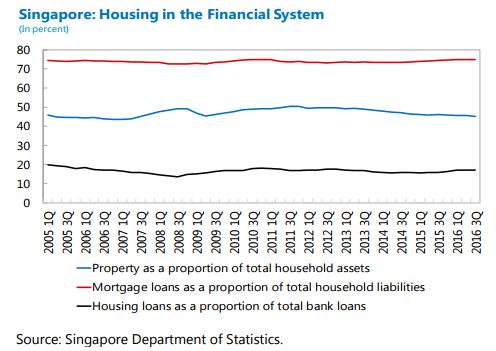
The report also says that: “Finally, Singapore’s banks are well-positioned to withstand shocks from the property market, partly as a result of macro-prudential tightening. Average loan-to-value ratios are low, loan-loss coverage is adequate, and capital and liquidity buffers are strong. Households also have healthy balance sheets and well-diversified assets. ”
On international comparison, the report says that “In Hong Kong SAR, Singapore, and Taiwan Province of China, property tightening measures in recent years have achieved different results. Since peaking in 2013, house prices in Singapore have declined gradually to 2010 levels. The impact contrasts with Hong Kong SAR, where prices have continued to rise and mortgage growth has shown no clear downward trend. House price growth has also remained rapid in New Zealand and Australia where tightening began in 2013 and 2014 respectively. Hence, there is significant liquidity in the regional markets calling for continued vigilance and careful calibration of the measures to guard against speculative capital inflows that can hamper financial stability.”
A new IMF report on Singapore says that: “In Singapore, property market stability is closely linked to macroeconomic and financial stability. Property is the largest component of household wealth, representing about half of total household assets. Mortgage loans account for some three-quarters of total household liabilities, and property-related loans form a substantial portion of banks’ loan books. In addition, housing affordability is a key concern for the Singapore public (Lum, 1996 and 2011;
Posted by at 11:41 AM
Labels: Global Housing Watch
Friday, July 28, 2017
Housing in the U.S.
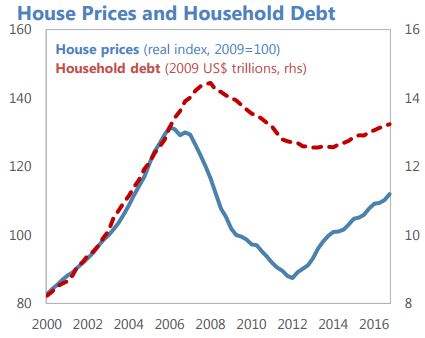
The IMF’s latest report on the U.S. says that: “After a prolonged deleveraging, the housing sector is showing healthy growth.”
The IMF’s latest report on the U.S. says that: “After a prolonged deleveraging, the housing sector is showing healthy growth.”
Posted by at 3:36 PM
Labels: Global Housing Watch
A Profile of Assaf Razin
Below is an extract from the Jerusalem Post:
“In 1924, the late English economist John Maynard Keynes deliberated on what makes a great economist: “The master-economist … must be mathematician, historian, statesman, philosopher—in some degree. He must understand symbols and speak in words. He must contemplate the particular in terms of the general and touch abstract and concrete in the same flight of thought. He must study the present in the light of the past for the purposes of the future.”
Keynes was eulogizing a colleague economist who passed 17 years before Israeli economist Assaf Razin was born in 1941. However, if you ask colleagues and students, Keynes’ words could have been describing the ideal this 2017 EMET Prize winner for social sciences aspires to achieve.
Razin studied and shared ideas about globalization before many modern commentators on the subject even heard of the word, according to Prakash Loungani, an adviser at the International Monetary Fund. Migration and its impact on welfare states, economic policies that would have to shift in a world that is smaller and more accessible – “All the issues we are dealing with now, he was writing about all of it 20 or 30 years ago,” said Loungani.
Razin’s accomplishments are most surprising, considering his upbringing in Kibbutz Shamir in the Upper Galilee. He was born to a family of modest means with Marxist ideals. The professor describes his life as one of extremes – from the kibbutz to Tel Aviv University; from Israel to different parts of the world; and from his childhood in the nursery bed of socialism to the Economics Department at the University of Chicago, the cradle of intellectual capitalism, from where he received his Ph.D. in economics.”
Despite some rather dramatic personal events, including the death of his son in 1996 at the age of 30, Razin’s academic and professional achievements are truly outstanding, said Lars E.O. Svensson, a professor in the Stockholm School of Economics.
“Assaf has an excellent standing in the international community of scholars,” said Svensson. “He is a most welcome visitor to universities, research institutes and international organizations all over the world, and he is a high appreciated participant in international conferences.”
Continue reading here.
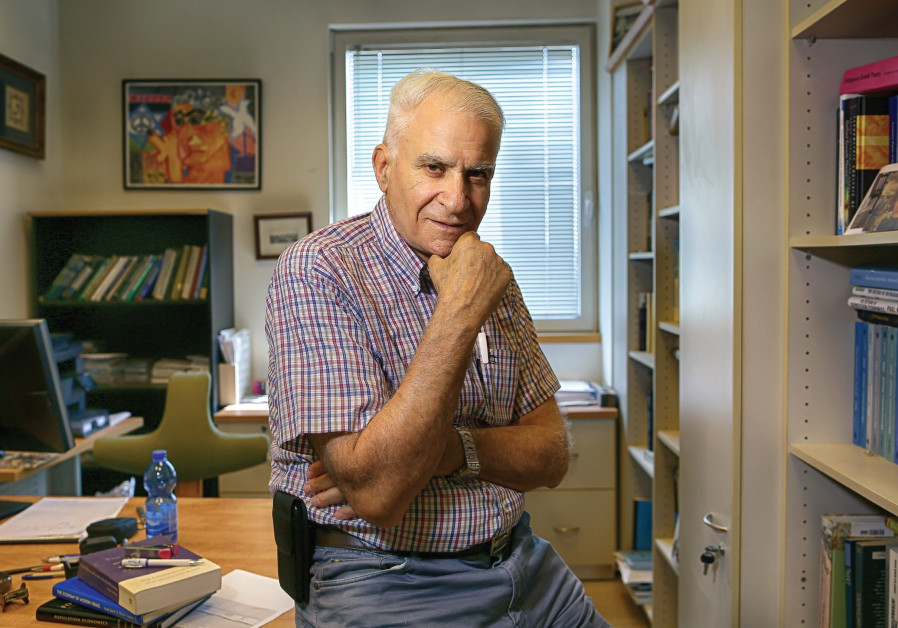
ASSAF RAZIN. (photo credit:Courtesy)
Below is an extract from the Jerusalem Post:
“In 1924, the late English economist John Maynard Keynes deliberated on what makes a great economist: “The master-economist … must be mathematician, historian, statesman, philosopher—in some degree. He must understand symbols and speak in words. He must contemplate the particular in terms of the general and touch abstract and concrete in the same flight of thought. He must study the present in the light of the past for the purposes of the future.”
Keynes was eulogizing a colleague economist who passed 17 years before Israeli economist Assaf Razin was born in 1941.
Posted by at 6:31 AM
Labels: Profiles of Economists
Housing View – July 28, 2017
On cross-country:
- Why Jimmy Carter Believes Housing Is a Basic Human Right – Citylab
- When the (Empty) Apartment Next Door Is Owned by an Oligarch – New York Times
- ¿Por qué las ciudades se vuelven incosteables? – El Economista
- The impact of oil shocks on the housing market: Evidence from Canada and U.S – Journal of Economics and Business
On the US:
- Having Shed Young Workers, the Construction Industry Needs Change – BuildZoom
- The Toughest Places to Build: Behind the Scenes of a Wall Street Journal Analysis – BuildZoom
- Inventory Myth Busting: Why is Home Inventory So Low? – Trulia
- Housing Prices: Highs and Lows – Conversable Economist
- We’re Finally Building More Small Homes, but Construction Remains at Historically Low Levels – Harvard Joint Center for Housing Studies
- Housing Shortage: Where is the Undersupply of New Construction Worst? – Apartment List
- Echoes of Rising Tuition in Students’ Borrowing, Educational Attainment, and Homeownership in Post-Recession America – Federal Reserve Bank of New York
- A promising new coalition looks to rewrite the politics of urban housing – Vox
- Boosting Taxes for Boasting about Houses: Status Concerns in the Housing Market – TU Wien
- Study: Tax subsidies like the mortgage interest deduction have ‘zero effect on homeownership’ – American Enterprise Institute
- These four trends in rental housing have big implications for the growing affordable housing crisis – Urban Institute
On other countries:
- [Canada] Housing Market Assessment — CMHC
On cross-country:
- Why Jimmy Carter Believes Housing Is a Basic Human Right – Citylab
- When the (Empty) Apartment Next Door Is Owned by an Oligarch – New York Times
- ¿Por qué las ciudades se vuelven incosteables? – El Economista
- The impact of oil shocks on the housing market: Evidence from Canada and U.S – Journal of Economics and Business
On the US:
- Having Shed Young Workers,
Posted by at 6:16 AM
Labels: Global Housing Watch
Subscribe to: Posts