Showing posts with label Global Housing Watch. Show all posts
Wednesday, November 14, 2018
House Prices in United Kingdom
From the IMF’s latest report on the United Kingdom:
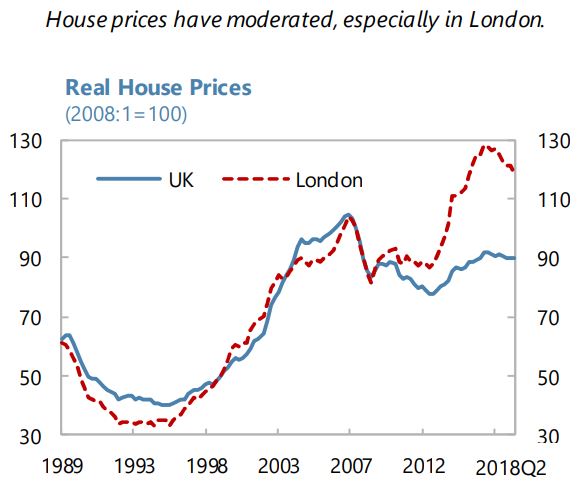
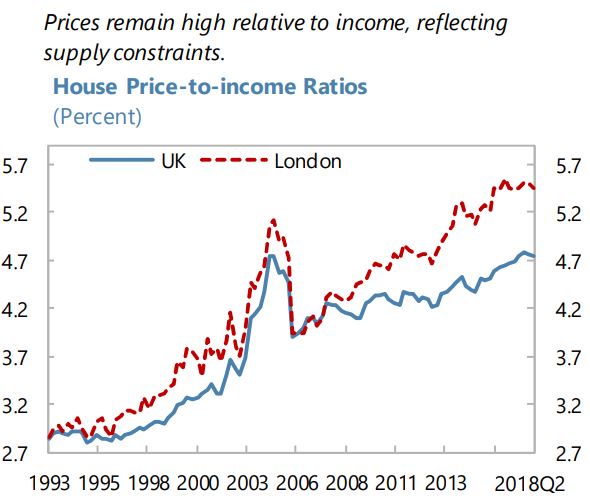
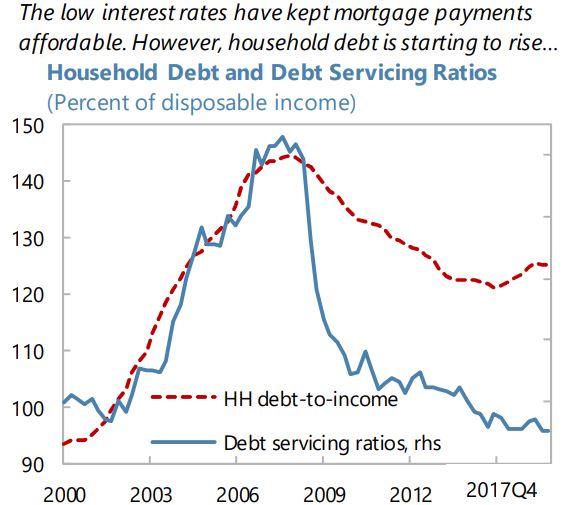
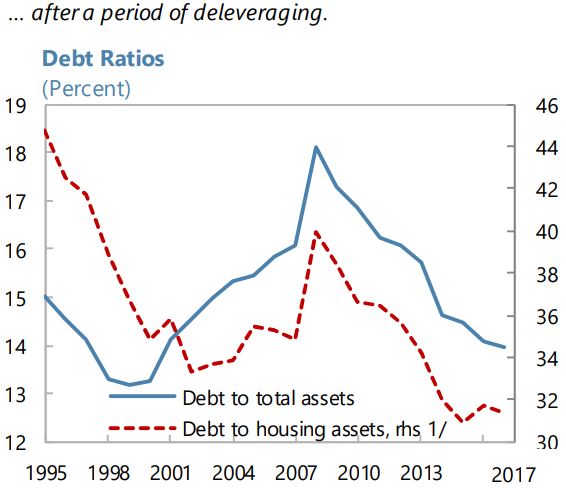
“Mortgage lending growth has been moderate, owing in part to subdued demand, as well as macroprudential measures taken in recent years. Despite the recent moderation in residential house price growth (and outright declines in parts of London), house prices remain high relative to incomes (…). The ratio of new mortgage loans at relatively high loan-to-income (LTI) ratios has increased somewhat in the last two years, although the share of highly indebted households remains low. Since 2014, mortgage lenders have been required to test whether borrowers could still afford their mortgages in a stressed rates scenario.”


From the IMF’s latest report on the United Kingdom:
“Mortgage lending growth has been moderate, owing in part to subdued demand, as well as macroprudential measures taken in recent years. Despite the recent moderation in residential house price growth (and outright declines in parts of London), house prices remain high relative to incomes (…). The ratio of new mortgage loans at relatively high loan-to-income (LTI) ratios has increased somewhat in the last two years,
Posted by at 2:13 PM
Labels: Global Housing Watch
Friday, November 9, 2018
Chile: Housing Market Developments

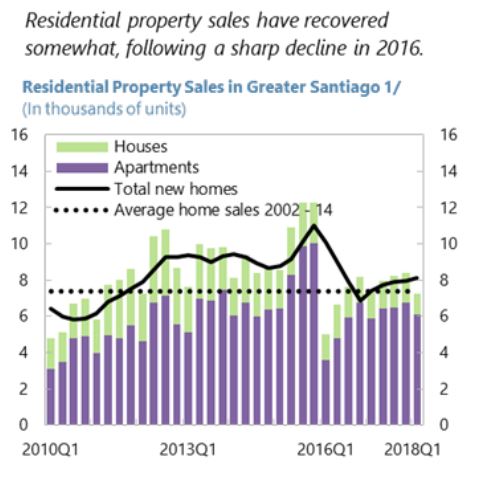
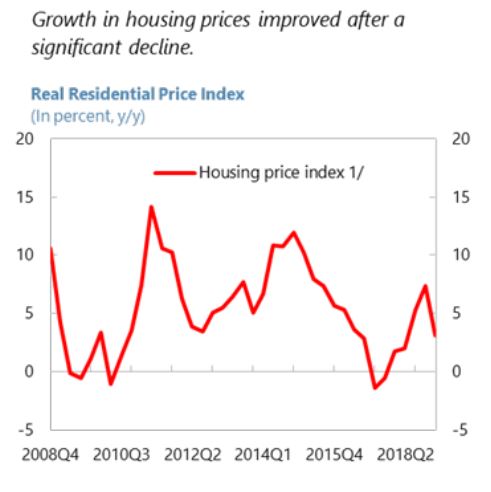

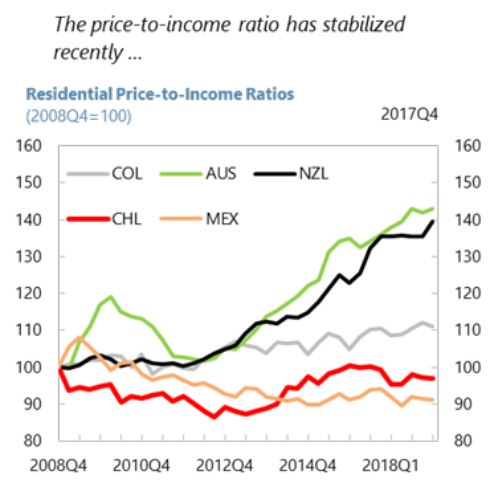
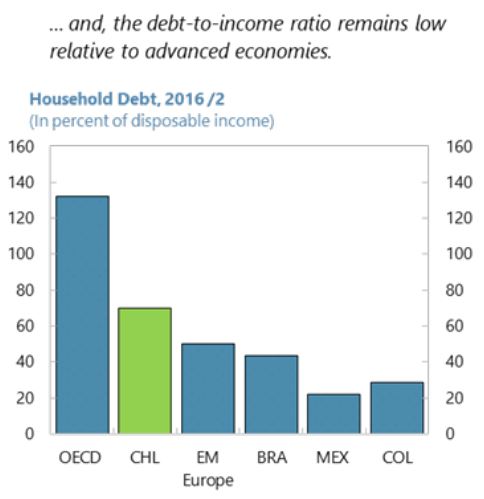
Posted by at 4:20 PM
Labels: Global Housing Watch
Housing View – November 9, 2018
On cross-country:
- 2018 Housing Finance in Africa Yearbook – Centre for Affordable Housing Finance in Africa
- Pockets of risk in European Housing Markets: then and now – Central Bank of Ireland
- UN Special Rapporteur Leilani Farha on homelessness, human rights and why the lack of adequate housing is on the rise – Al Jazeera
- ULI/ PwC’s Emerging Trends in Real Estate Europe 2019 – Urban Land Institute
On the US:
- Birth Rates and Home Values: A Closer Look – Zillow
- Affordability, Disruption & Rising Interest Rates Lead Top Ten Issues Facing Real Estate – National Association of Realtors
- US Housing: As good as it gets? – ING
- When Millennials Battle Boomers Over Housing – Citylab
- Ballots for Buildings: Voters Weigh Affordable Housing Measures – The Pew Charitable Trusts
- Are median incomes actually stagnating? How we calculate housing costs affects the answer – Urban Institute
- Amazon’s real estate team did its homework – Brookings
- How Minimum Zoning Mandates Can Improve Housing Markets and Expand Opportunity – The Aspen Institute
- Resilience and housing markets: Who is it really for? – Land Use Policy
On other countries:
- [Australia] Australia’s Property Slump Casts Doubt on Household Spending – Bloomberg
- [Australia] Significant drop in auction rates set alarm bells ringing for major Australian housing markets – Global Property Guide
- [Canada] Vancouver’s complicated relationship with Chinese money – CBC
- [China] Three New Signs China’s Housing Market Slowdown Is Taking Hold – Bloomberg
- [Denmark] Party is over for apartment owners – but the Danish housing market is picking up – Danske Bank
- [Hungary] Measuring Heterogeneity of House Price Developments in Hungary, 1990–2016 – Central Bank of Hungary

Photo by Aliis Sinisalu
On cross-country:
- 2018 Housing Finance in Africa Yearbook – Centre for Affordable Housing Finance in Africa
- Pockets of risk in European Housing Markets: then and now – Central Bank of Ireland
- UN Special Rapporteur Leilani Farha on homelessness, human rights and why the lack of adequate housing is on the rise – Al Jazeera
- ULI/ PwC’s Emerging Trends in Real Estate Europe 2019 – Urban Land Institute
On the US:
- Birth Rates and Home Values: A Closer Look – Zillow
- Affordability,
Posted by at 5:00 AM
Labels: Global Housing Watch
Monday, November 5, 2018
Balancing Financial Stability and Housing Affordability: The Case of Canada
From the IMF’s latest report on Canada:
“Housing market imbalances are a key source of systemic risk and can adversely affect housing affordability. This paper utilizes a stylized model of the Canadian economy that includes policymakers with differing objectives—macroeconomic stability, financial stability, and housing affordability. Not surprisingly, when faced with multiple objectives, deploying more policy instruments can lead to better outcomes. The results show that macroprudential policy can be more effective than policies based on adjusting propertytransfer taxes because property-tax policy entails excessive volatility in tax rates. They also show that if property-transfer taxes are used as a policy instrument, taxes targeted at a broader-set of homebuyers can be more effective than measures targeted at a smaller subset of homebuyers, such as nonresident homebuyers.”
From the IMF’s latest report on Canada:
“Housing market imbalances are a key source of systemic risk and can adversely affect housing affordability. This paper utilizes a stylized model of the Canadian economy that includes policymakers with differing objectives—macroeconomic stability, financial stability, and housing affordability. Not surprisingly, when faced with multiple objectives, deploying more policy instruments can lead to better outcomes. The results show that macroprudential policy can be more effective than policies based on adjusting propertytransfer taxes because property-tax policy entails excessive volatility in tax rates.
Posted by at 9:49 AM
Labels: Global Housing Watch
Friday, November 2, 2018
Housing View – November 2, 2018
On cross-country:
- 500 Years of Urban Rents, Housing Quality and Affordability – Research Gate
On the US:
- Seventh annual AEI-CRN conference on housing markets and finance: Supply, demand, and pro-cyclical forces – American Enterprise Institute
- Lynn Fisher on affordable housing and US housing markets – American Enterprise Institute
- Changes in Supply and Demand at Various Segments of the Rental Market: How Do They Match Up? – Harvard Joint Center for Housing Studies
- Creepin’ it Real: Haunted Neighborhoods and Their Home Values – Trulia
- American Abodes: Where International House Hunters are Searching for Homes – Trulia
- Why there’s no bubble in the US housing market – AsianInvestor
- Intergenerational Homeownership – Urban Institute
- Mortgage Rates Are Pushing U.S. Homes Out of Reach – Bloomberg
- How Airbnb’s Tech Is Impacting People’s Fundamental Human Rights – Forbes
- No, rent control doesn’t always reduce the supply of housing – Los Angeles Times
- Rent Control Returns: Thoughts and Evidence – Conversable Economist
On other countries:
- [China] Local capital scarcity and industrial decline caused by China’s real estate booms – VOX
- [Greece] Seeking a bargain, and taste of the good life, Chinese buy Greek homes – Reuters
- [Singapore] Singapore’s Public Housing, Envy of World, Hits Rough Patch – Bloomberg
- [Spain] Little Caracas, el barrio de lujo que se ha instalado en el centro de Madrid – GQ
- [United Kingdom] Curtain comes down on Help to Buy – Financial Times
Photo by Aliis Sinisalu
On cross-country:
- 500 Years of Urban Rents, Housing Quality and Affordability – Research Gate
On the US:
- Seventh annual AEI-CRN conference on housing markets and finance: Supply, demand, and pro-cyclical forces – American Enterprise Institute
- Lynn Fisher on affordable housing and US housing markets – American Enterprise Institute
- Changes in Supply and Demand at Various Segments of the Rental Market: How Do They Match Up?
Posted by at 5:00 AM
Labels: Global Housing Watch
Subscribe to: Posts