



Friday, August 11, 2017
Housing View – August 11, 2017
On cross-country:
- Prime Global Cities Index – Knight Frank
On the US:
- Stabilizing the System of Mortgage Finance in the United States – IMF
- Robert Shiller on The Transformation of the ‘American Dream’ – New York Times
- Was there a Housing Price Bubble? Revisited – Marginal Revolution
- Appraising Home Purchase Appraisals – Federal Reserve Bank of Philadelphia
- Finding Common Ground for Land-Use Regulation Reform – Cato Institute
- Significant Improvements in Energy Efficiency Characteristics of the US Housing Stock – Harvard Joint Center for Housing Studies
- Housing Sentiment Dips as High Home Prices Weigh on Buyers and Economic Conditions Weigh on Sellers – Fannie Mae
On other countries:
- [Australia] Mapping the market shows a substantial decline in affordable housing supply in Sydney and Melbourne over the past five years – CoreLogic
- [Canada] New mortgages continue to rise in Canada – CMHC
- [United Kingdom] Housing is a growing political problem for the Conservatives – The Economist
- [United Kingdom] How to solve Britain’s housing crisis – The Economist
On cross-country:
- Prime Global Cities Index – Knight Frank
On the US:
- Stabilizing the System of Mortgage Finance in the United States – IMF
- Robert Shiller on The Transformation of the ‘American Dream’ – New York Times
- Was there a Housing Price Bubble? Revisited – Marginal Revolution
- Appraising Home Purchase Appraisals – Federal Reserve Bank of Philadelphia
- Finding Common Ground for Land-Use Regulation Reform – Cato Institute
- Significant Improvements in Energy Efficiency Characteristics of the US Housing Stock – Harvard Joint Center for Housing Studies
- Housing Sentiment Dips as High Home Prices Weigh on Buyers and Economic Conditions Weigh on Sellers – Fannie Mae
On other countries:
- [Australia] Mapping the market shows a substantial decline in affordable housing supply in Sydney and Melbourne over the past five years – CoreLogic
- [Canada] New mortgages continue to rise in Canada – CMHC
- [United Kingdom] Housing is a growing political problem for the Conservatives – The Economist
- [United Kingdom] How to solve Britain’s housing crisis – The Economist
Posted by at 5:00 AM
Labels: Global Housing Watch
Tuesday, August 8, 2017
Stabilizing the System of Mortgage Finance in the United States
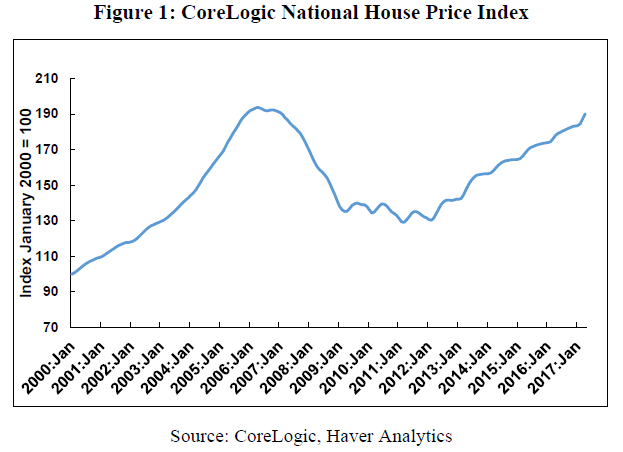
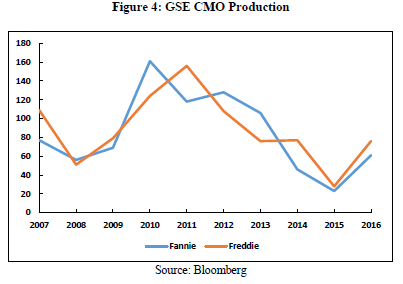
A new IMF Working Paper by Richard Koss says that “It has been over a decade since the peak of house prices in the US was attained, and while there has been a concerted regulatory response to the subsequent collapse, the two Government Sponsored Enterprises (GSEs) remain in conservatorship. While this action served to forestall a deeper crisis at the time, over the past several years risks related to the system of mortgage finance can be seen building across several dimensions that need to be addressed. While reforms to the GSEs are an important part of dealing with these concerns, this paper argues that broader changes need to be made across the entire mortgage landscape to stabilize the system, even before the final state of the GSEs is fully determined.”
Continue reading here.
A new IMF Working Paper by Richard Koss says that “It has been over a decade since the peak of house prices in the US was attained, and while there has been a concerted regulatory response to the subsequent collapse, the two Government Sponsored Enterprises (GSEs) remain in conservatorship. While this action served to forestall a deeper crisis at the time, over the past several years risks related to the system of mortgage finance can be seen building across several dimensions that need to be addressed.
Posted by at 4:12 PM
Labels: Global Housing Watch
Friday, August 4, 2017
Housing View – August 4, 2017
On cross-country:
- Housing in Euro Area – IMF
On the US:
- Why Has Regional Income Convergence in the U.S. Declined? – NBER
- 2017 Profile of International Activity in U.S. Residential Real Estate – National Association of Realtors
- Remarks of Melvin L. Watt at the National Association of Real Estate Brokers’ 70th Annual Convention – Federal Housing Finance Agency
- Matthew Desmond Q&A: Housing Insecurity Is a Problem We Need to ‘Out-Hate’ – Zillow
- Tenants Under Siege: Inside New York City’s Housing Crisis – The New York Review of Books
- Why is Moving to a New Home Worse for African-American and Hispanic Children than for White Children? – Harvard Joint Center for Housing Studies
- Housing Policy Should Prioritize Those With Greatest Need – Center on Budget and Policy Priorities
- Where Does Job Growth Outpace New Housing Construction? – National Association of Realtors
- The Sharing Economy and Housing Affordability: Evidence from Airbnb – SSRN
- Residential Rent Affordability across U.S. Metropolitan Areas – Federal Reserve Bank of Kansas City
- Mortgage Default in an Estimated Model of the U.S. Housing Market – Banco de México
- Understanding the Surge in Commercial Real Estate Lending – Federal Reserve Bank of Richmond
- Increase in Long Commutes Indicates More Residential Dispersion – New Geography
- The Great Train Robbery: Urban Transportation in the 21st Century – Chapman University
On other countries:
- [Australia] Quarterly Housing & Economic Review – July 2017 – CoreLogic
- [Canada] Vancouver plan to boost housing supply ignores city hall red tape – Fraser Institute
- Japan: Risks Emerging from Real Estate? – IMF
- [Singapore] Housing Market in Singapore – IMF
- [Turkey] Real estate purchases by foreigners drop in Turkey, despite generous incentives – Global Property Guide
- [United Kingdom] British homeowners move home half as frequently as Americans do – The Economist
- [United Kingdom] How the credit crunch transformed the UK housing market – Savills
- [United Kingdom] Making the Case for Affordable Housing on Public Land – New Economics Foundation
On cross-country:
- Housing in Euro Area – IMF
On the US:
- Why Has Regional Income Convergence in the U.S. Declined? – NBER
- 2017 Profile of International Activity in U.S. Residential Real Estate – National Association of Realtors
- Remarks of Melvin L. Watt at the National Association of Real Estate Brokers’ 70th Annual Convention – Federal Housing Finance Agency
- Matthew Desmond Q&A: Housing Insecurity Is a Problem We Need to ‘Out-Hate’
Posted by at 5:00 AM
Labels: Global Housing Watch
Tuesday, August 1, 2017
Bridging the Gap: Forecasting Interest Rates with Macro Trends
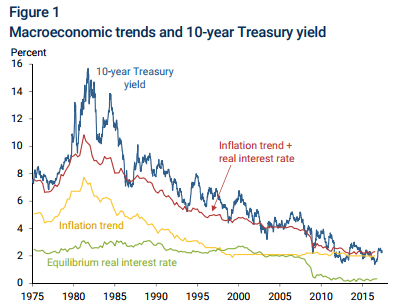
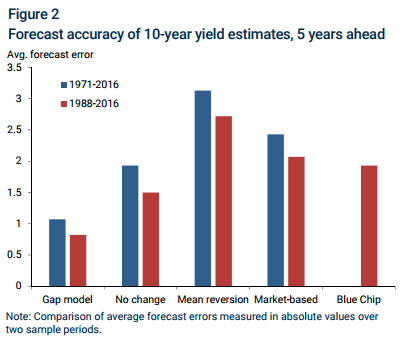
A new economic letter by Michael Bauer says that “Interest rates are inherently difficult to predict, and the simple random walk benchmark has proven hard to beat. But macroeconomics can help, because the long-run trend in interest rates is driven by the trend in inflation and the equilibrium real interest rate. When forecasting rates several years into the future, substantial gains are possible by predicting that the gap between current interest rates and this long-run trend will close with increasing forecast horizon. This evidence suggests that accounting for macroeconomic trends is important for understanding, modeling, and forecasting interest rates.”
Continue reading here.
A new economic letter by Michael Bauer says that “Interest rates are inherently difficult to predict, and the simple random walk benchmark has proven hard to beat. But macroeconomics can help, because the long-run trend in interest rates is driven by the trend in inflation and the equilibrium real interest rate. When forecasting rates several years into the future, substantial gains are possible by predicting that the gap between current interest rates and this long-run trend will close with increasing forecast horizon.
Posted by at 9:49 AM
Labels: Forecasting Forum
Japan’s Lifetime Employment and Gender Inequality
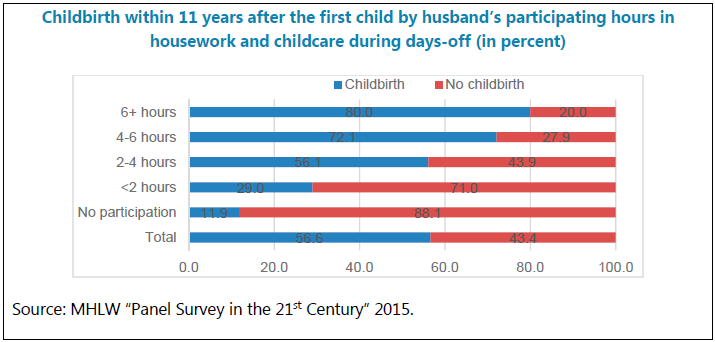
A new IMF report finds that “Societal attitudes in which males contribute to household work could be a powerful lever both to increase female labor force participation, and increase fertility. If women can get more child rearing support from their husbands, it would be easier for them to continue to work. However, with 85 percent of full-time employees working overtime, it is difficult in reality to share the childcare burdens among a working couple if both of them have regular works. Men’s commitment to house work and family responsibilities can have a significant impact on fertility. Data suggests that the more time spent by a husband in house work and childcare, the higher the changes that couples will have a second child.”
Continue reading here.
A new IMF report finds that “Societal attitudes in which males contribute to household work could be a powerful lever both to increase female labor force participation, and increase fertility. If women can get more child rearing support from their husbands, it would be easier for them to continue to work. However, with 85 percent of full-time employees working overtime, it is difficult in reality to share the childcare burdens among a working couple if both of them have regular works.
Posted by at 9:44 AM
Labels: Inclusive Growth
Subscribe to: Posts