



Thursday, December 14, 2017
Medium Term Growth in Albania
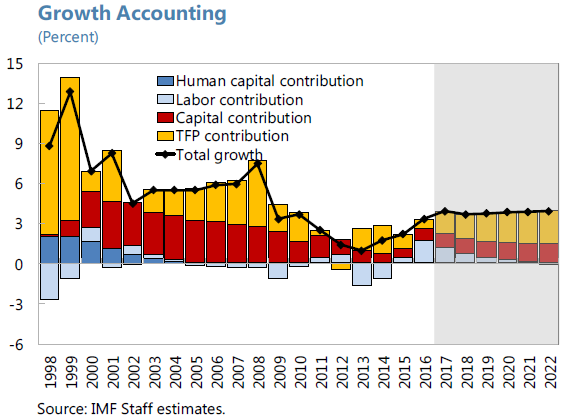
IMF’s latest report says that “Growth in Albania is recovering but has recently been driven by large FDI projects, raising concerns about the sustainability of the recovery and underlying growth potential. This study assesses the prospects and challenges for medium term growth. While Albania’s external conditions are favorable, low savings and demographic trends are expected to weigh on investment and labor utilization. However, EU accession literature suggests that institutional reforms as an EU candidate country can catalyze productivity improvements and potential growth in Albania.”
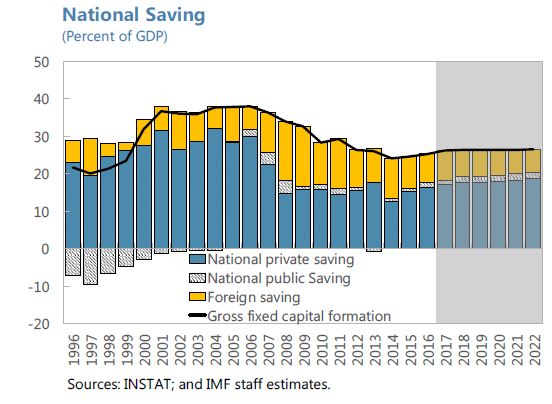
IMF’s latest report says that “Growth in Albania is recovering but has recently been driven by large FDI projects, raising concerns about the sustainability of the recovery and underlying growth potential. This study assesses the prospects and challenges for medium term growth. While Albania’s external conditions are favorable, low savings and demographic trends are expected to weigh on investment and labor utilization. However, EU accession literature suggests that institutional reforms as an EU candidate country can catalyze productivity improvements and potential growth in Albania.”
Posted by at 10:31 AM
Labels: Forecasting Forum, Inclusive Growth
Okun’s Law in Finland: Declining Labor Market Sensitivity
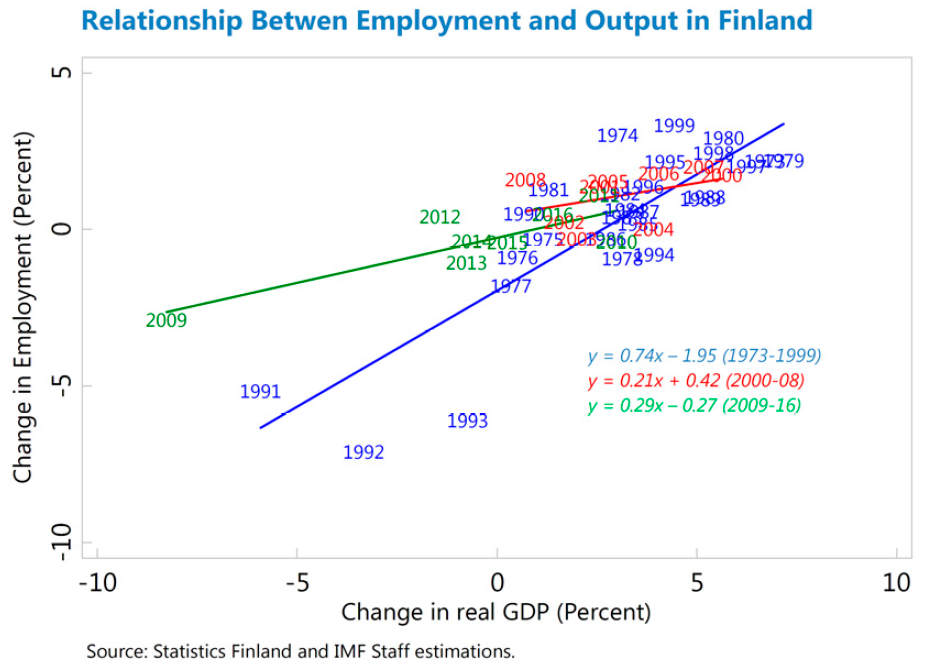
A new IMF report on Finland’s labor market finds that “the response of employment to output seems to have slowed since 2000. Based on the entire 1973–2016 sample, the estimate of [Okun coefficient] is equal to 0.5. However, there are substantial differences between the subsamples considered. For example, using data until 2000 yields a [Okun coefficient] of 0.75, while more recently a one percent increase in output has been associated only with a 0.3 percent expansion of employment.”
Continue reading here, page 23-30.
A new IMF report on Finland’s labor market finds that “the response of employment to output seems to have slowed since 2000. Based on the entire 1973–2016 sample, the estimate of [Okun coefficient] is equal to 0.5. However, there are substantial differences between the subsamples considered. For example, using data until 2000 yields a [Okun coefficient] of 0.75, while more recently a one percent increase in output has been associated only with a 0.3 percent expansion of employment.”
Posted by at 10:16 AM
Labels: Inclusive Growth
Finland’s Labor Market
A new IMF report says that “Finland’s labor market features a highly educated workforce and has safeguarded equality during a time of adverse shocks. But labor market outcomes have not been as good as in Nordic peers for many years. This paper suggests that there is room for improvement in two main areas. First, wages have become misaligned with productivity at the sectoral level during the past decade. More firm-level flexibility in collective bargaining could help to address this. Second, labor supply is lower among certain population groups compared to other Nordics; to this end, bolstering work incentives further for the low skilled, women of child-bearing age, young and old workers would help. These structural measures would be important also because employment seems to respond less to cyclical growth upswings now than before the turn of the millennium. Finally, additional policies to facilitate the adjustment of the labor market to global trends—technological change and globalization—will likely be needed over the longer term.”
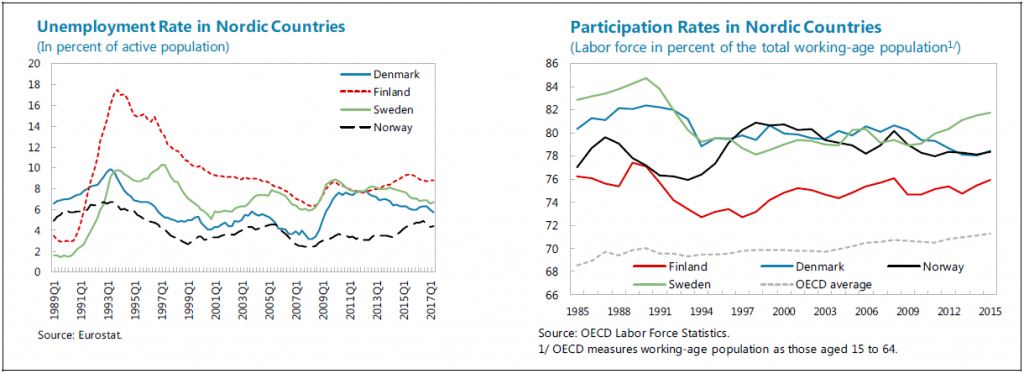
A new IMF report says that “Finland’s labor market features a highly educated workforce and has safeguarded equality during a time of adverse shocks. But labor market outcomes have not been as good as in Nordic peers for many years. This paper suggests that there is room for improvement in two main areas. First, wages have become misaligned with productivity at the sectoral level during the past decade. More firm-level flexibility in collective bargaining could help to address this.
Posted by at 9:47 AM
Labels: Inclusive Growth
Friday, December 8, 2017
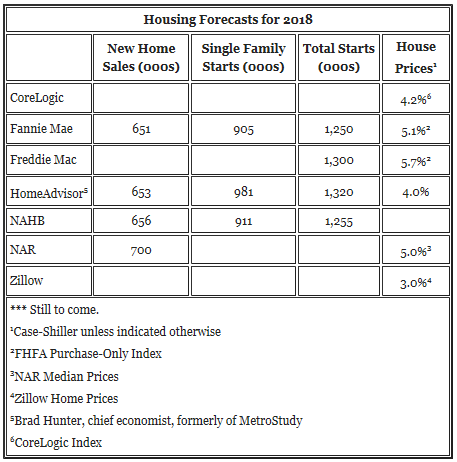
2018 Housing Forecasts
2018 Housing Forecasts collected by Bill McBride:
Posted by at 8:09 PM
Labels: Forecasting Forum, Global Housing Watch
Housing View – December 8, 2017
On cross-country:
- Global developments in residential property prices – second quarter of 2017 – Bank for International Settlements
- Global House Price Index – Q3 2017 – Knight Frank
- European Commission Annual Growth Survey confirms ‘State of Housing’ report – Housing Europe
- Why Affordable Housing is Key To Deliver SDGs – SDG Watch Europe
- Reform of the French Social Housing Sector – Housing Europe
On the US:
- The Awakening of Millennial Homeownership Demand – Fannie Mae
- A journey through office space from Babylonian scribes to Milton Waddams to Apple’s ‘mothership’ – Rutgers Real Estate Center
- Mortgage-Default Research and the Recent Foreclosure Crisis – Federal Reserve Bank of Boston
- Place Database – Lincoln Institute of Land Policy
- Is Homeownership Bad for Wealth Accumulation? – Federal Reserve Bank of St. Louis
- Urban Revival in America, 2000 to 2010 – NBER
- House Price Beliefs And Mortgage Leverage Choice – NBER
- 2016 Q3 Commercial Real Estate Market Survey – National Association of Realtors
- Gig Economy Workers and Homeownership – Fannie Mae
- Reactions to the tax plan – Bloomberg, Builder Magazine, Citylab, Slate
- 2018 Housing Forecasts – Calculated Risk
On other countries:
- [Australia] Aussie states to encourage ‘built-to-rent’ housing projects – Global Property Guide
- [Canada] The Housing Supply Myth – Kwantlen Polytechnic University
- [Canada] Mortgage and consumer credit trends – CMHC
- [China] Hidden peril awaits China’s banks as property binge fuels mortgage fraud frenzy – Reuters
- Housing Challenges in Chinese Cities Under Urbanization – Urbanization and Urban Governance in China
- [Denmark] A regional model of the Danish housing market – Danmarks Nationalbank
- [France] French housing market heating up led by Paris – Reuters
- [India] Affordable housing is a no-brainer for India’s bulls – Financial Times
- [Ireland] The roots of Ireland’s property crisis – Economist
- [Sweden] Swedish construction firms see no major fall in housing demand ahead- c.bank survey – Reuters
- [United Arab Emirates] Dubai, Property Market Outlook, Winter 2017 – Cluttons
- [United Kingdom] London’s property market is rescued by its former colony, Hong Kong – Economist
- [United Kingdom] UK stamp duty cut for first-time buyers raises concerns – Global Property Guide

Photo by Aliis Sinisalu
On cross-country:
- Global developments in residential property prices – second quarter of 2017 – Bank for International Settlements
- Global House Price Index – Q3 2017 – Knight Frank
- European Commission Annual Growth Survey confirms ‘State of Housing’ report – Housing Europe
- Why Affordable Housing is Key To Deliver SDGs – SDG Watch Europe
- Reform of the French Social Housing Sector – Housing Europe
On the US:
- The Awakening of Millennial Homeownership Demand – Fannie Mae
- A journey through office space from Babylonian scribes to Milton Waddams to Apple’s ‘mothership’ – Rutgers Real Estate Center
- Mortgage-Default Research and the Recent Foreclosure Crisis – Federal Reserve Bank of Boston
- Place Database – Lincoln Institute of Land Policy
- Is Homeownership Bad for Wealth Accumulation?
Posted by at 5:00 AM
Labels: Global Housing Watch
Subscribe to: Posts