



Friday, October 20, 2017
Housing View – October 20, 2017
On cross-country:
- Risks in International Housing Markets – Reserve Bank of Australia
- Interest rates and house prices in the United States and around the world – Bank for International Settlements
- The State of Housing in the EU 2017 – Housing Europe
- Housing Markets: A European Perspective – Seeking Alpha
- Inclusive City Development: City-Wide Slum Upgrading and Housing Development – World Resource Institute
- International housing policies – CMHC
On the US:
- Paying For Dirt: Where Have Home Values Detached From Construction Costs? – BuildZoom
- First-Time Homebuyers: Toward a New Measure – Federal Reserve Bank of Philadelphia
- Don’t Worry About Inflation. Solve the Housing Shortage. – Bloomberg
- The Barriers Stopping Poor People From Moving to Better Jobs – The Atlantic
- How Historic Racial Injustices Still Impact Housing Today – Zillow
- Reducing Work Disincentives in the Housing Choice Voucher Program: Rent Reform Demonstration Baseline Report – U.S. Department of Housing and Urban Development
On other countries:
- [Canada] Canada’s Bank Regulator Toughens Mortgage Qualifying Rules – Bloomberg
- [Canada] Canadian housing agency says it can withstand severe downturn – Reuters
- [China] Chinese property boom props up Xi’s hopes for the economy – Financial Times
- [China] Chinese Cities Buy Off Housing Glut With Borrowed Money – Wall Street Journal
- [Hong Kong] Nano apartments rise to HK’s housing challenge – Financial Times
- [Sweden] Warning Signs Are Mounting for Sweden’s Once-Hot Housing Market – Bloomberg
- [Sweden] ‘The risks have definitely increased’ – Sweden’s housing boom wobbles – Financial Times
- [United Kingdom] Curbs on UK housing benefit making system ‘irrelevant’, IFS warns – Financial Times

Photo by Aliis Sinisalu
On cross-country:
- Risks in International Housing Markets – Reserve Bank of Australia
- Interest rates and house prices in the United States and around the world – Bank for International Settlements
- The State of Housing in the EU 2017 – Housing Europe
- Housing Markets: A European Perspective – Seeking Alpha
- Inclusive City Development: City-Wide Slum Upgrading and Housing Development – World Resource Institute
- International housing policies – CMHC
Posted by at 5:00 AM
Labels: Global Housing Watch
Thursday, October 19, 2017
Aggregate Uncertainty Shocks and Sectoral Productivity
My paper with Sangyup Choi, Davide Furceri, and Yi Huang on the effects of effect of aggregate uncertainty shocks on sectoral productivity is now forthcoming in the Journal of International Money and Finance and is available (link) at the JIMF website. First, we find that an increase in aggregate uncertainty reduces productivity growth more in industries that depend heavily on external finance. Second, the mechanism at play is that during periods of high uncertainty, firms that are credit constrained switch the composition of investment by reducing productivity-enhancing investment that is more subject to liquidity risks. Third, the mechanism is stronger during recessions, when credit constraints bind more. For those without access to JIMF, an earlier working paper (link) version is available.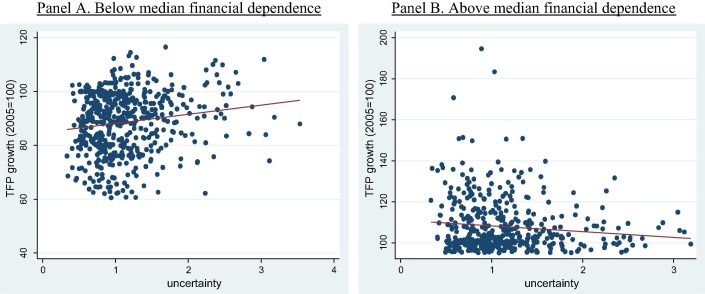
My paper with Sangyup Choi, Davide Furceri, and Yi Huang on the effects of effect of aggregate uncertainty shocks on sectoral productivity is now forthcoming in the Journal of International Money and Finance and is available (link) at the JIMF website. First, we find that an increase in aggregate uncertainty reduces productivity growth more in industries that depend heavily on external finance. Second, the mechanism at play is that during periods of high uncertainty,
Posted by at 9:47 AM
Labels: Macro Demystified
Friday, October 13, 2017
Housing View – October 13, 2017
On cross-country:
- Global urban house price index records slower growth – Knight Frank
- Global Residential Cities Index – Q2 2017 – Knight Frank
- The State of Housing in the EU 2017 – Housing Europe
- Transparent and efficient social housing – Housing Europe
On the US:
- Sixth annual AEI and CRN conference on housing risk – American Enterprise Institute
- Gentrification and the Amenity Value of Crime Reductions: Evidence from Rent Deregulation – NBER
- What happens to U.S. home prices after Fed rate increase? – Real Estate Decoded
On other countries:
- [Australia] Chinese Investors Keep Pouring Money Into Australian Housing – Bloomberg
- [Canada] Government Eyeing ‘All Options’ to Cool Vancouver Housing Market – Bloomberg
- [United Arab Emirates] Dubai: Premiums Under the Microscope – Reidin
Photo by Aliis Sinisalu
On cross-country:
- Global urban house price index records slower growth – Knight Frank
- Global Residential Cities Index – Q2 2017 – Knight Frank
- The State of Housing in the EU 2017 – Housing Europe
- Transparent and efficient social housing – Housing Europe
On the US:
- Sixth annual AEI and CRN conference on housing risk – American Enterprise Institute
- Gentrification and the Amenity Value of Crime Reductions: Evidence from Rent Deregulation – NBER
- What happens to U.S.
Posted by at 5:00 AM
Labels: Global Housing Watch
Thursday, October 12, 2017
Capital Account Liberalization and Inequality
My paper with Davide Furceri on the effects of capital account liberalization on inequality is now forthcoming in the Journal of Development Economics and is available (link) at the JDE website. We find that capital account liberalization is associated with a persistent increase in the share of income going to the top. We investigate three channels through which these impacts could occur. First, the impact of liberalization on inequality is stronger where credit markets lack depth and financial inclusion is low; positive impacts of liberalization on poverty rates also vanish when financial inclusion is low. Second, the impact on inequality is also stronger when liberalization is followed by a financial crisis. Third, liberalization seems to alter the relative bargaining power of firms and workers: the labor share of income falls in the aftermath of capital account liberalization. For those without access to the JDE, an earlier working paper (link) version is available.
Figure 10. The effect of capital account liberalization on the top income shares
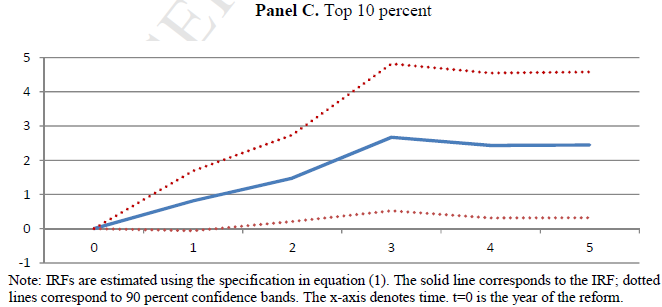
My paper with Davide Furceri on the effects of capital account liberalization on inequality is now forthcoming in the Journal of Development Economics and is available (link) at the JDE website. We find that capital account liberalization is associated with a persistent increase in the share of income going to the top. We investigate three channels through which these impacts could occur. First, the impact of liberalization on inequality is stronger where credit markets lack depth and financial inclusion is low;
Posted by at 2:13 PM
Labels: Inclusive Growth
Wednesday, October 11, 2017
The IMF’s Fiscal Monitor on Tackling Inequality
From the opening remarks of Vitor Gaspar, Director of the Fiscal Affairs Department:
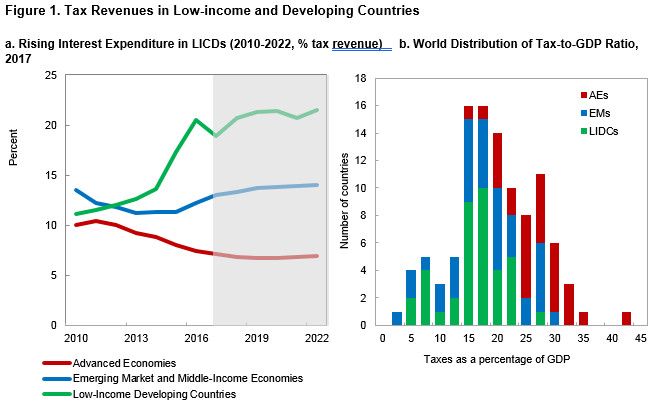
“This issue of the Fiscal Monitor looks at inequality. First, it documents trends in inequality and examines the role of fiscal policy. Then, it examines the following three policies that are currently widely debated: first, progressive taxation; second, universal basic income (UBI); and third, public spending on education and health.”
Continue reading here.
From the opening remarks of Vitor Gaspar, Director of the Fiscal Affairs Department:
“This issue of the Fiscal Monitor looks at inequality. First, it documents trends in inequality and examines the role of fiscal policy. Then, it examines the following three policies that are currently widely debated: first, progressive taxation; second, universal basic income (UBI); and third, public spending on education and health.”
Continue reading here.
Posted by at 10:53 AM
Labels: Inclusive Growth
Subscribe to: Posts