



Monday, February 19, 2018
The New Minimum Wage Policy in Korea
From the latest IMF report on Korea’s minimum wage:
“The 2018 minimum wage hike is by far the largest increase in real terms since the minimum wage system was established in late 1980s. […] This hike will bring Korea’s minimum wage close to the OECD average.
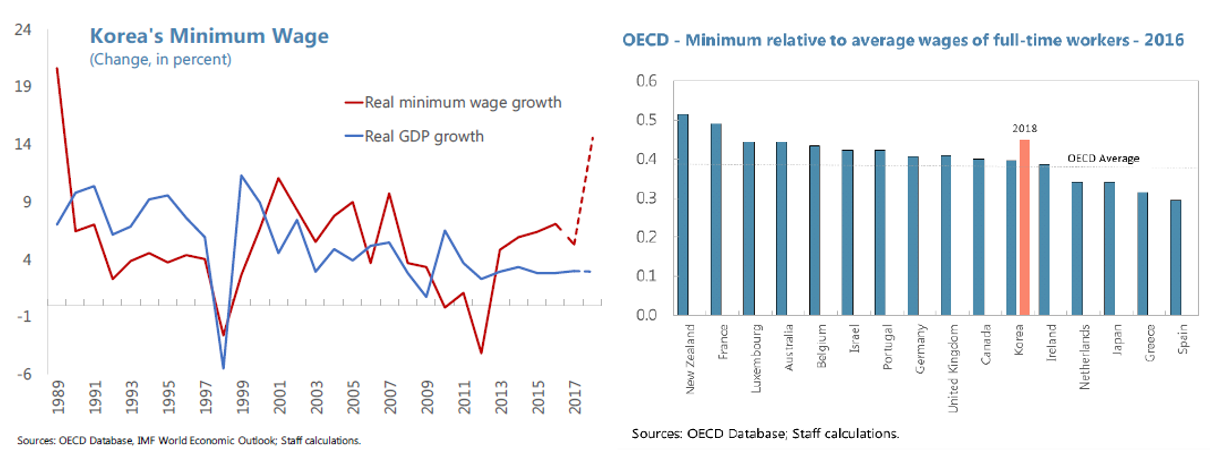
A hike in the minimum wage could have an impact on multiple fronts. In general, it effects employment, especially youth employment, the overall wage levels in the economy, income distribution, and competitiveness of the firms. These in turn affect economic growth and inflation.” Continue reading here.
From the latest IMF report on Korea’s minimum wage:
“The 2018 minimum wage hike is by far the largest increase in real terms since the minimum wage system was established in late 1980s. […] This hike will bring Korea’s minimum wage close to the OECD average.
A hike in the minimum wage could have an impact on multiple fronts. In general, it effects employment,
Posted by at 10:04 PM
Labels: Inclusive Growth
Youth (Un)Employment in Korea—Recent Trends Drivers
From the latest IMF report on Korea’s youth unemployment:
“While Korea’s rate of youth unemployment is low in international comparison, it has recently increased. In addition, the share of inactive youth is exceptionally high. These developments are concerning as extensive research has shown long-lasting negative effects for individuals affected and the society and economy as a whole.
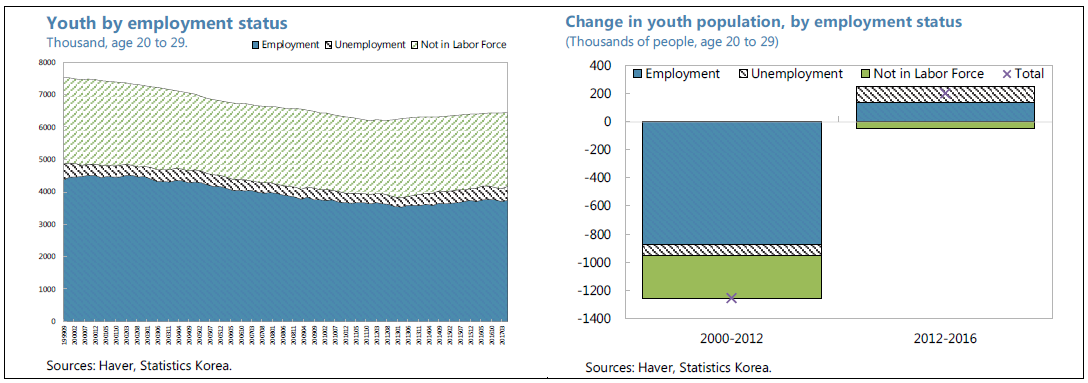
This paper discusses the potential drivers behind youth unemployment in Korea, the various measures taken by the authorities and best practices from the literature and other countries. The analysis suggests that various factors have contributed to the current situation, including cyclical, structural and policy variables. In particular, weak consumption, a temporary increase in the youth cohort and expectation and skill mismatches are likely responsible. Moreover, issues with educational quality, a focus on direct job creation and high protection of regular workers and the resulting labor market duality have also contributed.
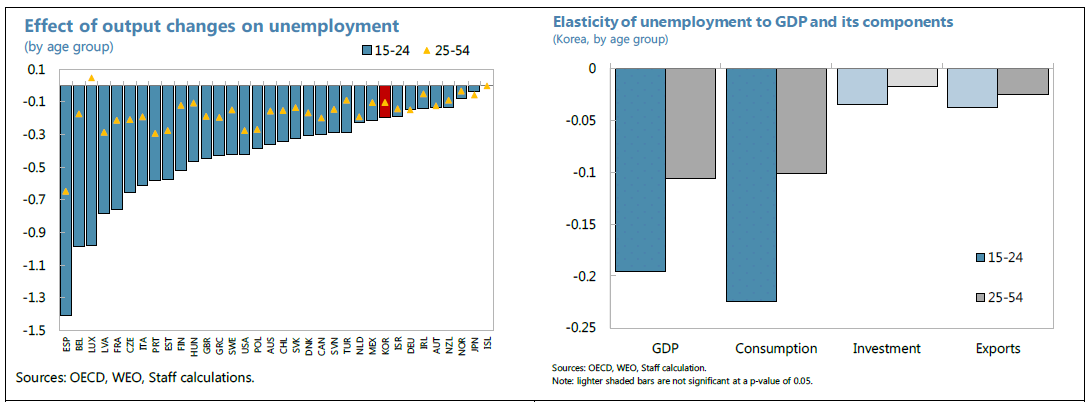
The Korean government has already made significant and comprehensive efforts to tackle youth employment issues and plans to further expand on them. Based on a growing literature of international experiences and policy evaluations, the government could consider (i) fine-tuning existing measures, (ii) expanding preemptive measures and (iii) addressing general cyclical and structural impediments.”
From the latest IMF report on Korea’s youth unemployment:
“While Korea’s rate of youth unemployment is low in international comparison, it has recently increased. In addition, the share of inactive youth is exceptionally high. These developments are concerning as extensive research has shown long-lasting negative effects for individuals affected and the society and economy as a whole.
This paper discusses the potential drivers behind youth unemployment in Korea,
Posted by at 9:36 PM
Labels: Inclusive Growth
Labor Market Duality in Korea
A new IMF report says that “Labor market duality in Korea is a complex issue, which encompasses various types of non-regular workers. Nonetheless, it is particularly prominent among SMEs and in the service sector and disproportionately affects women, the elderly and youth. On a macro level it has likely contributed to increasing inequality, low fertility rates and declining productivity growth. The two main drivers behind duality are various employment protection legislations and large productivity differentials in the product market. A general equilibrium search-and-matching model is applied to model duality and simulate the impact of flexicurity policies. It finds that a well-calibrated introduction of flexicurity could address a number of issues that Korea is facing, such as reducing duality and inequality, and raising productivity and welfare. For this it would be crucial to implement all three pillars to ensure gains are distributed among all individuals.”
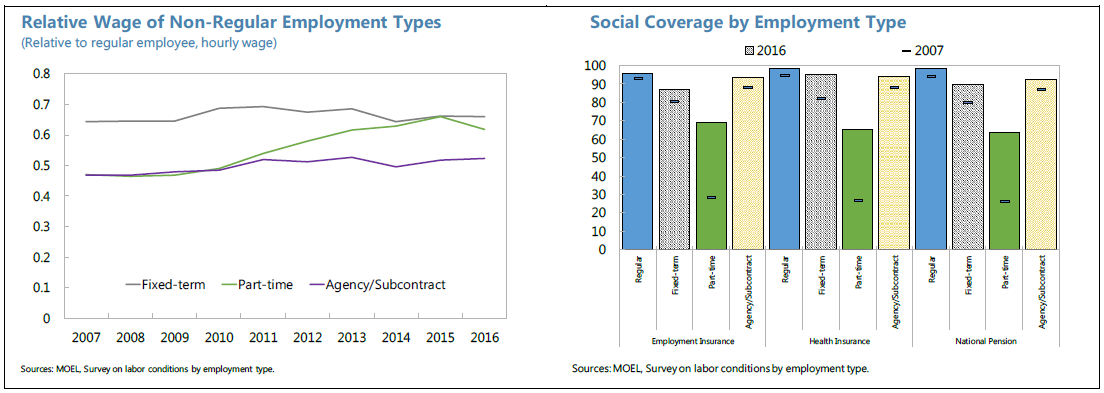
A new IMF report says that “Labor market duality in Korea is a complex issue, which encompasses various types of non-regular workers. Nonetheless, it is particularly prominent among SMEs and in the service sector and disproportionately affects women, the elderly and youth. On a macro level it has likely contributed to increasing inequality, low fertility rates and declining productivity growth. The two main drivers behind duality are various employment protection legislations and large productivity differentials in the product market.
Posted by at 9:22 PM
Labels: Inclusive Growth
Friday, February 16, 2018
Housing View – February 16, 2018
On cross-country:
- Recent house price increases and housing affordability – European Central Bank
- European Mortgage Markets at Risk from Policy Tightening – Continuum 360
- Sovereign wealth funds quadruple investment in student housing – Financial Times
- Which foreign countries will grant me citizenship if I invest? – Financial Times
On the US:
- Housing Sentiment at New Survey High on Higher Home Price Expectations – Fannie Mae
- To increase employment among housing-assisted families, don’t pull the rug out from under them – Urban Institute
- Cut HUD, Fix Housing – Cato Institute
- Construction Wages: Who Makes the Most and Where? – BuildZoom
- A closer look at the fifteen-year drop in black homeownership – Urban Institute
- Mortgage Supply and Housing Rents – The Review of Financial Studies
On other countries:
- [Canada] British Columbia to curb housing speculation, crack down on tax cheats – Reuters
- [Canada] B.C. throne speech—government vows action on high house prices, but ignores their cause – Fraser Institute
- [Canada] Speculation is best hope for housing supply, developers say – Business Vancouver
- [China] China is trying new ways of skimming housing-market froth – Economist
- [Malaysia] Unsold homes in Malaysia rise to decade high in 2017 – Reuters
- [Sweden] Reduced housing construction is subduing GDP growth – Riksbank
- [Sweden] Household Finances Exposed to Falling House Prices – Continuum Economics

Photo by Aliis Sinisalu
On cross-country:
- Recent house price increases and housing affordability – European Central Bank
- European Mortgage Markets at Risk from Policy Tightening – Continuum 360
- Sovereign wealth funds quadruple investment in student housing – Financial Times
- Which foreign countries will grant me citizenship if I invest? – Financial Times
On the US:
- Housing Sentiment at New Survey High on Higher Home Price Expectations – Fannie Mae
- To increase employment among housing-assisted families,
Posted by at 5:00 AM
Labels: Global Housing Watch
Wednesday, February 14, 2018
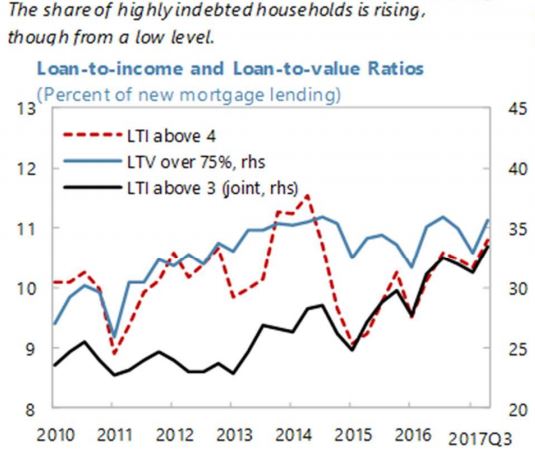
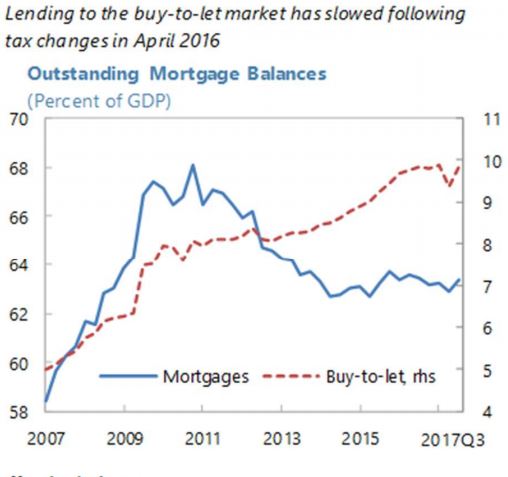
UK’s Housing Market
From the IMF’s latest report on the UK:
“Housing supply. Efforts should continue to boost housing supply, including by easing planning restrictions and reforming property taxes to encourage more efficient use of the housing stock. Increasing supply would support near-term growth, facilitate labor mobility across regions, support financial stability by making homes more affordable, and promote social cohesion by reducing wealth inequality.”
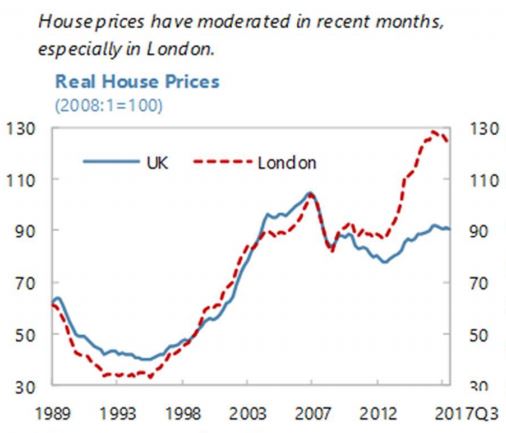
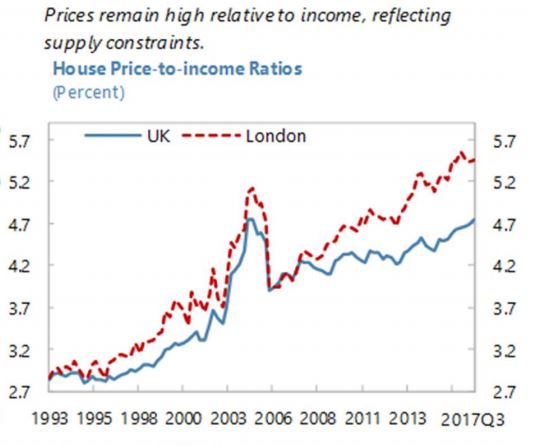
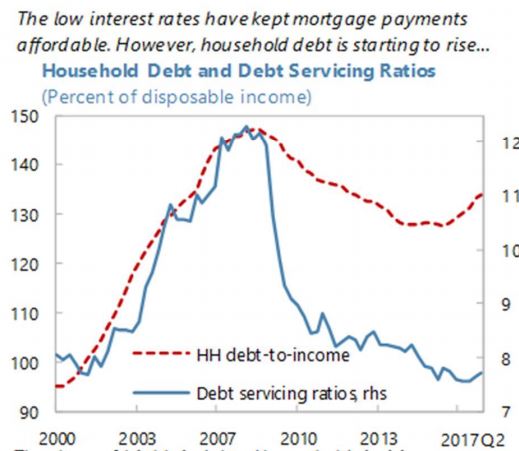
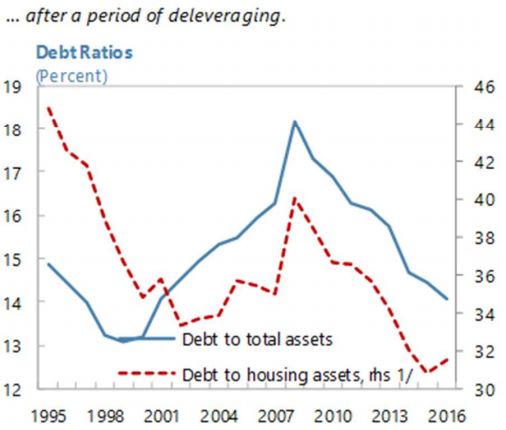
From the IMF’s latest report on the UK:
“Housing supply. Efforts should continue to boost housing supply, including by easing planning restrictions and reforming property taxes to encourage more efficient use of the housing stock. Increasing supply would support near-term growth, facilitate labor mobility across regions, support financial stability by making homes more affordable, and promote social cohesion by reducing wealth inequality.”
Posted by at 10:17 AM
Labels: Global Housing Watch
Subscribe to: Posts