



Tuesday, May 29, 2018
Services Development and Comparative Advantage in Manufacturing
From a new World Bank working paper:
“Most manufacturing activities use inputs from the financial and business services sectors. But these services sectors also compete for resources with manufacturing activities, provoking concerns about de-industrialization—inancial services in industrial countries like the United States and the United Kingdom, and business services in developing countries like India and the Philippines. This paper examines the implications of services development for the export performance of manufacturing sectors. It develops a methodology to quantify the indirect role of services in international trade in goods and constructs new measures of revealed comparative advantage based on domestic value added in gross exports. The paper shows that the development of financial and business services enhances the revealed comparative advantage of manufacturing sectors that use these services intensively but not that of other manufacturing sectors. It also finds that a country can partially overcome the handicap of an underdeveloped domestic services sector by relying more on imported services inputs. Thus, lower services trade barriers in developing countries can help to promote their manufacturing exports.”
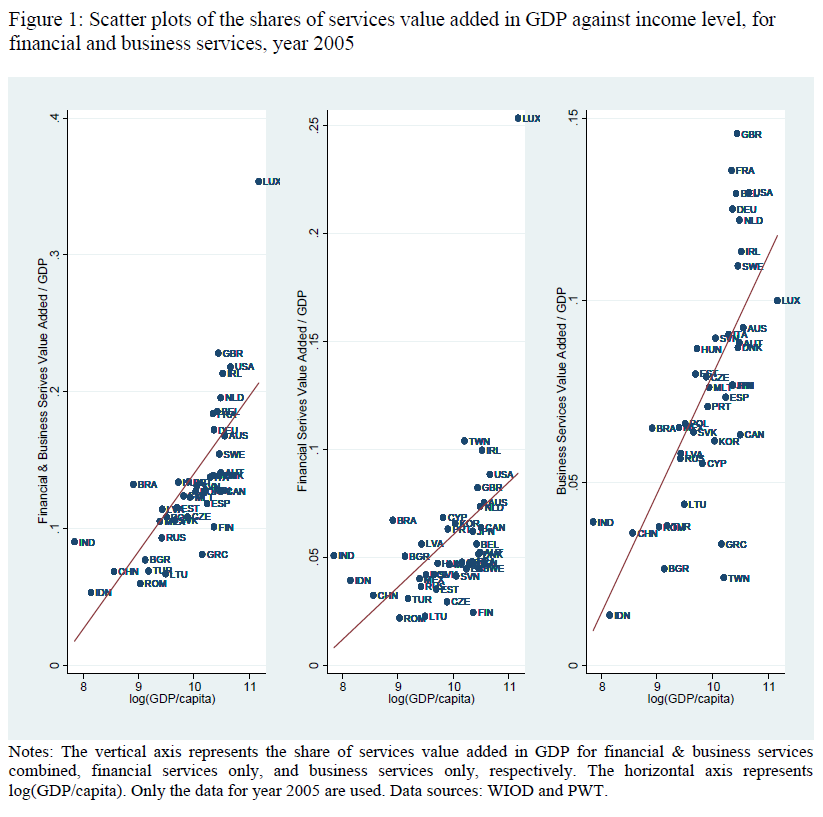
From a new World Bank working paper:
“Most manufacturing activities use inputs from the financial and business services sectors. But these services sectors also compete for resources with manufacturing activities, provoking concerns about de-industrialization—inancial services in industrial countries like the United States and the United Kingdom, and business services in developing countries like India and the Philippines. This paper examines the implications of services development for the export performance of manufacturing sectors.
Posted by at 8:13 AM
Labels: Inclusive Growth
The ‘suprasecular’ stagnation
A new VOXEU post by Paul Schmelzing says that “Trends over recent decades are generally in line with a long-term ‘suprasecular’ trend of declining real rates.”
“[…] even if cyclical forces could now stabilise nominal Treasury rates beyond 3%, central bankers may find that before they have fully returned to normalised balance sheets, ‘suprasecular’ real rate trends will have caught up to them once more. Negative real rates could become a more frequent phenomenon, and indeed constitute a ‘new normal’. Absent geopolitical or natural disaster shocks – which in the past at least temporarily ‘broke’ the trend – unconventional monetary tools may (under this scenario) mature into more permanent features of the international financial system.”
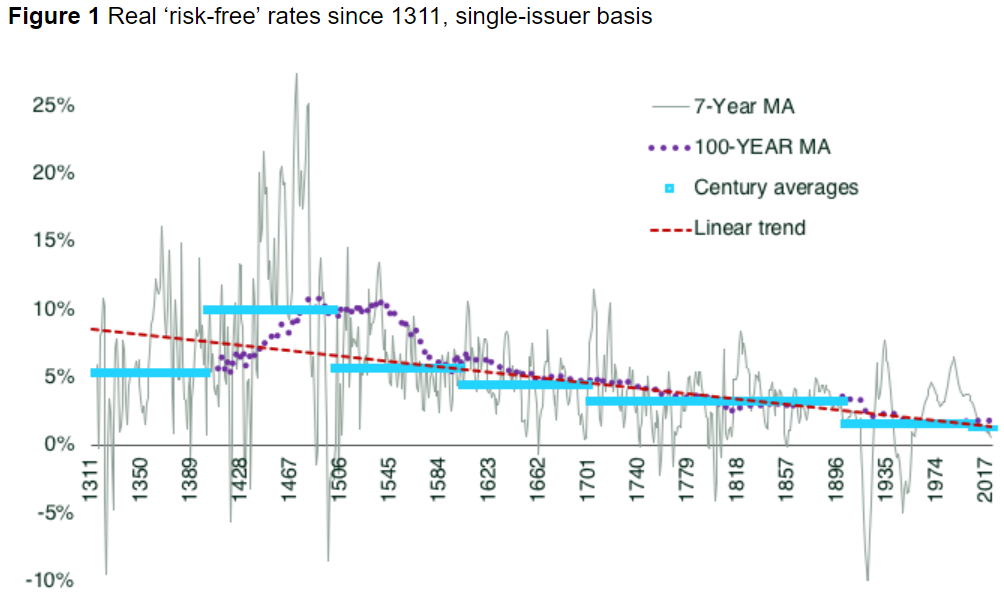
A new VOXEU post by Paul Schmelzing says that “Trends over recent decades are generally in line with a long-term ‘suprasecular’ trend of declining real rates.”
“[…] even if cyclical forces could now stabilise nominal Treasury rates beyond 3%, central bankers may find that before they have fully returned to normalised balance sheets, ‘suprasecular’ real rate trends will have caught up to them once more. Negative real rates could become a more frequent phenomenon,
Posted by at 8:03 AM
Labels: Inclusive Growth, Macro Demystified
Wage Moderation in the Netherlands
The IMF’s latest report on Netherlands says:
“Besides various cyclical factors, rising labor market flexibility may have contributed to the wage moderation in the Netherlands. Like other advanced economies, slower productivity growth and lower expected inflation are important drivers to the wage moderation in the recent years. In addition to that, remaining slack in the labor market also weighed on wage growth. Like many other EA or EU countries, foreign wage growth has been showing strong spillovers to domestic wage development, especially for small open economies with strong trade exposures that strive to safeguard competitiveness. But more specifically to the Netherlands, rising labor market duality/flexibility with higher share of temporary and self-employed workers, may have also contributed to stagnant wage growth. Reforms to harmonize labor market employment contracts in a manner that increases flexibility but also allows greater bargaining power for the more “flexible” employees might allow both greater flexibility and higher wages.”
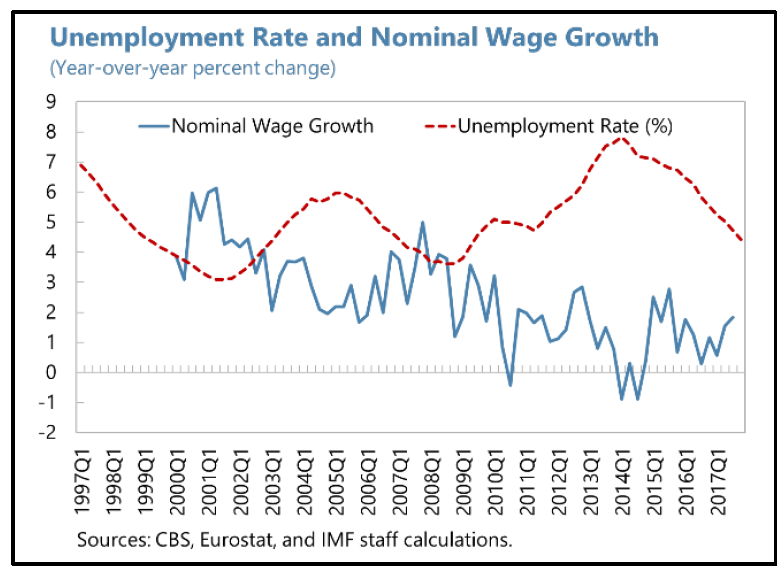
The IMF’s latest report on Netherlands says:
“Besides various cyclical factors, rising labor market flexibility may have contributed to the wage moderation in the Netherlands. Like other advanced economies, slower productivity growth and lower expected inflation are important drivers to the wage moderation in the recent years. In addition to that, remaining slack in the labor market also weighed on wage growth. Like many other EA or EU countries, foreign wage growth has been showing strong spillovers to domestic wage development,
Posted by at 7:45 AM
Labels: Inclusive Growth
Monday, May 28, 2018
The Infrastructure & Real Estate Nexus: Three Case Studies
Global Housing Watch Newsletter: May 2018
This post is written by Arpit Gupta, Stijn Van Nieuwerburgh, Kristen Sosulski, Harry Chernoff, and Sinziana Dorobantu. All at New York University Stern School of Business.
Infrastructure Investment and Real Estate are closely linked. Infrastructure initiatives are catalysts in the economic development process, often with major external benefits that are reflected in the productivity and returns on both physical and human capital and on accelerating growth. Infrastructure can fundamentally alter the economics of real estate investments, on the one hand, while real estate development creates the need for and value of infrastructure. This inter-dependence is well understood by investors, policymakers and academics, and there is a rich body of applied research to draw on. A recent conference took a close look into three recent cases of joint infrastructure real estate dynamics in order to identify many of the key lessons. The cases presented were: The Second Avenue Subway, The Dakota Access Pipeline Project, and the Panama Canal Widening.

Elizabeth Morrison, Vice Dean of Faculty at NYU Stern gives the welcome remarks
Case Study 1: The Second Avenue Subway: Infrastructure and Real Estate Returns in an Urban Context

From Left to Right: Stijn Van Nieuwerburgh, Tim McManus, Dale Hemmerdinger, Daniel Minkowitz, Philip Milstein, Arpit Gupta, Ingo Walter
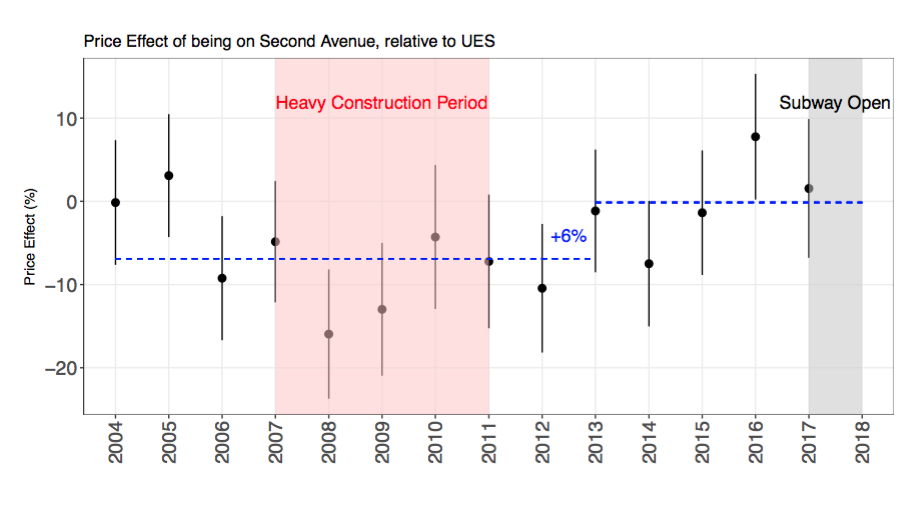
The first panel of the day started with a presentation of new research by Stern Professors Arpit Gupta and Stijn Van Nieuwerburgh on the benefits of the Second Avenue subway extension. They found that the value of residential real estate along the second avenue corridor increased 6 percent after subway completion was assured, and relative to neighboring Lexington and First avenue corridors. This 6 percent gain partly reflects a rebound from substantial declines in real estate values during the heavy construction phase from 2007-2011. The authors calculated that a 6 percent gain corresponds to a US$4.4 billion benefit, which is just about equal to the US$4.5 billion cost of construction.
Arpit Gupta then led a panel discussion with several of the major actors in the case. Philip Milstein (principal at Ogden) owns a large rental building (Normadie Court) on second avenue that pre-dates the Second Ave subway construction, but was nevertheless adversely affected by the subway construction itself and by the decline in foot traffic and retail activity during the heaviest stretch of the construction. Daniel Minkowitz (principal and Mink development) has a new condo building near completion and noted to the benefit of the new subway for his project. He noted changes in clientele and interest in the period after the opening of the second avenue.
The conversation then moved to discussing broader aspects of who benefits from infrastructure, as well as who should pay. Participants discussed value capture: the idea that infrastructure developments could potentially be financed through taxing the incremental value generation on real estate properties near transit stops. Value increases on such properties reflect the capitalized gain of accessibility improvements. Dale Hemmerdinger (principal at ATCO), former MTA head, noted the high costs of subway construction, as well as the role of unions and political economy in driving these costs. He emphasized the ability for the city to do more in improving subway capacity on existing lines, without needing to engage in additional construction. He called on all New York citizens to demand better service and accountability. Tim McManus (senior VP at McKinsey) compared the Second Avenue subway with international projects, particularly in Hong Kong and London, where value capture techniques had been more effective.
Case Study 2: The Dakota Access Pipeline: Cost-Benefit Balance in an Environment-Social Governance (ESG) Context

From Left to Right: Clive Lipshitz, John Kingston, Chad Harrison, Linda Chiarelli, Dave Archambault, Sinziana Dorobantu, Ingo Walter
The conversation in the second panel of the conference highlighted the tensions created by the uneven distribution of cost and benefits associated with the development of large infrastructure and real estate projects. The panel focused specifically on the Dakota Access Pipeline (DAPL), a 1,200-mile 30-inch underground oil pipeline connecting the Bakken fields in North Dakota to a terminal in Patoka, Illinois.
John Kingston of Freightwaves explained why oil shippers and refiners welcomed DAPL’s development, and why pipelines are generally viewed as the best mode of transporting crude oil over long distances. He also suggested, however, that for local communities along pipeline routes, disruptions in construction and operation and the risk of environmental pollution can create serious issues. Dave Archambault, former Chairman of the Standing Rock Sioux Tribe which vehemently opposed DAPL, and Chad Harrison, Executive Director of the Standing Rock Housing Authority, highlighted that the project created only costs and no benefits for the Tribe. The two speakers stressed that the development of DAPL felt like the continuation of a long history of land-takings and infrastructure-related costs that negatively impacted Tribes while creating few tangible benefits.
The conversation then broadened to other kinds of infrastructure projects and to large real estate developments. Clive Lipshitz of Tradewind Interstate Advisors argued that sponsors or developers of major infrastructure or real estate projects have to be aware of all their stakeholders and ideally map them onto a credible risk matrix that captures how each group is affected by – and can affect – the project. Carefully thought-through outreach strategies need to build on an emphatic understanding of concerns and needs, and on efforts to build meaningful interpersonal relationships. Linda Chiarelli, NYU Vice President for Capital Projects and Facilities, built on this point and argued that stakeholder outreach has to come from and involve executives at the highest level, starting with the early stages of a large real estate project.
The panel discussion brought into focus the gains that can be achieved by identifying and anticipating conflicts that may arise in the course of developing major infrastructure and real estate projects with respect to key stakeholders. Smart diagnostics and early and effective engagement at the most senior level can reinforce good project economics by avoiding cost overruns, delays and in some cases termination – all in the context of today’s growing emphasis of Environmental, Social and Governance (ESG) considerations.
Keynote Interview with Stephen Ross, Founder & Chairman of Related Companies

Stephen Ross and Stijn Van Nieuwerburgh
Stephen Ross, founder and chairman of the Related Companies, discussed the Hudson Yards project in conversation with CREFR director Prof. Stijn Van Nieuwerburgh during the lunchtime keynote. Related’s Hudson Yards project, bounded by 30th and 34th streets and between 10th avenue and the West Side Highway is a monumental 20 million square feet, $25 billion project that will create an entirely new neighborhood on Manhattan’s west side. Mayor Bloomberg rezoned the area in 2005 and initially planned to build a stadium as part of New York City’s bid to host the 2012 Olympics. The city spent $4 billion in infrastructure projects, chiefly the extension of the No. 7 subway line, investments that Ross call essential for the viability of the HY project. Related ultimately got the deal in 2008, acquired the site from the MTA, and started construction of a 10-acre platform over the eastern railyard in 2014.
Since then half a dozen major buildings have gone up on top of the platform, most of which will be open by mid-2019. A second phase of the project, with a platform over the western railyard and construction atop is scheduled to be finished by 2026. The “work-live-play” concept will deliver a neighborhood where office, retail, apartments, and entertainment co-exist side-by-side. Relative to an old urban design where residential and business districts are separated in space, this arrangement may economize on commuting trip and reduce the burden on the existing transit system. The neighborhood will reflect the vision of several different architects, contain a new art venue, as well as new 150 feet tall interactive sculpture which Ross hopes will achieve the stature of the Eiffel tower.
The second part of the conversation turned to the challenges NYC and the USA faces in delivering much needed infrastructure investment. Ross emphasized the need for reducing the regulatory burden and reigning in the costs. On the cost side, he highlighted some of the same excesses associated with labor union contracts (over-staffing, excessive pay for overtime) that were discussed in the first panel. Maintaining the U.S. and NYC’s competitive position requires political leadership to recognizes the imperative of investing in infrastructure projects with high long-term rates of return and with accountability to the citizens.
The last part of the conversation turned to two technological trends that promise to affect cities for years to come. Ross believes driverless cars will fundamentally reshape how we organize our cities, with important implications for real estate values and power usage. Artificial intelligence and its repercussions on the labor market will intensify the need for affordable housing. Ross believes that micro-units hold some promise, but that the task is daunting.
Case Study 3: Panama Canal Expansion: Global Logistics and Real Estate Impacts

From Left to Right: Harry Chernoff, Bob Silverman, Mike Landy, Carlos Fabrega, Kristen Sosulski, Stijn Van Nieuwerburgh
The Panama Canal Expansion project and its impact on the real estate market and the global shipping supply chain.
Professors Kristen Sosulski and Harry Chernoff moderated a panel comprised of experts in logistics (Bob Silverman), real estate development (Michael Landy), and the Panama Canal (Carlos Fabrega). The topic of discussion was on the effect of an enlarging the Panama Canal, a waterway connecting the Atlantic and Pacific Oceans, on U.S real estate and the global supply chain.
The Panama Canal expansion is a truly remarkable infrastructure project. Updating the existing Canal, first built in 1914 was no easy feat; it came with huge expense, politics, and litigation. A project costing over US$5.2 billion was necessary to keep Panama relevant.
A country of approximately 4 million people and little in terms of natural resources, the Canal is their natural resource accounting for 30 percent of the country’s GDP. An expanded canal would allow for larger containerships to transit the Canal, translating to more cargo and an expanded revenue stream. The Canal was constrained by the size of its three locks which limited its capacity. Vessels were unable to use the Canal because they were larger than the 4,500 TEUs, the maximum size. By adding wider and deeper third lane to the Canal was the way to service the larger vessels.
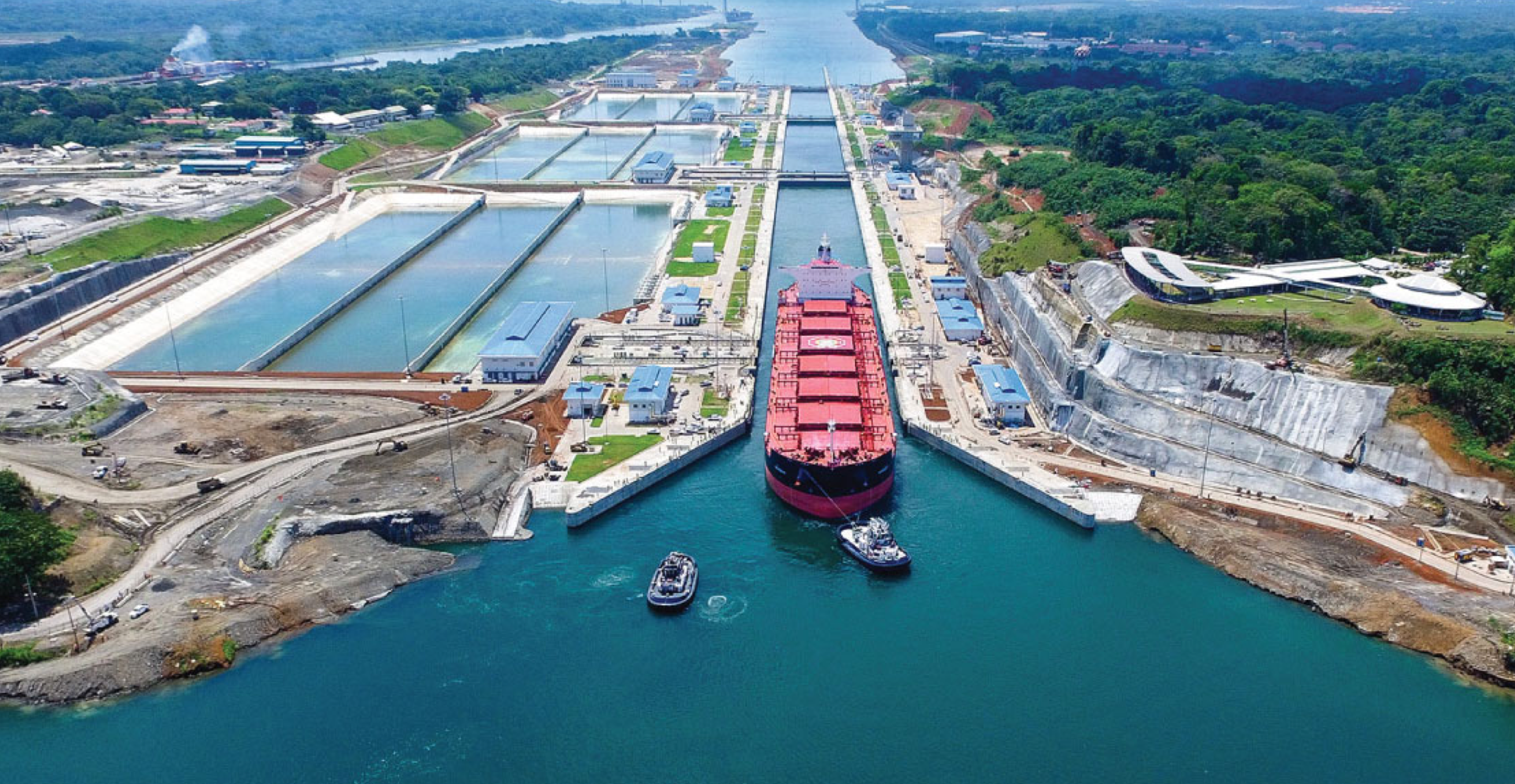
The Panama Canal
The scope of the expansion project was determined by the highest profit user, the containership.
The Panamax containership, 3,400 to 4,500 TEUs, represented the greatest revenue for the Canal. Containerships accounted for 24 percent of ships going across the Canal in 2015, 34 percent of total tonnage, and 48 percent of total revenue. The world fleet of containerships has been moving towards larger vessels (12,000 – 18,000 TEU’s). By 2020, without the expansion, the Panama Canal would only able to service 32 percent of the world’s container vessel fleet. With an expanded canal, Panama Canal could accommodate 80 percent of the world’s containerships by 2020. The third lane expansion was designed to accommodate containerships carrying up to 14,500 TEUs. The cost for these vessels for one transit (approximately 48 miles) is US$1 million or more.
The expanded Canal has been up and running for almost 2 years. This expansion has led to expanded markets and new diversification opportunities for Panama.
While the overall number of transits is not increasing significantly, the amount of cargo transiting the Canal has been. On average, the canal transits 35 to 40 ships per day. With the expanded Canal, the transits have increased marginally by two to three ships per day. There are bigger vessels using the canal some expected and some unexpected. For example, vessels carrying liquefied natural gas have become a new unexpected customer of the Panama Canal. In addition, there’s a huge opportunity to diversify the services offer to users of the Canal such as ship repair, transshipment terminal, logistic park, and pipelines. All these services can use existing real estate around the canal (over 185 acres) previously under U.S control until the end of 1999.
The impact on U.S. real estate has been significant.
From the U.S. point of view, the impact of the promise of an expanded Canal was enormous. North American ports have been spending billions of dollars to prepare for these larger ships. The infrastructure upgrades include new equipment such as larger cranes, deeper berths, and redesign of container port layouts to accommodate ships carrying two to three times more per cargo than before. In the port of New York/New Jersey, the Bayonne bridge was raised to allow 12,000 TEU and larger ships to pass through to one of the larger consumer market gateways in the world. These megaships carry 45 percent of the world’s cargo and will be able to take shorter routes creating savings in time and fuel by using the canal.
Competition among the east coast ports and between the east and west coast gateways has exploded. Over the past ten years, container traffic has been shifting from the West Coast to the East Coast ports. The market share of TEU volume in 2016 is close to an even 50-50 split between both ports, a seven percent change from the 2006 division of 57 percent (West) versus 43 percent (East coast).
Inland ports have also been developing, as larger ships make less stops (or port calls). Storage centers for e-commerce business, big box retailers, and warehouse tenants have expanded or relocated to more strategic positions in the global supply chain, closer to the major east coast hubs. The effect on the global shipping supply chain has led to new investment, major cost savings for the end-users and the creation of innovative opportunities and services for the logistics and real estate development industry. Overall, the creation of the Canal expansion infrastructure has caused substantial increases in real estate values in the ports themselves, and in surrounding areas.
Global Housing Watch Newsletter: May 2018
This post is written by Arpit Gupta, Stijn Van Nieuwerburgh, Kristen Sosulski, Harry Chernoff, and Sinziana Dorobantu. All at New York University Stern School of Business.
Infrastructure Investment and Real Estate are closely linked. Infrastructure initiatives are catalysts in the economic development process, often with major external benefits that are reflected in the productivity and returns on both physical and human capital and on accelerating growth.
Posted by at 6:01 PM
Labels: Global Housing Watch
A Look at Housing Affordability: From a Design Perspective
Global Housing Watch Newsletter: May 2018
This post is written by Laura Wainer. She is a doctoral student at the MIT’s Department of Urban Studies and Planning, and Housing+ conference curator.
The provision of housing is a global challenge with an urgent need for innovation. Design is typically not an approach that comes to mind when one refers to housing affordability, whether at the scale of the house, neighborhood, or city. In its third biennial theme, “Housing+“, the MIT Norman B. Leventhal Center for Advanced Urbanism (LCAU) at the Massachusetts Institute of Technology explored this global phenomenon through the lens of interdisciplinary and multi-scalar approaches.
The structure of the biennial leaded by Adèle Naudé Santos was inspired in a “learning by doing” process. In association with local and national governments, philanthropic institutions, and international agencies, the LCAU hosted seven workshops where faculty and graduate students of Architecture and Urban Planning focused on different challenges of affordable housing provision in Africa, Asia and Latin America. The biennale culminated in an international exhibition and conference hosted on May 3 to 4 at the Media Lab, MIT.
The Housing+ conference included 33 practitioners and academics from all over the globe, who explored the interpretations of the “+,” extending the design dialogue beyond the scale of the housing unit. Panels investigated the ways in which housing design interacts with aspects of community building, large scale planning, public space, construction industry and infrastructure. The following summary presents the key topics of the two-day discussion.
Revisiting the housing challenge…
Most of the participants of the conference emphasized on the transformed nature of the current housing deficit. They argued that today, the most significant housing deficit, in both emerging economies and developed countries such as the U.S., is qualitative rather than quantitative. For the last twenty years, national governments have delivered subsidized houses for the lowest income populations at massive scale. Contrary to performing poorly, governments in Africa, Asia and Latin America had proved great efficiency in this housing delivery scheme. For instance, summing up the figures of the countries of the MIT workshops (Brazil, Colombia, Guayana, India, Peru, Rwanda), the national governments delivered about 4,609,600 housing solutions for the lowest income populations.[1]
However, this sudden, extraordinarily simultaneous expansion of low-income national housing subsidy programs, targeted to both the demand and supply, shows that despite the different political, institutional, demographic and economic contexts, their housing policies produce the same industrial-like neighborhoods located on the outskirts of cities. We also see a homogenization of house design and construction technologies that look similarly inadequate. Empirical research in Mexico, South Africa and Colombia demonstrates that families often abandon these houses looking for proximity to jobs, education centers and health care institutions.
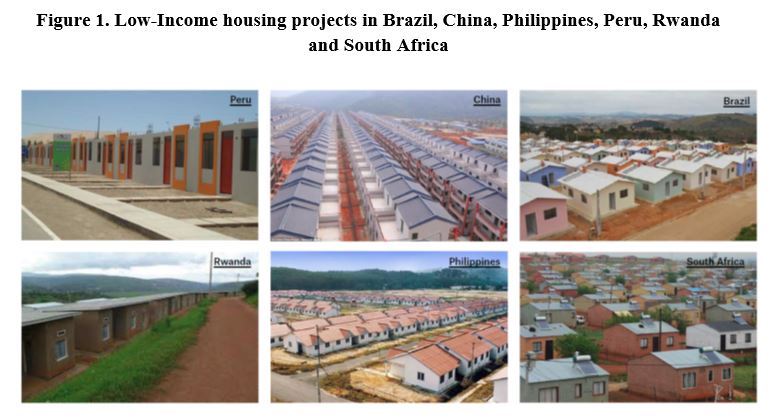
Nora Libertun, a housing market expert at the Inter-American Development Bank, presented her research about the housing developers’ decision making for building in peripheral areas in Latin America. She said that one of the biggest challenges for housing policy is how to shift from a rationale of ‘economies of scale’ production to an environment where building affordable housing in inner cities is an attractive investment opportunity. Diane Jones, Program Director for Landscape Architecture at the University of Texas, studies the relationship between housing and infrastructure access in the U.S., specifically the phenomenon of “transit desserts.” Jones argues that this scenario is not as different in the U.S., and that the qualitative housing deficit is “a hidden problem” in suburban areas of the country.
These industrial-like housing landscapes are re-shaping the urban form of cities and have ecological implications at a broader territorial scale. Kazi Ashraf, Director of the Bengal Institute, argued that the unprecedented scale of development in Bangladesh is transforming the natural landscapes of the country with significant impacts on food production and climate change.
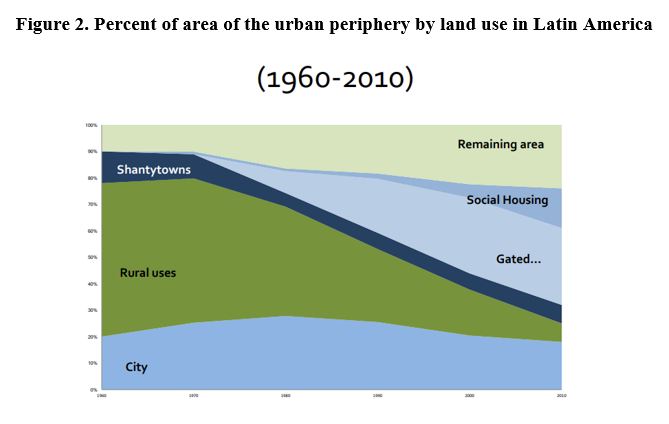
Source: Presentation by Nora Libertun
Scaling-up innovation and the limits of standardization…
A great deal of the H+ conference consisted of sharing international and U.S cases that successfully interconnected design, financial and social innovation. Practitioners discussed about the challenge of scaling-up micro practices to systemic housing solutions. Andy Bolnick, Director of Ikhayalami, presented the “re-blocking system,” an in site upgrading, participative design intervention that couples innovative shelter and infrastructural solutions with the spatial reconfiguration of informal settlement layouts. She claimed that scaling-up is not just matter of quantitative replication but also how innovations are adopted by the public sector. While Slum Dwellers International was capable of spreading the re-blocking system among the grassroots federation, the city of Cape Town presented several difficulties to incorporate re-blocking in their informal settlements upgrading policy. James Shen, founding director of Beijing-based People’s Architecture Office, presented the Courtyard House Plugin, a prefab system that efficiently upgrades and expands homes without demolition or relocating inhabitants. He explained that their approach is to think of scaling-up in terms of customization –instead of standardization– by creating flexible solutions that focus on systems rather than an architectural output.
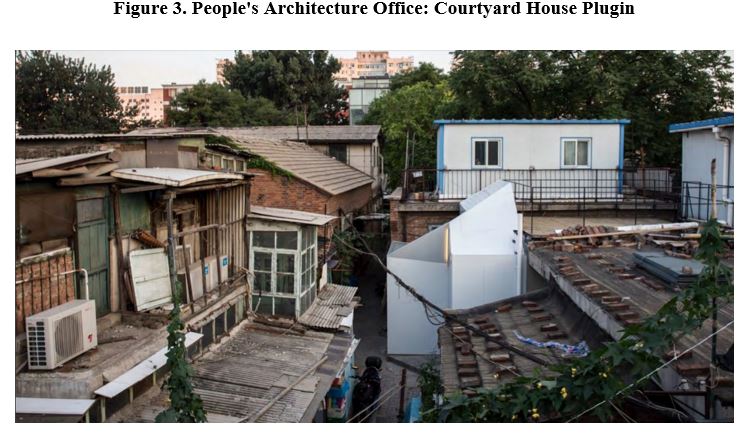
Source: Presentation by James Shen
Associate professor in the MIT Department of Architecture Larry Sass told the audience that to build prototypes is easy but to scale them up to systemic housing solutions represents one of the most difficult challenges in the construction industry. He and Anupama Kundoo highlighted the importance of “contextual technologies.” Reducing costs often relates to standardization, mass production, industrialization, but in a post-industrial era reducing costs must pair to be flexible enough to adapt innovation into different contexts and expressions. From the same perspective, Nathalie de Vries director and co-founder of MVRDV, and Christoph Heinemann from the Institute for Applied Urbanism in Berlin, showed examples of “suited standards,” a combination between participatory processes and the architect’s ability to transform users’ decision making into standardized design solutions. Successful but not mainstream, these approaches should be a core agenda of the design education in the future. Andrew Freear, Professor at Auburn University Rural Studio, and his team consider participatory design as a quintessential part of low-cost housing innovation in Alabama.
Scaling up innovation and successful micro experiences is not simple. The intrinsic relationship between innovation and informality stresses two main challenges. On the one hand, how can the public and private sectors incorporate innovative solutions that many times come from pushing the boundaries of legality within policy schemes and market strategies. On the other hand, low income users are often the ones who must deal with innovation’s burden. Local governments’ lack of capacity to coordinate successful cases into a territorial strategy may represent a liability at the aggregate scale. As Sheela Patel, founder and Director of the Society for Promotion of Area Resource Centres in India, claimed: “poor people do not want to live in islands that are pilot renders of founders, philanthropic institutions, and creative architects, where each project is isolated, is different and has its own autonomous logic.”
Housing policy or housing politics?
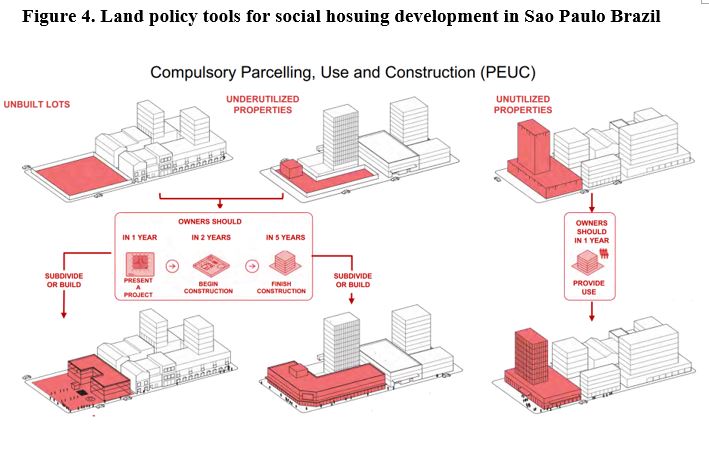
Unfortunately, rarely public expenditures are structured in a way that will improve housing affordability and result in more inclusive cities. Indeed, in many places the programs could have long-term detrimental effects. Moreover, as the experience of many countries presented in this conference indicates, once an approach has taken root it is very difficult to change. Nora Libertun and Fernando De Mello Franco, former Secretary of Urban Development of the Municipality of São Paulo, said that the greatest challenges for housing policy is how to promote the private sector to build in the inner city and how permeate tacit political agreements between large scale developers and governments. De Mello Franco argued that the politics of land access has transformed good policies in bad results, like the infamous “Minha Casa Minha Vida.”
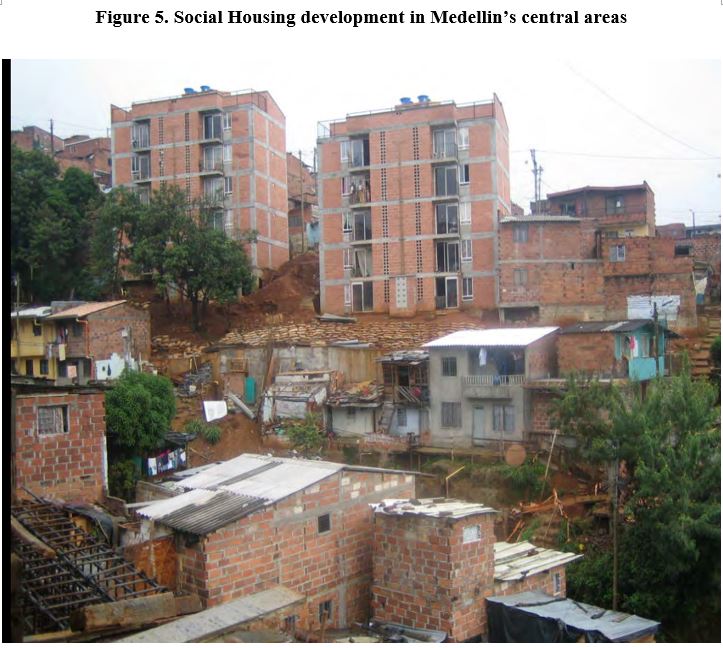
Alejandro Echeverri, director of URBAM, presented his insights about Medellin’s successful redevelopment, which included the construction of thousands of well-located, affordable housing units in the city. For Echeverri, Medellin’s success relied on a “political momentum,” that the city is not experiencing today. He asked, how can non-governmental actors interested in social justice create governance conditions for reducing inequality in our cities? Echeverri, Libertun, De Mello and housing expert Robert Buckley also questioned whether the housing agenda is a matter of social justice or political agreements with large scale developers and the construction industry. In this line, housing expert professor Lawrence Vale asked: what affordable housing should afford? And Steve Weir, from Habitat for Humanity claimed that integrated solutions for systemic change should include multi-scalar and multi-sectorial approaches that include public, private, civil society, and also households.
Source: Presentation by Alejandro Echeverri
Better data, not just more data…
Focusing on qualitative aspects of housing implies revisiting how we measure housing deficit and monitor the impacts of interventions in the short and long term. The new UN Sustainable Development Goals and Habitat 3 called for increased attention to improve measures of urban issues and housing. However, many speakers at the H+ conference highlighted that more data is not necessarily better data. Like the attempt to construct new cities without addressing the fundamental problems besetting the existing ones, attempts to create new urban indicators fail to appreciate just how weak existing data is. Without better data, accountability for public expenditures cannot be achieved. Diane Jones showed how aggregate transport data is built on racial biases in the U.S., MIT professor James Wescoat asked how we can develop metrics to measure and evaluate quality of life, Anupama Kundoo spoke about the challenges of measuring design impacts in both affordability and quality of life.
The limits of data and how we monitor the impacts of housing policy also speaks to a timing question: When is the appropriate time to measure the outcomes of a housing intervention? Philip Yang, founder of URBEM, showed award-winning affordable housing projects in Brazil that ended up in decayed, failed experiences for the families in the long term. Thus, better data implies to think of which metrics can be more sensible to context, geographies and culture; and at the same time, which metrics we should standardize to understand the scope of the housing challenge at a global scale in a market that responds to both local and international dynamics.
[1] Data Source: Cámara de la Construcción Colombiana, Indicadores de Vivienda y Construcción (2017); Congressional Budget Office. Federal Housing Assistance for Low-Income Households (2015); Gopalan, K., & Venkataraman, M. (2015). Affordable housing: Policy and practice in India; Instituto Nacional de Estadística e Informática de Perú, Encuesta Nacional de Programas Presupuestales (2016); Joint Center for Housing Studies, The State of the Nation’s Housing (2017); Ministry of Statistics and Programme Implementation, India. HOUSING – Statistical Year Book India 2016; Ministerio de Vivienda, Construcción y Saneamiento de Peru. Plan Nacional de Vivienda 2006 – 2015 “Vivienda Para Todos.”; Rwandan Housing Authority. Projects (2017)
Global Housing Watch Newsletter: May 2018
This post is written by Laura Wainer. She is a doctoral student at the MIT’s Department of Urban Studies and Planning, and Housing+ conference curator.
The provision of housing is a global challenge with an urgent need for innovation. Design is typically not an approach that comes to mind when one refers to housing affordability,
Posted by at 6:00 PM
Labels: Global Housing Watch
Subscribe to: Posts