



Friday, June 1, 2018
Housing View – June 1, 2018
On cross-country:
- Book: Housing Policy, Wellbeing and Social Development in Asia – Taylor & Francis Group
- Conference: National Housing Conference – Canada Mortgage Housing Corporation
- Southern European housing policies: a legislative regulation perspective – Universidade Autónoma de Lisboa
On the US:
- Leaning Against Housing Prices as Robustly Optimal Monetary Policy – NBER
- Why Don’t House Price Growth and Inflation Move in Tandem? – Federal Reserve Bank of St. Louis
- Help wanted: Home builders need women, immigrants and robots to fill shortage – MarketWatch
- Where the House-Price-to-Income Ratio Is Most Out of Whack – Citylab
- Mortgage Interest Deduction Reform Worked; Sky Isn’t Falling – Cato Institute
- How Student Debt Can Ruin Home Buying Dreams – New York Times
- Quest for Affordable Housing Drives People Away From the Coasts – Pew Charitable Trusts
- Alexandria, Virginia Gets Housing Affordability Wrong – Cato Institute
On other countries:
- [Australia] Seven Charts That Show Why Australia’s Housing Boom Is Ending – Bloomberg
- [Australia] Chinese property investment in Australia plummets – Financial Times
- [Australia] Inquiry into increasing affordable housing supply: Evidence-based principles and strategies for Australian policy and practice – Australian Housing and Urban Research Institute
- [Canada] Determinants of housing prices: evidence from Ontario cities, 2001-2011 – Emerald Insight
- [Canada] Canada’s ‘Unprecedented’ Reliance on Housing Fuels Recession Call – Bloomberg
- [Canada] Bank of Canada Seen on Hold Amid Trade Uncertainty, Housing Slowdown – Wall Street Journal
- [China] China’s Toughest Housing Curbs Test Limits of Speculative Buyers – Bloomberg
- [Hungary] Property prices boom in Budapest – Financial Times
- [Korea] Housing investment, default risk, and expectations: Focusing on the chonsei market in Korea – Regional Science and Urban Economics
- [Netherlands] Amsterdam Bets on Social Housing to Beat Soaring Prices – Bloomberg
- [Rwanda] How can the mismatch in housing supply be addressed? – The New Times
- [South Africa] Cape Town Rocked by Protests as Poor Communities Demand Housing – Bloomberg
- [United Arab Emirates] Why affordability is the new buzzword in Dubai real estate – JLL
- [United Kingdom] Will London Ever Get Affordable Housing? – Bloomberg
- [United Kingdom] UK Housing Review 2018 – UK Housing Review

Photo by Aliis Sinisalu
On cross-country:
- Book: Housing Policy, Wellbeing and Social Development in Asia – Taylor & Francis Group
- Conference: National Housing Conference – Canada Mortgage Housing Corporation
- Southern European housing policies: a legislative regulation perspective – Universidade Autónoma de Lisboa
On the US:
- Leaning Against Housing Prices as Robustly Optimal Monetary Policy – NBER
- Why Don’t House Price Growth and Inflation Move in Tandem?
Posted by at 5:00 AM
Labels: Global Housing Watch
Thursday, May 31, 2018
Finance, the state and innovation
From the Enlightened Economist:
“Yesterday brought the launch of a new and revised edition of Doing Capitalism in the Innovation Economy by William Janeway. Anybody who read the first (2012) edition will recall the theme of the ‘three player game’ – market innovators, speculators and the state – informed by Keynes and Minsky as well as Janeway’s own experience combining an economics PhD with his experience shaping the world of venture capital investment.
The term refers to how the complicated interactions between government, providers of finance and capitalists drive technological innovation and economic growth. The overlapping institutions create an inherently fragile system, the book argues – and also a contingent one. Things can easily turn out differently.
The book starts with a more descriptive first half, including Janeway’s “Cash and Control” approach to investing in new technologies, and also an account of how the three players in the US shaped the computer revolution. This is an admirably clear but nuanced history emphasising the important role of the state – through defense spending in particular – but also the equally vital private sector involvement. I find this sense of the complicated and path dependent interplay far more persuasive than simplistic accounts emphasising either the government or the market.”
Continue reading here.
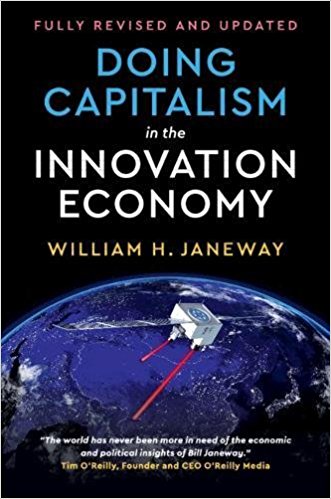
From the Enlightened Economist:
“Yesterday brought the launch of a new and revised edition of Doing Capitalism in the Innovation Economy by William Janeway. Anybody who read the first (2012) edition will recall the theme of the ‘three player game’ – market innovators, speculators and the state – informed by Keynes and Minsky as well as Janeway’s own experience combining an economics PhD with his experience shaping the world of venture capital investment.
Posted by at 11:33 AM
Labels: Macro Demystified
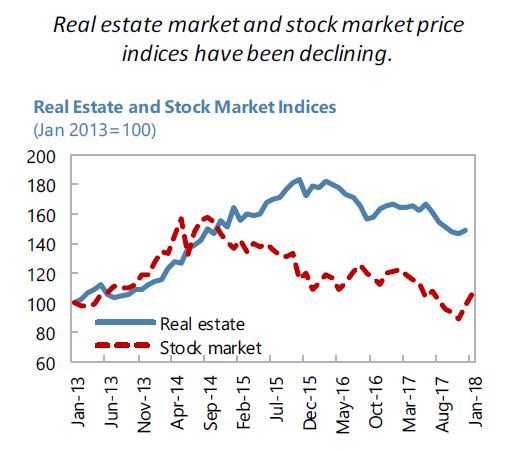
House Prices in Qatar
From the IMF’s latest report on Qatar:
Posted by at 11:27 AM
Labels: Global Housing Watch
Wednesday, May 30, 2018
On the Macroeconomic Consequences of Over-Optimism
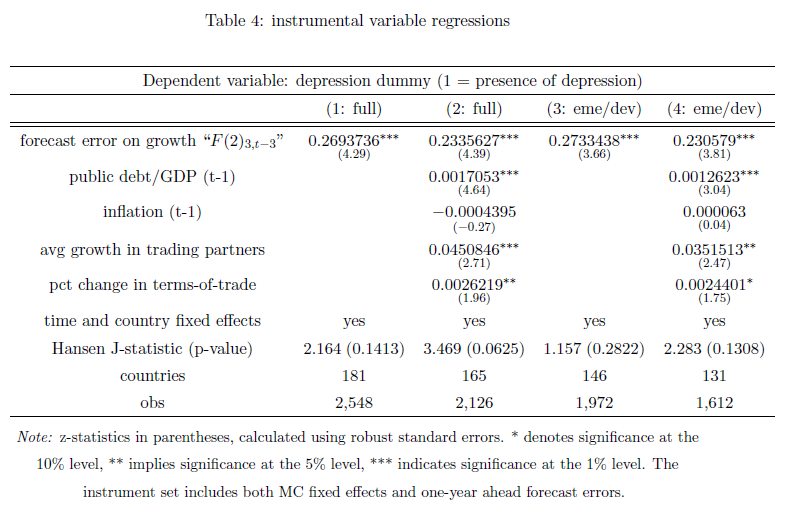
A new IMF working paper finds that “recessions, fiscal problems, as well as Balance of Payment-difficulties are more likely to arise in countries where past growth expectations have been overly optimistic.”
“The mechanism which transforms over-optimism into future crises seems to run through higher debt accumulation: both the public and private sector seem to “celebrate” positive news about the future by borrowing more. If the expected rise in income subsequently fails to materialize, the amount of debt accumulated turns out to be excessive and negative dynamics set in.”
“Our results illustrate the potency of (non-materializing) optimism shocks and underline the importance of basing policy upon realistic (or even cautious) medium-term macroeconomic forecasts. Speci cally, our nding regarding the impact of over-optimism on the incidence of future recessions provides support for existing models in the news/noisetradition, but we are not aware of contributions which model the particular transmission channel that our results point at. Developing such a theoretical model could be an important avenue for future research.”
A new IMF working paper finds that “recessions, fiscal problems, as well as Balance of Payment-difficulties are more likely to arise in countries where past growth expectations have been overly optimistic.”
“The mechanism which transforms over-optimism into future crises seems to run through higher debt accumulation: both the public and private sector seem to “celebrate” positive news about the future by borrowing more. If the expected rise in income subsequently fails to materialize,
Posted by at 7:05 PM
Labels: Forecasting Forum
Forecasting Forum – May 2018
Europe’s future: The value of an institutional economics perspective – VOXEU
Spring 2018 Economic Forecast: Expansion to continue, amid new risks – European Commission
A Brief Analysis of the Central America and the Caribbean Economy – Focus Economics
The yield curve and the stock market: Mind the long run – VOXEU
Expansion to continue amid new risks – VOXEU
Economic Snapshot for the G7 Countries – Focus Economics
Retail Apocalypse Postponed Not Cancelled – Conference Board
Biggest fear for world growth is fear itself as markets fret – Bloomberg Quint
Exchange rate forecasting on a napkin – Unassuming Economist
Europe’s future: The value of an institutional economics perspective – VOXEU
Spring 2018 Economic Forecast: Expansion to continue, amid new risks – European Commission
A Brief Analysis of the Central America and the Caribbean Economy – Focus Economics
The yield curve and the stock market: Mind the long run – VOXEU
Expansion to continue amid new risks – VOXEU
Economic Snapshot for the G7 Countries – Focus Economics
Retail Apocalypse Postponed Not Cancelled – Conference Board
Biggest fear for world growth is fear itself as markets fret – Bloomberg Quint
Exchange rate forecasting on a napkin – Unassuming Economist
Posted by at 10:42 AM
Labels: Forecasting Forum
Subscribe to: Posts