



Friday, July 27, 2018
Housing Market in China
The IMF’s latest report on China says that:
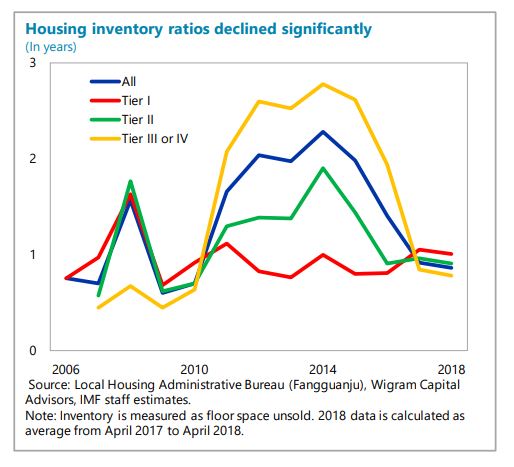
- “Housing inventories in smaller cities declined considerably, due in part to social housing programs. House price growth moderated following the tightening measures since late 2016.”
- “A more sustainable housing market. The government’s “long-term mechanism for housing” appropriately focuses on addressing fundamental supply-demand imbalances. Ensuring long-run sustainability of the housing market requires increasing land supply for residential housing, promoting rental markets, and reducing the reliance of local governments on land sales. De-emphasizing growth targets would allow housing investment to be driven by long-run fundamentals, rather than the need to manage economic cycles. Staff’s projection indicates that residential investment, a key growth engine over the last decade, will decline as a share of GDP over the medium term as household income and consumption growth moderates.”
The IMF’s latest report on China says that:
- “Housing inventories in smaller cities declined considerably, due in part to social housing programs. House price growth moderated following the tightening measures since late 2016.”
- “A more sustainable housing market. The government’s “long-term mechanism for housing” appropriately focuses on addressing fundamental supply-demand imbalances. Ensuring long-run sustainability of the housing market requires increasing land supply for residential housing,
Posted by at 3:50 PM
Labels: Global Housing Watch
Housing View – July 27, 2018
On the US:
- Gen X rebounds as the only generation to recover the wealth lost after the housing crash – Pew Research Center
- ‘Severe’ housing shortage hits US home sales, lifts prices – Financial Times
- Airbnb pulled out every trick to stop NYC from curbing rentals – CNET
- The Millionaire’s Mortgage – Slate
- How Washington could actually make housing more affordable – CNN
- When Black Lawmakers Get Elected, Zoning Decisions Change – CityLab
On other countries:
- [China] Stabilizing China’s Housing Market – VoxChina
- [United Kingdom] Millennials must fight for their right to housing – Financial Times
- [United Kingdom] London house prices are falling, and remain as unaffordable as ever – Quartz

Photo by Aliis Sinisalu
On the US:
- Gen X rebounds as the only generation to recover the wealth lost after the housing crash – Pew Research Center
- ‘Severe’ housing shortage hits US home sales, lifts prices – Financial Times
- Airbnb pulled out every trick to stop NYC from curbing rentals – CNET
- The Millionaire’s Mortgage – Slate
- How Washington could actually make housing more affordable – CNN
- When Black Lawmakers Get Elected,
Posted by at 5:00 AM
Labels: Global Housing Watch
Thursday, July 26, 2018
Housing Market in Slovak Republic
The latest IMF’s report on Slovak Republic says that:
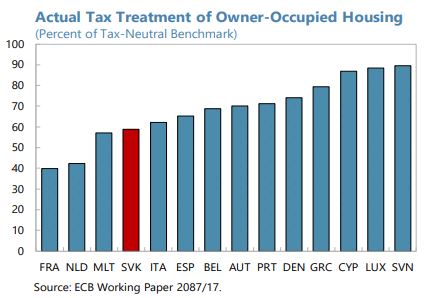
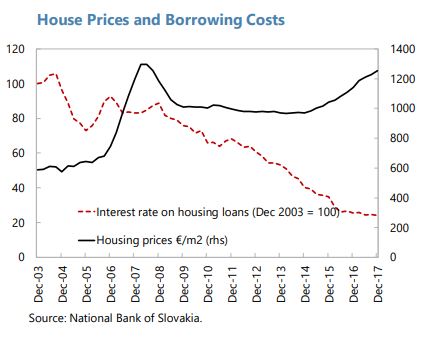
“To complement macroprudential policy efforts, consideration could be given to reducing tax subsidies for owner-occupied housing (…). Staff’s analysis shows that the tax on owner-occupied housing in Slovakia is just 58 percent of the tax-neutral benchmark indicating sizable subsidies consisting of untaxed capital gains and exemption of imputed rent. In Slovakia, main residences are exempt from capital gains tax after 2 years of tenure, which contributes to tax subsidy. The average subsidy on untaxed capital gains could be reduced from the current level of 18 percent to bring it in line with the EU average of 13 percent. In addition, there are also direct subsidies for home ownership for individuals under the age of 35.”

The latest IMF’s report on Slovak Republic says that:
“To complement macroprudential policy efforts, consideration could be given to reducing tax subsidies for owner-occupied housing (…). Staff’s analysis shows that the tax on owner-occupied housing in Slovakia is just 58 percent of the tax-neutral benchmark indicating sizable subsidies consisting of untaxed capital gains and exemption of imputed rent. In Slovakia, main residences are exempt from capital gains tax after 2 years of tenure,
Posted by at 5:25 PM
Labels: Global Housing Watch
House Prices in Peru
The IMF’s latest report on Peru says that:
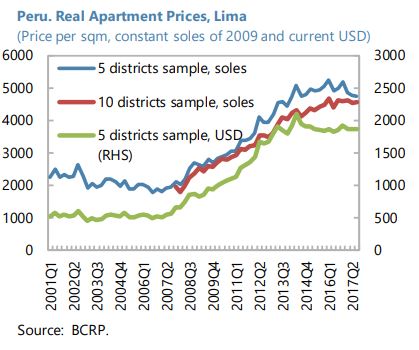
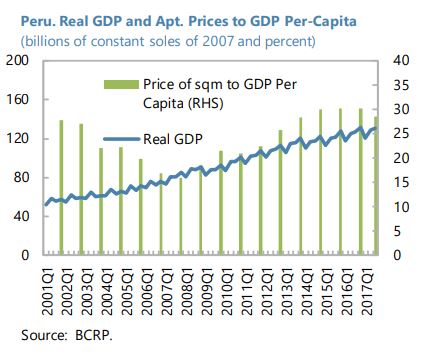
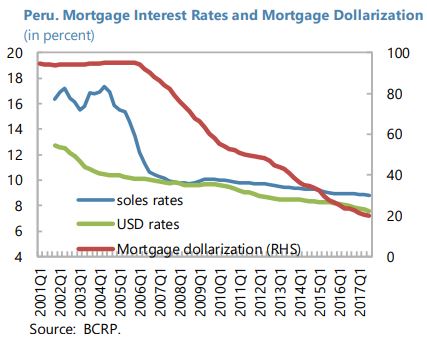
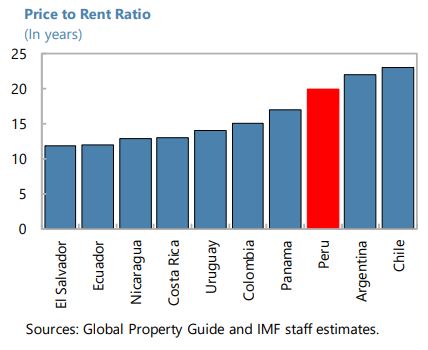
“Housing prices have stabilized and cross-country indicators on balance do not suggest a misalignment, although careful monitoring is warranted. Regional comparators show that Peru’s property market is still in line with the rest of the region. Although indicators of the price-to rent ratio show Peru relatively high in the distribution of Latin American countries, the absolute value of this indicator does not appear excessive. In addition, cross-country indicators of housing prices place Peru in the bottom-half of the price distribution of a broader sample of countries. Nevertheless, property price indices in Peru only reflect the capital, Lima.”


The IMF’s latest report on Peru says that:
“Housing prices have stabilized and cross-country indicators on balance do not suggest a misalignment, although careful monitoring is warranted. Regional comparators show that Peru’s property market is still in line with the rest of the region. Although indicators of the price-to rent ratio show Peru relatively high in the distribution of Latin American countries, the absolute value of this indicator does not appear excessive.
Posted by at 5:16 PM
Labels: Global Housing Watch
Fundamental Drivers of House Prices in Advanced Economies
An IMF working paper by Nan Geng says that:
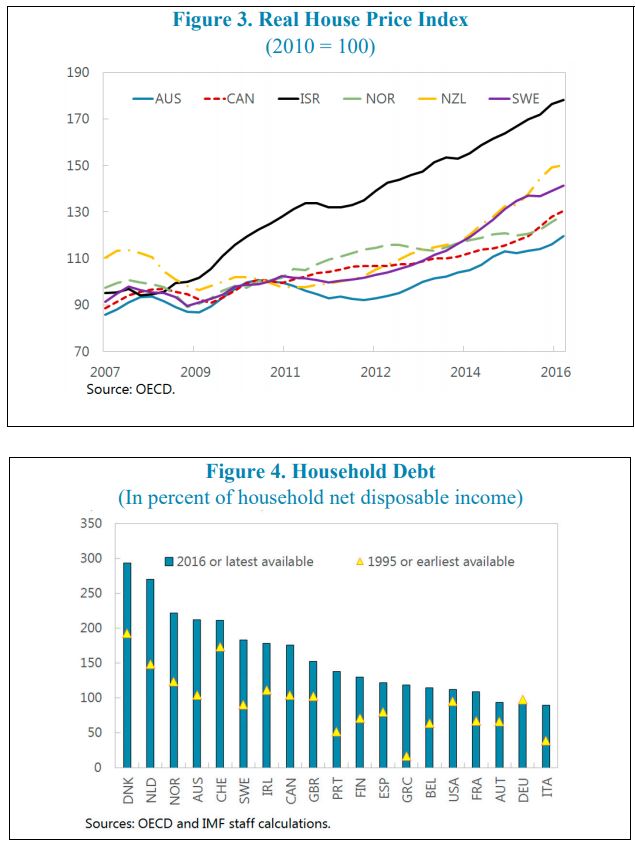
“Assessing the sustainability of house price developments has become an integral part of macro-financial surveillance. Many AEs have experienced a remarkable run-up in their national housing markets in the past two decades and in some cases house prices have remained strong in recent years. Understanding housing price developments and monitoring the extent to which house prices deviate from levels supported by long-run fundamental factors are important for assessing risks to financial and macroeconomic stability.
This paper models house prices on a cross-country basis seeking insights on deviations from sustainable valuations. Based on standard theory, it selects a small set of supply and demand fundamental drivers of house prices to model long-run equilibrium house prices in 20 AEs in the OECD. The novel feature of the model is the incorporation of policy, institutional, and structural factors—i.e. tax incentives for home ownership, rent controls, and the long-run supply responsiveness of housing construction. The estimated long-run relationship broadly captures trends in housing prices since the early 1990s. Hence, the uptrend in real housing prices largely reflects fundamentals, especially rising real disposable incomes. On average, the overvaluation of housing prices on current fundamentals is modest, but there are significant variations in the estimated valuation gaps across our sample.
Policy, institutional, and structural factors are found to be important determinants of long-run equilibrium house prices. The impact of shocks to the traditional demand and supply factors on long-run house prices varies significantly across countries depending on policies and structural factors. In particular, more generous tax relief, stricter rent control, and below-average long-run supply responsiveness are found to drive up house prices.
In this regard, structural reforms in the housing market should be considered alongside macroprudential instruments. Structural reforms can over time improve housing affordability, thereby reducing debt accumulation and enhancing financial stability. These structural reforms include, but are not limited to, reforms to raise the long-run elasticity of housing supply, phasing out rent control, and reducing tax incentives for home ownership and debt financing. Such instruments may complement and support the more commonly used macroprudential tools such as limits on loan-to-value ratios, as the impact of reforms on supply and demand fundamentals may shape longer-term expectations in the housing market.”
An IMF working paper by Nan Geng says that:
“Assessing the sustainability of house price developments has become an integral part of macro-financial surveillance. Many AEs have experienced a remarkable run-up in their national housing markets in the past two decades and in some cases house prices have remained strong in recent years. Understanding housing price developments and monitoring the extent to which house prices deviate from levels supported by long-run fundamental factors are important for assessing risks to financial and macroeconomic stability.
Posted by at 5:09 PM
Labels: Global Housing Watch
Subscribe to: Posts