



Friday, June 19, 2015
Fiscal Forecasting Follies: Private Sector vs. Government
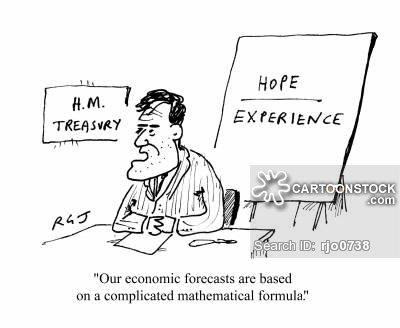
Government forecasts of budget deficits invoke considerable skepticism. A prominent critic is Jeff Frankel who mocks the ‘‘budgetary wishful thinking’’ of many government agencies. Frankel notes that during the 2000s, the U.S. Office of Management and Budget ‘‘turned out optimistic forecasts’’ for eight years in a row; likewise, in 2000, the Greek government projected that its budget deficits would shrink below 2 percent of GDP within a year, a far cry from the outcome of 4–5 percent of GDP. Read the full article…
Posted by at 2:44 PM
Labels: Forecasting Forum
Wednesday, June 10, 2015
Housing Finance and Real-Estate Booms: A Cross-Country Perspective
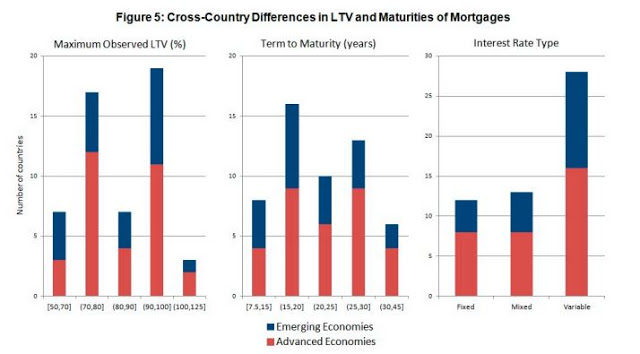
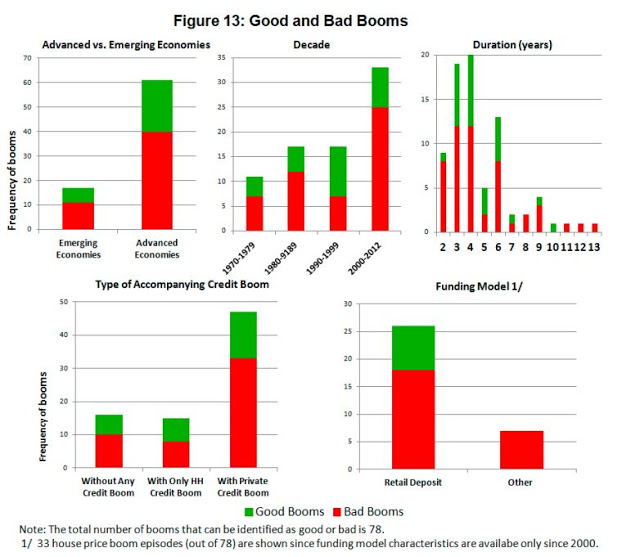
A new IMF paper “analyzes the conflict between the objective of increasing access to housing finance and the dangers associated with fast-growing housing credit. [The paper finds the following:] First, housing finance characteristics vary widely across countries, and several characteristics are correlated with the relative depth of mortgage markets. (…) Second, some of the housing finance characteristics associated with deeper mortgage markets are also associated with increased risks of crisis. (…) Third, in this context, both advanced and emerging markets should avoid relaxing house financing standards in order to achieve deeper mortgage markets, Read the full article…
Posted by at 5:43 PM
Labels: Global Housing Watch
Monday, June 8, 2015
House Prices in Colombia
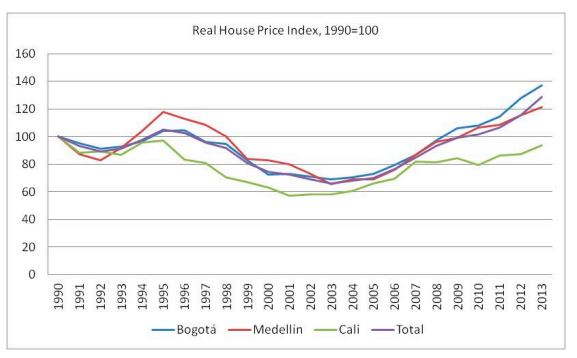
Moreover, the report says that: “The exposure of households and the financial sector to house price developments continues to be low (…). The growth of mortgages in banks’ loan portfolios remains high, although it has slowed marginally to 17.3 percent in real terms in September 2014. Credit risks are, however, mitigated by a low overall stock of mortgages (about 10.5 percent of total loans), conservative provisioning, and lower housing finance interest rates, which are capped to the lowest rates prevailing for other type of lending. Banks have also been moving towards greater amounts of fixed rate funding for mortgages from variable rates, which should strengthen profitability in a low interest rate environment. Moreover, housing loans extended in recent years have shown less deterioration compared to those made in the past. At 17.5 percent of GDP and 28 percent of disposable income, household debt is moderate, and debt service-to-disposable income is low (9 percent). Although slightly higher than a year ago, LTVs remain low (52 percent).”
“Housing prices have increased rapidly in recent years, raising concerns that the market may be undergoing a bubble. House prices have nearly doubled in real terms over the last decade, equally for subsidized and commercial housing, and are almost 40 percent above their peak in 1996. The price hikes have outstripped increases in construction prices and were mainly driven by a rising trend in the capital and two other large cities. However, the increase in housing prices has been less pronounced after adjusted for income levels and the quality of newly constructed housing. Read the full article…
Posted by at 6:56 PM
Labels: Global Housing Watch
House Prices in Luxembourg
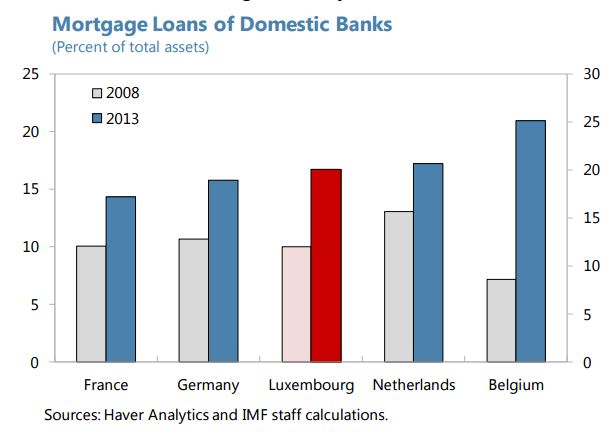
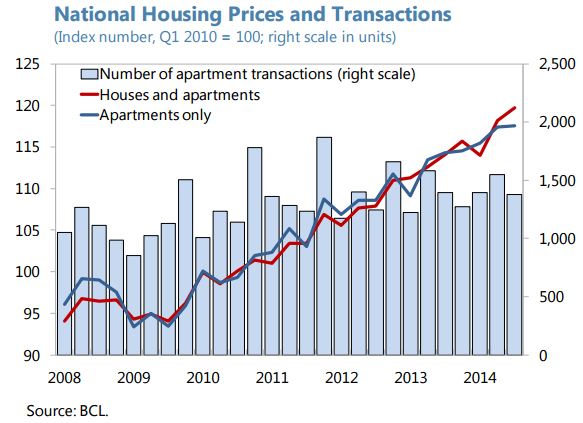
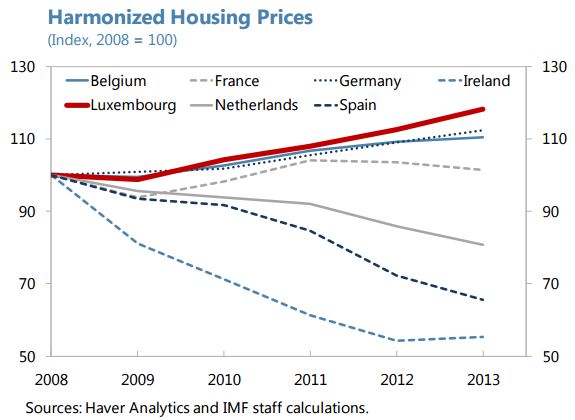
“(…) there is some risk that a protracted period of low interest rates could spawn a credit fueled housing bubble (…). Credit to households has been growing by about 7 percent y/y, yet household debt seems managable (data vary by source). If a bubble were to develop, housing prices could correct, compressing household consumption or triggering defaults and possibly disrupting credit to the economy. With rising housing prices spanning decades, reflecting population and job growth combined with zoning and other rules that constrain supply, Read the full article…
Posted by at 5:54 PM
Labels: Global Housing Watch
Saturday, May 30, 2015
House Prices in Peru
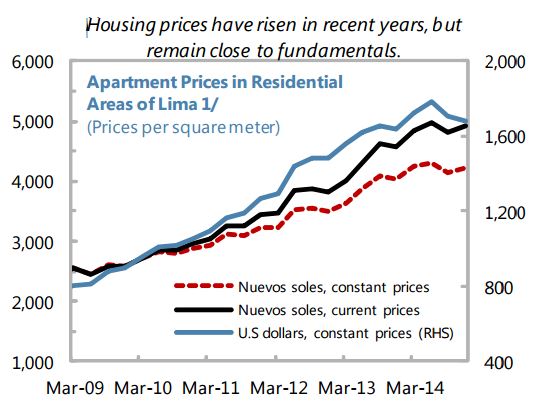
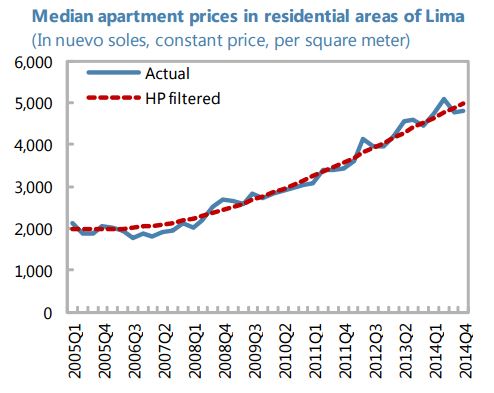
“There are no signs of asset price bubbles. (…) Housing prices continued to increase, but there is no evidence of misalignment from the trend average and the housing price-to-rent ratio was 15 percent―one of the lowest in the region,” according to IMF’s latest report on Peru.
Posted by at 6:34 PM
Labels: Global Housing Watch
Subscribe to: Posts