


Wednesday, July 13, 2016
House Prices in Czech Republic
“A strong housing market is becoming a potential source of risk. Mortgage rates are at historic lows and have boosted new mortgage lending to a 10-year high, thus putting upward pressure on prices. Residential housing offer prices increased by 10 percent y-o-y in 2015:Q4, despite a 16 percent increase in housing starts. A slight deterioration in the affordability-of-housing indicators has taken place recently despite strong wage growth and a continued decline in interest rates. On the other hand, the estimated average apartment price-to-annual wage ratio of 4 is still low by international standards. (…) Going forward, continued vigilance will be needed and, if current trends in the mortgages segment continue in the coming months, the macroprudential stance should be further tightened. Preference should given to targeted measures, including raising risk weights on mortgages, lowering LTV limits with possible regional differentiation, and issuing clear guidance on maximum debt-to income limits”, says IMF’s report on Czech Republic.
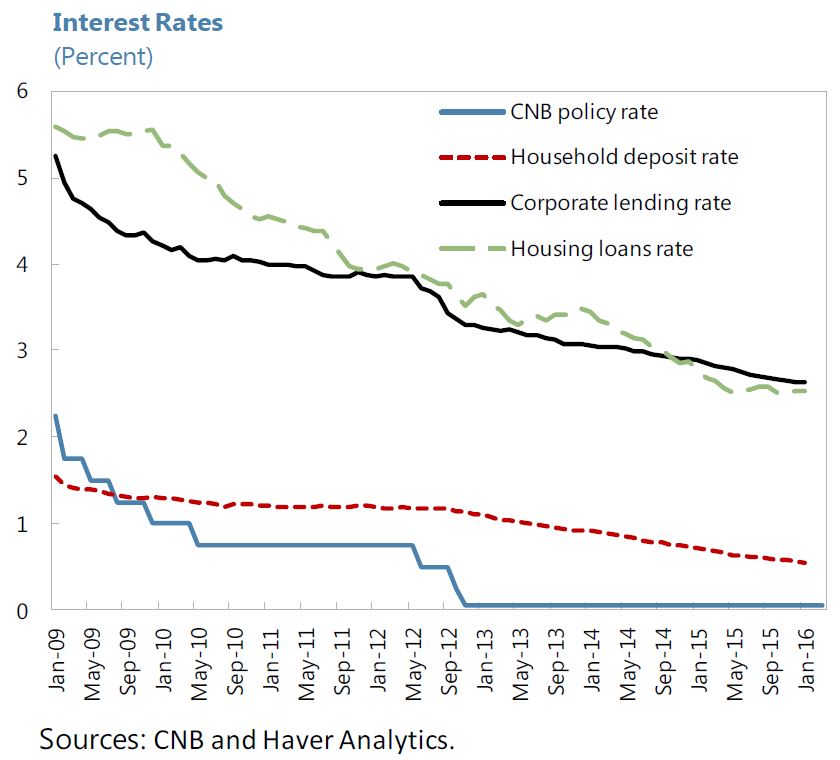
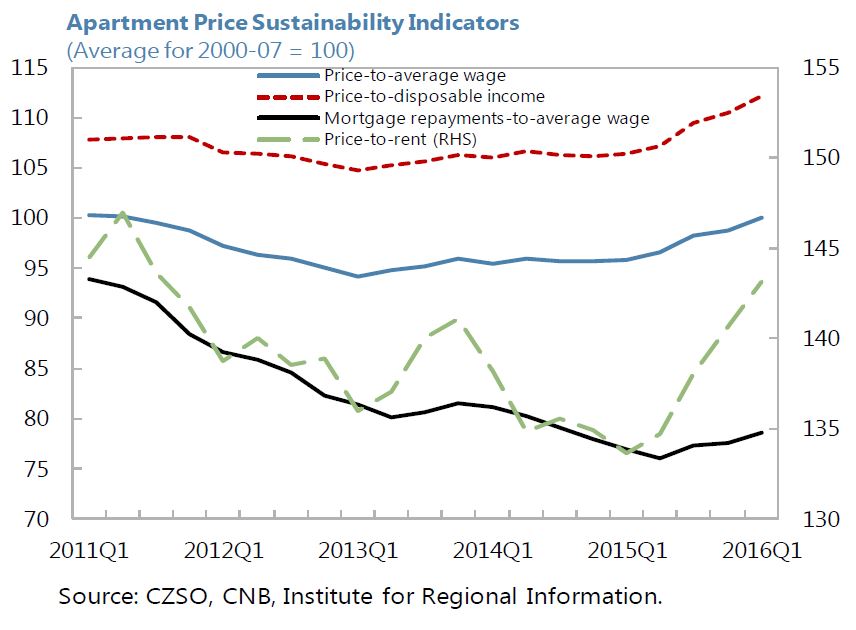
“A strong housing market is becoming a potential source of risk. Mortgage rates are at historic lows and have boosted new mortgage lending to a 10-year high, thus putting upward pressure on prices. Residential housing offer prices increased by 10 percent y-o-y in 2015:Q4, despite a 16 percent increase in housing starts. A slight deterioration in the affordability-of-housing indicators has taken place recently despite strong wage growth and a continued decline in interest rates. On the other hand,
Posted by at 5:00 AM
Labels: Global Housing Watch
Tuesday, July 12, 2016
What Keeps France’s Unemployment High?
Structural unemployment in France has long been elevated, and appears to have edged up further since the crisis. This reflects both demand and supply factors, including: high labor taxes, wage stickiness, a growing skill gap, hysteresis effects from the crisis years, a lengthy period of elevated economic uncertainty, inactivity traps created by the unemployment and welfare benefit systems, and demographic factors that have pushed up the labor force. The cyclical recovery is projected to bring down the unemployment rate only slowly, and the NAIRU is estimated to remain above 8 percent over the medium term. We investigate the structural causes of unemployment and potential remedies.
Reducing labor tax wedges can increase both output and employment. In France, CICE, PRS and other recent reforms have reduced the labor tax wedge for the low-paid workers. The wedge remains elevated for middle and upper incomes, but further reductions would require difficult policy trade-offs given the high level of public spending.
Strictness of employment protection in France is above the EU average. Labor arbitration procedures are cumbersome and allow making an appeal for a very long time after dismissal, which adds to uncertainty for companies. Reforms easing dismissal regulations could have a sizable positive impact on output and employment when economic conditions are strong. Early studies suggest that the proposed “El Khomri” law, by reducing judicial uncertainty around dismissals, could have a moderate impact on overall unemployment, while stimulating hiring on open-ended (CDI) contracts as opposed to temporary recruitment (on CDD).
Efficiency of collective bargaining depends on flexibility at the firm level, the reach of sector-level agreements, and the effectiveness of coordination among agents. IMF research suggests that France can be classified among countries with “low trust” and “some coordination”, which entails poor unemployment outcome. In France, trade unions play a leading role in collective negotiations even though membership is low. The El Khomri law would extend the scope for firm-level collective agreements.
While the replacement rate of unemployment benefits in France is broadly in line with other countries, eligibility criteria are relatively lax, with rapid qualification and accumulation of benefit rights, and weak job search requirements. Moreover, specificities of the benefit formula create incentives for alternating between ultra-short contracts and unemployment periods.
The ratio of minimum to median wage in France is among the highest in the OECD, which may adversely affect job market chances for the young, the low-skilled, and the long-term unemployed. Its automatic annual adjustment can contribute to wage stickiness.
A detailed analysis by my IMF colleague Nicoletta Batini.
Structural unemployment in France has long been elevated, and appears to have edged up further since the crisis. This reflects both demand and supply factors, including: high labor taxes, wage stickiness, a growing skill gap, hysteresis effects from the crisis years, a lengthy period of elevated economic uncertainty, inactivity traps created by the unemployment and welfare benefit systems, and demographic factors that have pushed up the labor force.
Posted by at 12:28 PM
Labels: Inclusive Growth
Monday, July 11, 2016
House Prices in Norway
“High and rising house prices and household debt in Norway pose important macro-financial stability risks. Real house prices have risen more than 80 percent in Norway since 2000. Currently, house prices are estimated to be 40 percent overvalued (…) The authorities have introduced a number of measures targeted at the housing market in recent years. (…) Empirical evidence suggests that LTV limits and mortgage risk weights can have significant effects on the growth of mortgage credit and house prices. (…) Results based on a DSGE model suggest that tightening macroprudential measures can reduce household debt ratios with relatively little impact on consumption over the medium-term. (…) Systemic risks from overvalued house prices and high household debt levels suggest that macroprudential policy measures could be tightened further. Addressing structural factors contributing to high household debt and house prices, such as mortgage interest tax deductibility, would reinforce the impact of macroprudential policy measures”, according to the IMF’s report on Norway. See a separate note here on macroprudential policies.
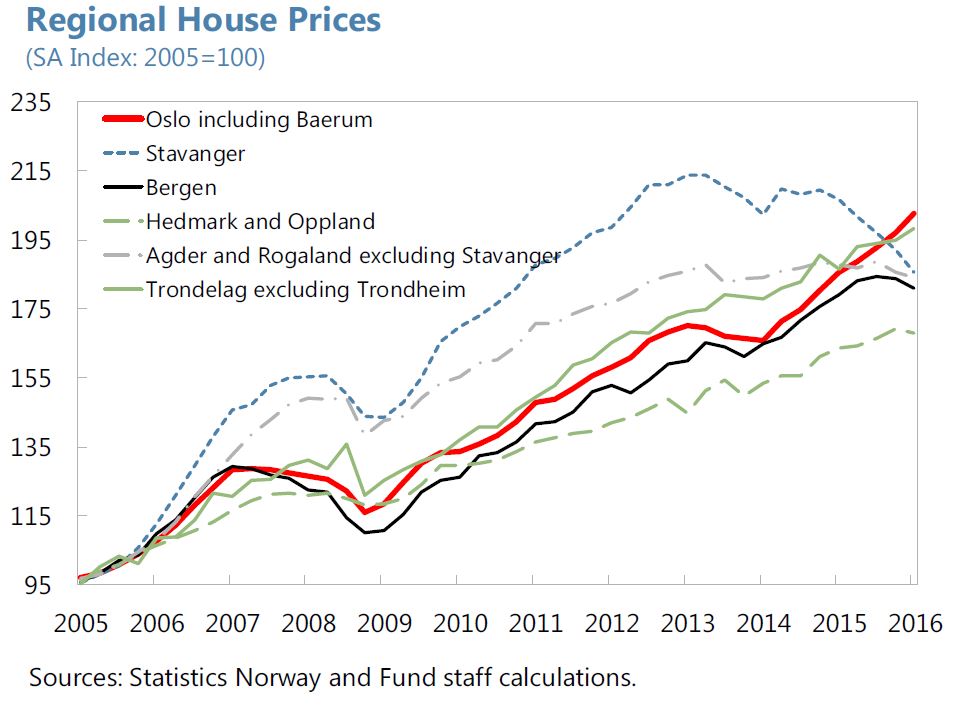
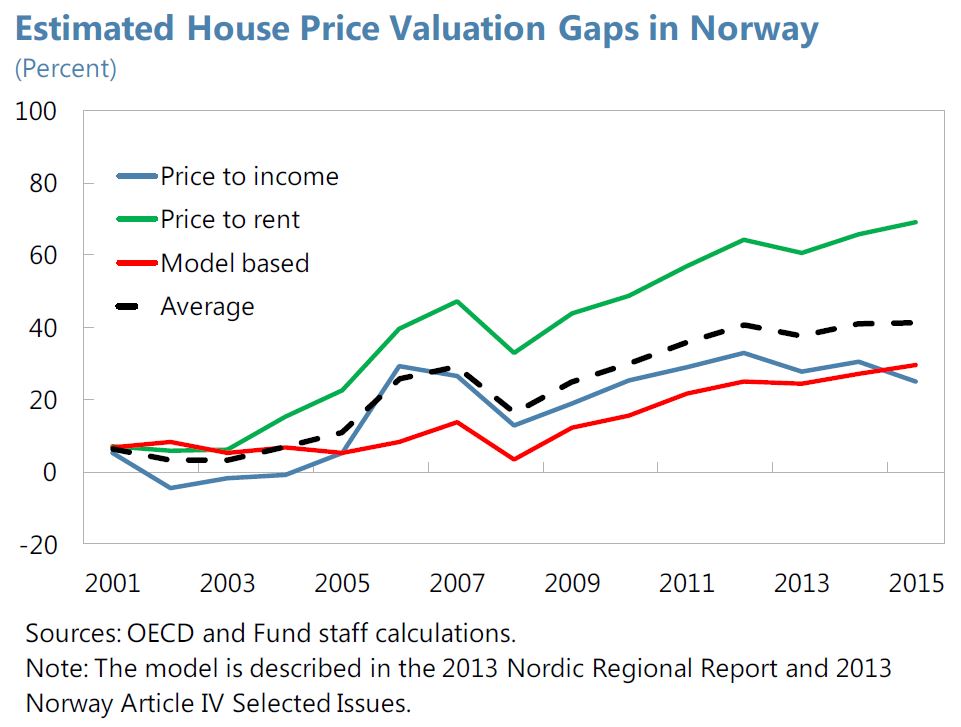
“High and rising house prices and household debt in Norway pose important macro-financial stability risks. Real house prices have risen more than 80 percent in Norway since 2000. Currently, house prices are estimated to be 40 percent overvalued (…) The authorities have introduced a number of measures targeted at the housing market in recent years. (…) Empirical evidence suggests that LTV limits and mortgage risk weights can have significant effects on the growth of mortgage credit and house prices.
Posted by at 5:00 AM
Labels: Global Housing Watch
Saturday, July 9, 2016
Female Labor Force Participation in Poland
An IMF report notes: “Poland is facing a rapidly aging population, which is expected to weigh on public finances and economic growth. Yet, there is an important underutilized source of qualified labor—Poland’s women. Women in Poland are on average just as educated as men and have a longer potential working lifespan. Nonetheless, female labor force participation is low relative to that for men and low relative to that in many other European countries. Unlocking this valuable source of growth would require leveling the playing field between men and women in the workplace, including by providing high quality affordable childcare for young children, removing tax disincentives for the second earner in a family, and allowing the retirement age to increase as envisaged by the 2013 reforms. For Poland to unleash its full economic potential, it needs to embrace the vital contribution that women can make to its economy.”
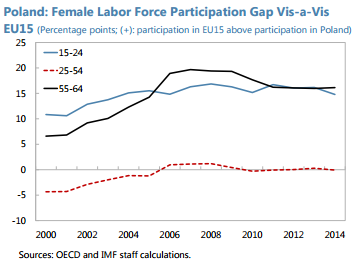
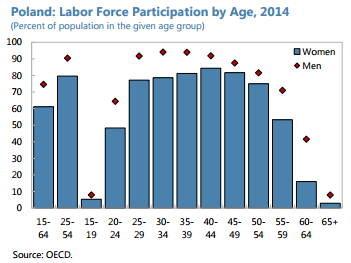
An IMF report notes: “Poland is facing a rapidly aging population, which is expected to weigh on public finances and economic growth. Yet, there is an important underutilized source of qualified labor—Poland’s women. Women in Poland are on average just as educated as men and have a longer potential working lifespan. Nonetheless, female labor force participation is low relative to that for men and low relative to that in many other European countries.
Posted by at 6:26 AM
Labels: Inclusive Growth
Friday, July 8, 2016
OPEC’s Strategic Actions and the 2014 Oil Price Crash
A new IMF working paper notes: “In November 2014, OPEC announced a new strategy geared towards improving its market share. Oil-market analysts interpreted this as an attempt to squeeze higher-cost producers including US shale oil out of the market. Over the next year, crude oil prices crashed, with large repercussions for the global economy. We present a simple equilibrium model that explains the fundamental market factors that can rationalize such a “regime switch” by OPEC. These include: (i) the growth of US shale oil production; (ii) the slowdown of global oil demand; (iii) reduced cohesiveness of the OPEC cartel; (iv) production ramp-ups in other non-OPEC countries. We show that these qualitative predictions are broadly consistent with oil market developments during 2014-15. The model is calibrated to oil market data; it predicts accommodation up to 2014 and a market-share strategy thereafter, and explains large oil-price swings as well as realistically high levels of OPEC output.”
A new IMF working paper notes: “In November 2014, OPEC announced a new strategy geared towards improving its market share. Oil-market analysts interpreted this as an attempt to squeeze higher-cost producers including US shale oil out of the market. Over the next year, crude oil prices crashed, with large repercussions for the global economy. We present a simple equilibrium model that explains the fundamental market factors that can rationalize such a “regime switch”
Posted by at 6:06 AM
Labels: Energy & Climate Change
Subscribe to: Posts