
Monday, January 16, 2017
IMF WEO Forecasts: A Shifting Economic Landscape
The latest World Economic Outlook (WEO) Update says that: “After a lackluster outturn in 2016, economic activity is projected to pick up pace in 2017 and 2018, especially in emerging market and developing economies. However, there is a wide dispersion of possible outcomes around the projections, given uncertainty surrounding the policy stance of the incoming U.S. administration and its global ramifications. The assumptions underpinning the forecast should be more specific by the time of the April 2017 World Economic Outlook, as more clarity emerges on U.S. policies and their implications for the global economy.”
Continue reading here.
The latest World Economic Outlook (WEO) Update says that: “After a lackluster outturn in 2016, economic activity is projected to pick up pace in 2017 and 2018, especially in emerging market and developing economies. However, there is a wide dispersion of possible outcomes around the projections, given uncertainty surrounding the policy stance of the incoming U.S. administration and its global ramifications. The assumptions underpinning the forecast should be more specific by the time of the April 2017 World Economic Outlook,
Posted by at 8:50 PM
Labels: Forecasting Forum
An Economy for the 99%
According to a new report by Oxfam: “Eight men own the same wealth as the 3.6 billion people who make up the poorest half of humanity [The 8 men are Bill Gates, Amancio Ortega, Warren Buffet, Carlos Slim, Jeff Bezos, Mark Zuckerberg, Larry Ellison, and Michael Bloomberg] (…). Oxfam’s report, ‘An economy for the 99 percent’, shows that the gap between rich and poor is far greater than had been feared. It details how big business and the super-rich are fuelling the inequality crisis by dodging taxes, driving down wages and using their power to influence politics. It calls for a fundamental change in the way we manage our economies so that they work for all people, and not just a fortunate few. New and better data on the distribution of global wealth – particularly in India and China – indicates that the poorest half of the world has less wealth than had been previously thought. Had this new data been available last year, it would have shown that nine billionaires owned the same wealth as the poorest half of the planet, and not 62, as Oxfam calculated at the time.” See the press release here.
According to a new report by Oxfam: “Eight men own the same wealth as the 3.6 billion people who make up the poorest half of humanity [The 8 men are Bill Gates, Amancio Ortega, Warren Buffet, Carlos Slim, Jeff Bezos, Mark Zuckerberg, Larry Ellison, and Michael Bloomberg] (…). Oxfam’s report, ‘An economy for the 99 percent’, shows that the gap between rich and poor is far greater than had been feared.
Posted by at 5:48 AM
Labels: Inclusive Growth
Thursday, January 12, 2017
IMF Executive Board Discusses Macroeconomic Prospects and Challenges in LIDCs
From the IMF Executive Board Discussion:
The sharp realignment of global commodity prices has been a major setback for commodity-exporting LIDCs, while generally benefitting others. As a result, growth prospects have become increasingly divergent.
In an era of subdued commodity prices, prospects for commodity exporters are heavily influenced by how successfully they can implement policies to confront high fiscal deficits, reduced foreign reserves, and elevated economic and financial stress.
The quantity, quality and accessibility of infrastructure in LIDCs is considerably lower than in other economies and enhancing the role of the private sector in its delivery is a priority for many.
Continue reading here.
From the IMF Executive Board Discussion:
The sharp realignment of global commodity prices has been a major setback for commodity-exporting LIDCs, while generally benefitting others. As a result, growth prospects have become increasingly divergent.
In an era of subdued commodity prices, prospects for commodity exporters are heavily influenced by how successfully they can implement policies to confront high fiscal deficits, reduced foreign reserves, and elevated economic and financial stress.
The quantity,
Posted by at 12:19 PM
Labels: Inclusive Growth
Decoupling of Emissions and GDP: Now you see it, now you don’t
There are conflicting claims about whether emissions growth and GDP growth have decoupled. My presentation today shows that some of this debate is due to a failure to distinguish cycles from trends: there is an Environmental Okun’s Law (a cyclical relationship between emissions and GDP) which often obscures the Environmental Kuznets Curve (the trend relationship between emissions and GDP).
My ongoing work casts relationships between emissions and economic growth in much simpler terms than is typically done in the climate change literature. My co-authors and I use the trend and cycle decomposition that is familiar to most economists, particularly macroeconomists. We then show that the cyclical relationship between emissions and real GDP—akin to an Okun’s Law, in the terminology of macroeconomists—obscures the trend relationship—the Kuznets Curve that is the focus of many papers in the climate change literature. Once the cyclical relationship is stripped away, the trends do show some evidence of decoupling in the richer nations, particularly in Europe.
We then apply the framework to take into account the effects of international trade. That is, we distinguish between production-based and consumption-based emissions. This makes a big difference to the results. Specifically, the evidence for decoupling among the top emitting countries gets much weaker, including for many countries in Europe.
There are conflicting claims about whether emissions growth and GDP growth have decoupled. My presentation today shows that some of this debate is due to a failure to distinguish cycles from trends: there is an Environmental Okun’s Law (a cyclical relationship between emissions and GDP) which often obscures the Environmental Kuznets Curve (the trend relationship between emissions and GDP).
My ongoing work casts relationships between emissions and economic growth in much simpler terms than is typically done in the climate change literature.
Posted by at 10:32 AM
Labels: Energy & Climate Change, Macro Demystified
Wednesday, January 11, 2017
Inclusive Growth and the IMF
In recent years, the IMF has put on its plate several issues that appear to go beyond its ‘bread and butter’ focus on fiscal and monetary policies. These issues include: employment & migration; gender; inequality; corruption; financial inclusion; climate change. Why has the institution done so? The answer is simple: they have become critical to the IMF’s mission. These issues directly affect economic performance and stability in many countries, and thus fall under the IMF’s mandate.
Is there a unifying framework for all these new issues? There is and it can be summarized in two words: Inclusive Growth. Both words are important. We do want growth. Understanding the sources of productivity and long-run growth, and which structural policies will deliver them, thus remains an important part of the IMF’s agenda. So when we talk about inclusive growth, we are not advocating as role models either the former Soviet Union or present day North Korea—those are examples of ‘inclusive misery,’ not inclusive growth.
We want growth but we also want to make sure:
- that people have jobs – this is the basis for people to feel included in society and to have a sense of dignity. (IMF Management set up a “Jobs & Growth” working group to emphasize the importance of this work.)
- that women and men have equal opportunities to participate in the economy—hence our focus on gender;
- that the poor and the middle class share in the prosperity of a country—hence the work on inequality and shared prosperity;
- that, as happens for instance when countries discover natural resources, wealth is not captured by a few—this is why we worry about corruption and governance
- that there is financial inclusion—which makes a difference in investment, food security and health outcomes;
- that growth is shared just not among this generation but with future generations— hence our work on building resilience to climate change and natural disasters.
In short, a common thread through all our initiatives is that they seek to promote inclusion. What we are after is strong growth but one that is broadly shared, where major segments of society feel they have had an opportunity to make a better life for themselves.
These are not just fancy words. We are putting these ideas into action in our work.
Continue reading here.
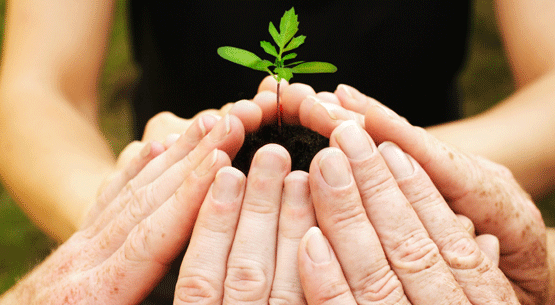
In recent years, the IMF has put on its plate several issues that appear to go beyond its ‘bread and butter’ focus on fiscal and monetary policies. These issues include: employment & migration; gender; inequality; corruption; financial inclusion; climate change. Why has the institution done so? The answer is simple: they have become critical to the IMF’s mission. These issues directly affect economic performance and stability in many countries, and thus fall under the IMF’s mandate.
Posted by at 9:28 AM
Labels: Inclusive Growth
Subscribe to: Posts