



Tuesday, July 3, 2018
Revamping inflation targeting in New Zealand 30 years after its inception
A new IMF country report reviews the backdrop to the revamping of the inflation targeting framework in New Zealand. It says that “The Phase One of the Review of the Reserve Bank Act can be regarded as a next step in the gradual evolution of inflation targeting in New Zealand. The new PTA, with its qualitative description of the employment objective, can be regarded as a refinement in the current practice of inflation targeting. The flexible inflation targeting regime was successful in terms of stabilizing output and inflation while maintaining price stability. Recent episodes of inflation undershooting the target serve as an example of uncertainty on the real-time assessment of slack in the economy. The explicit dual mandate will require some changes in the communication of the central bank, including on maximum sustainable employment.”

A new IMF country report reviews the backdrop to the revamping of the inflation targeting framework in New Zealand. It says that “The Phase One of the Review of the Reserve Bank Act can be regarded as a next step in the gradual evolution of inflation targeting in New Zealand. The new PTA, with its qualitative description of the employment objective, can be regarded as a refinement in the current practice of inflation targeting.
Posted by at 7:38 PM
Labels: Inclusive Growth
Monday, July 2, 2018
Can the Income-Expenditure Discrepancy Improve Forecasts?
A new paper finds that “Gross domestic income and gross domestic product—GDI and GDP—measure aggregate economic activity using income and expenditure data, respectively. Discrepancies between the initial estimates of quarterly growth rates for these two measures appear to have some predictive power for subsequent GDP revisions. However, this power has weakened considerably since 2011. Similarly, the first revision to GDP growth has less predictive power in forecasting subsequent revisions since 2011. One possible explanation is that evolving data collection and estimation methods have helped improve initial GDP and GDI estimates.”
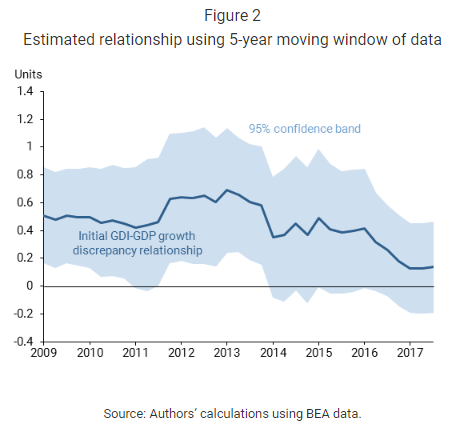
A new paper finds that “Gross domestic income and gross domestic product—GDI and GDP—measure aggregate economic activity using income and expenditure data, respectively. Discrepancies between the initial estimates of quarterly growth rates for these two measures appear to have some predictive power for subsequent GDP revisions. However, this power has weakened considerably since 2011. Similarly, the first revision to GDP growth has less predictive power in forecasting subsequent revisions since 2011. One possible explanation is that evolving data collection and estimation methods have helped improve initial GDP and GDI estimates.”
Posted by at 9:14 AM
Labels: Forecasting Forum
Saturday, June 30, 2018
Housing: Is This Time Different?
The IMF’s latest report on Ireland says that:
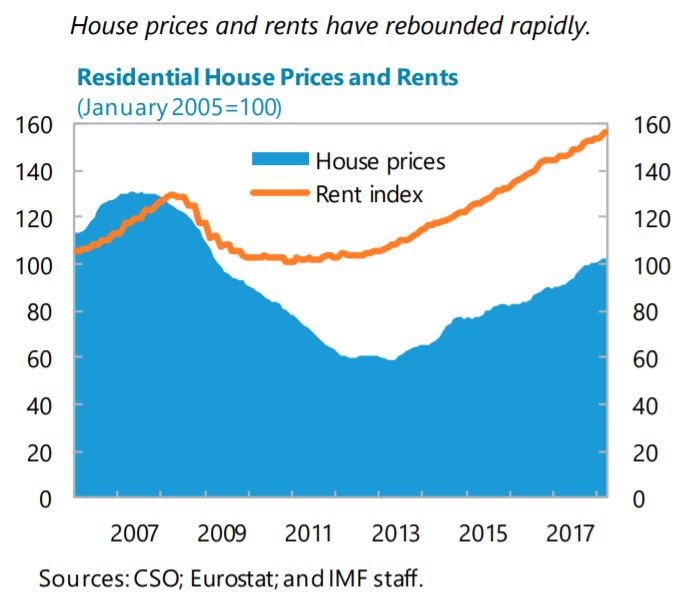
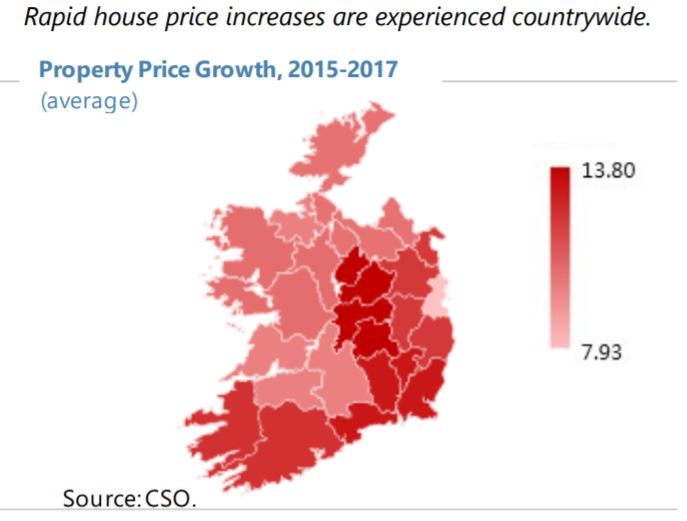
“As in the run-up to the crisis, the ongoing strong economic momentum is accompanied by a surge in house prices and rents. While house prices remain well below the pre-crisis peak, they have rebounded rapidly in Dublin and other regions, posting an average annual increase of 13 percent in March 2018. Rents have also increased at a strong pace (6 percent as of
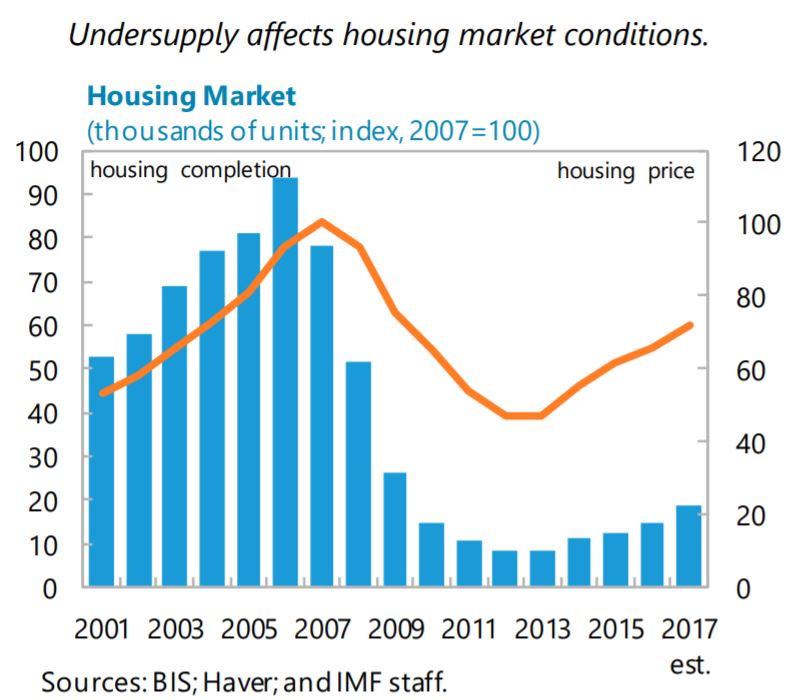
end-2017) and surpassed their pre-crisis level.Unlike in the pre-crisis period, house prices are fueled by a persistent supply shortfall
rather than by bank credit. Housing demand has recovered strongly, reflecting improved labor market conditions, rising incomes, and low interest rates. While mortgage drawdowns and approvals have rapidly increased, albeit from a low base, cash transactions remain relevant. In contrast, the recovery of the housing supply has been modest so far, with house completions falling well below the estimated underlying demand of about 35,000 units per year. The government has taken several measures to help boost supply (…) but these will need time to have an impact. High building costs, impaired balance sheets of construction firms and related funding difficulties, skill shortages, and land hoarding are the main factors holding back supply. In CRE properties, high yield attracted strong investment, largely from abroad, alleviating financing constraints and resulting in a fast supply response. Returns have moderated to levels seen in peers, after years of strong gains.While house prices are not significantly misaligned, upward pressure is likely to persist. Price-to-income and priceto-rent ratios have steadily increased in recent years and at present modestly exceed their historical average. However, model-based measures of house price misalignment are inconclusive with results ranging from some undervaluation (ESRI) to a small overvaluation. While there are no immediate financial stability risks, house price pressures are likely to persist over the medium term, as demand growth is
likely to continue outpacing supply.Against this backdrop, priority should be given to encourage greater housing supply…
- Further rationalization of building regulations and streamlining of planning processes are warranted. Reducing skills gaps in the construction sector, advancing debt restructuring of distressed but viable construction firms, and improving their access to financing are important.
- The establishment of the HBFI could provide funding to financially-constrained developers in the residential market. However, its operations should remain limited in scope and subject to prudent risk assessment and a robust governance structure to minimize risks for public finances.
- With a view to reducing land hoarding, a vacant site levy will be introduced starting
in 2019. However, its rates (3 percent for the first year and 7 percent for the second
and subsequent years) should be reviewed periodically to ensure effectiveness.
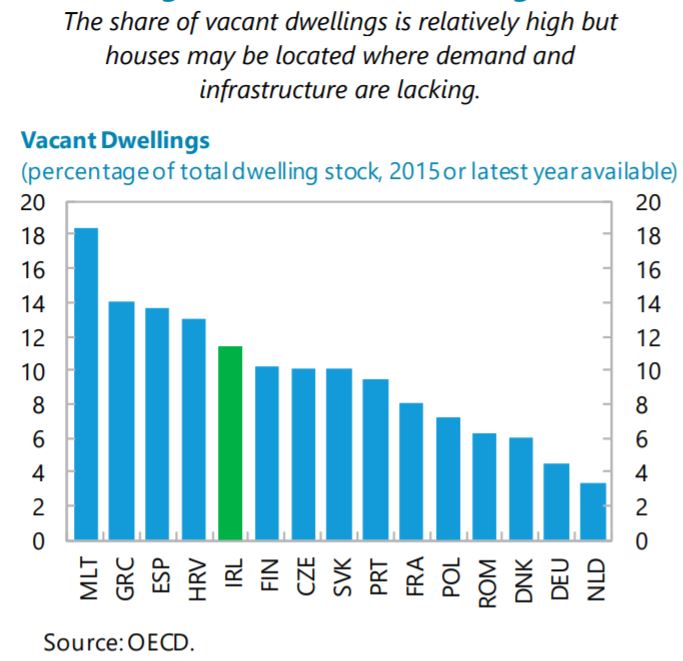
- Ireland has a high level of vacant dwellings, though some of these are located in areas
where demand and infrastructure are lacking. To ensure greater utilization of these properties, consideration should be given to adopting a surcharge on properties that are left vacant in urban areas.…while enacted measures to improve housing affordability need to be well-targeted…
- There is scope to re-calibrate the Help-to-Buy scheme, which provides a tax rebate of up to 5 percent of the dwelling purchase price for FTBs, towards low-income households.
- Measures to stabilize rents should be reconsidered as they may deter new construction. Support for disadvantaged groups should be delivered through well-targeted housing assistance payments.
- The RIHL, which provides loans to risky borrowers outside the banking system, should remain of limited scope and subject to stringent risk assessment to safeguard financial stability, particularly because the use of the RIHL might breach the central bank’s loan-to-income (LTI) limits.
…and macroprudential policy should continue to be deployed proactively. Following
last November’s review of mortgage measures, the central bank has kept the core parameters of the macroprudential framework intact, while halving the proportion of new non-FTB loans allowed to exceed the 3.5 LTI limit to 10 percent. Although currently appropriate, it is crucial that the macroprudential limits are adjusted pre-emptively to ensure that bank and household balance sheets remain resilient to shocks. In addition, as the Central Credit Registry becomes operational in 2018, staff encourages the authorities to shift from a LTI to a debt-to-income limit, which better captures household repayment capacity, once comprehensive data on household debt are available.”
The IMF’s latest report on Ireland says that:
“As in the run-up to the crisis, the ongoing strong economic momentum is accompanied by a surge in house prices and rents. While house prices remain well below the pre-crisis peak, they have rebounded rapidly in Dublin and other regions, posting an average annual increase of 13 percent in March 2018. Rents have also increased at a strong pace (6 percent as of
end-2017) and surpassed their pre-crisis level.
Posted by at 6:48 AM
Labels: Global Housing Watch
The Irish Commercial Real Estate Market: Synchronization and the Role of External Factors
The IMF’s latest report on Ireland says that:
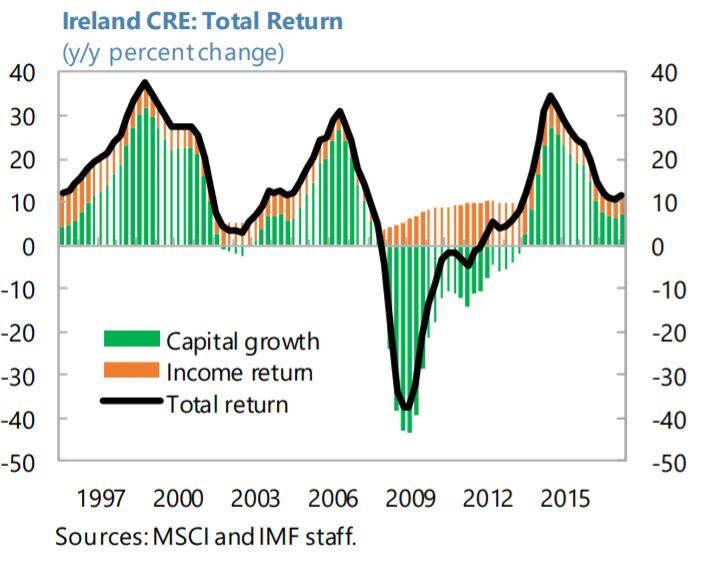
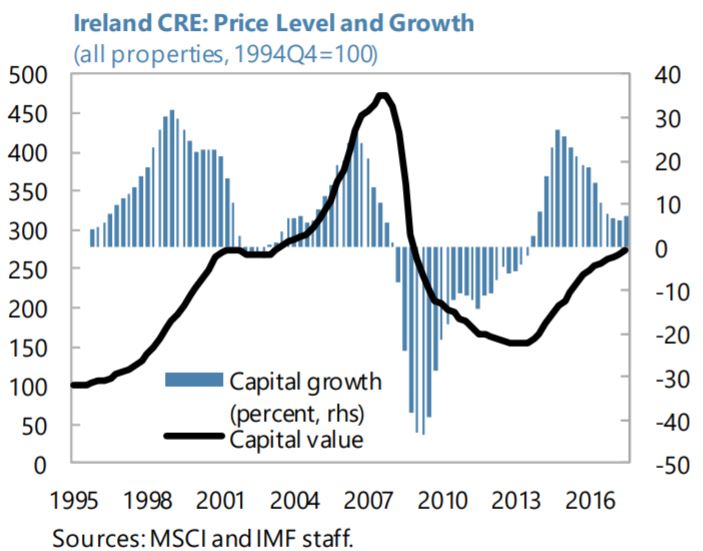
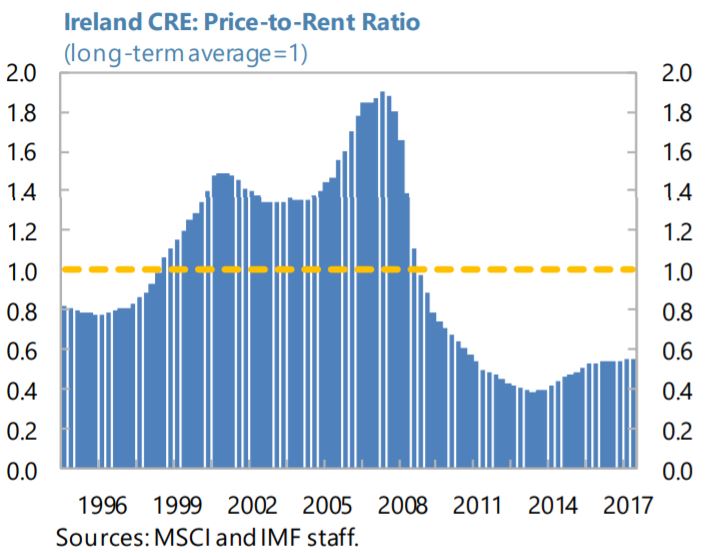
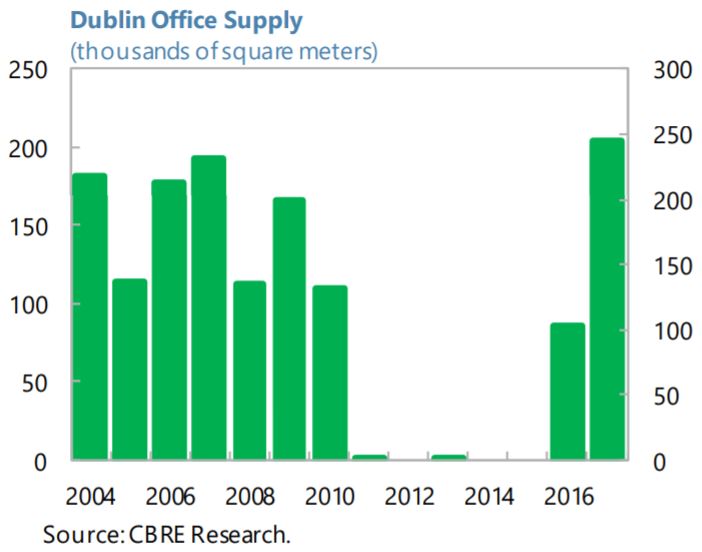
“This chapter examines the synchronization of the Irish returns on commercial real estate (CRE) properties with those in peers to better understand the importance of external factors in explaining the high volatility of CRE returns in recent years. The analysis finds that the cyclical pattern of Irish CRE returns is highly corelated with that in other advanced economies, yet with much higher volatility. Moreover, a vector auto-regression (VAR) analysis points to a high impact of international CRE prices on Irish CRE prices, and to strong feedback effects between the latter and domestic economic activity. These findings underline the importance of continued close monitoring of this market to ensure that the financial system is resilient to possible drops in collateral values and investment flows.”
The IMF’s latest report on Ireland says that:
“This chapter examines the synchronization of the Irish returns on commercial real estate (CRE) properties with those in peers to better understand the importance of external factors in explaining the high volatility of CRE returns in recent years. The analysis finds that the cyclical pattern of Irish CRE returns is highly corelated with that in other advanced economies, yet with much higher volatility.
Posted by at 6:23 AM
Labels: Global Housing Watch
Housing Market in Czech Republic
The IMF’s latest report on Czech Republic says that:
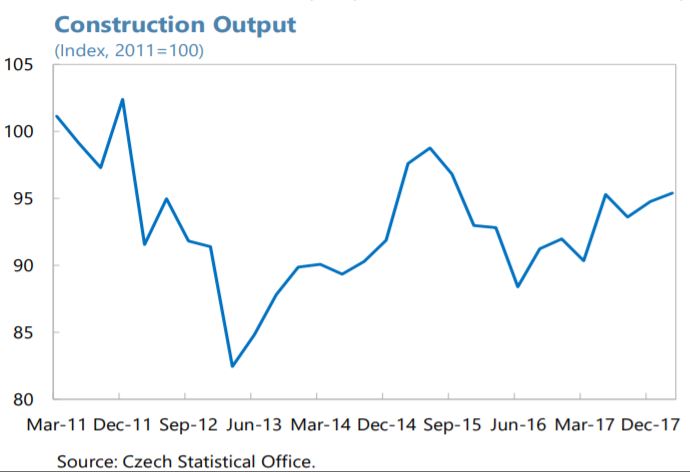
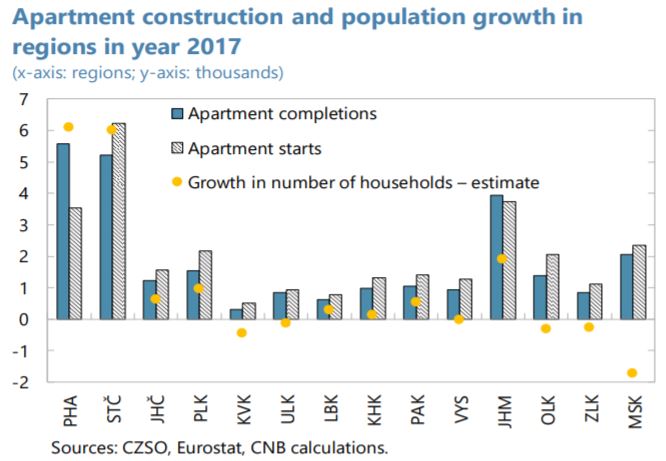
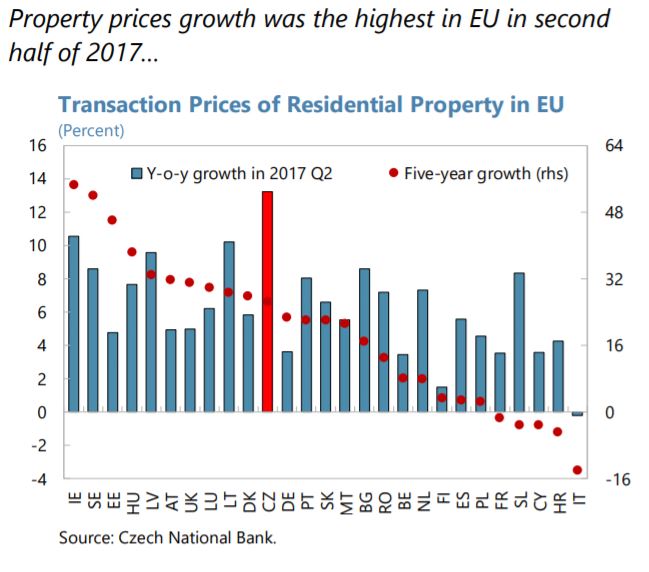
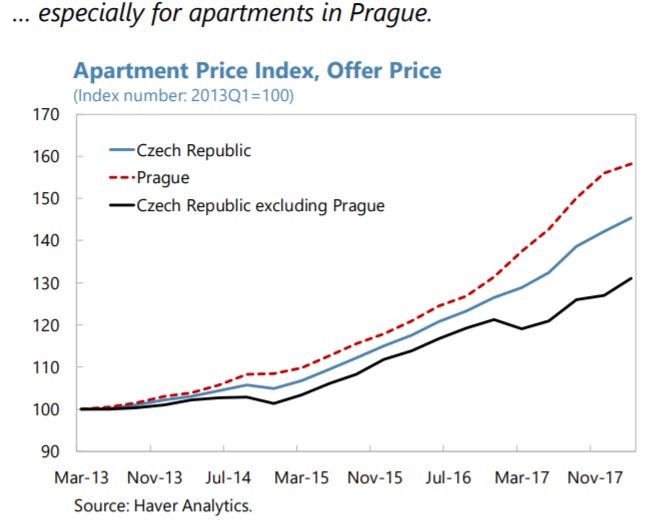
“Construction activity declined after the financial crisis and has yet to recover to levels seen in 2009. The effect is particularly noticeable in Prague, for which housing completions have not kept pace with housing demand. Low numbers of housing starts imply that the problem will continue for some time. Demand has been driven mainly by migration within the country and strong demand for prime properties by foreigners; demand for investment properties is also believed to play a significant role.”
The report also says that:
“Private credit growth is in line with nominal GDP growth, but household lending is growing more quickly. Bank lending to residents eased to 4 percent (y/y) in April, of which loans to
resident non-financial corporations grew by only 1½ percent. However, loans to households
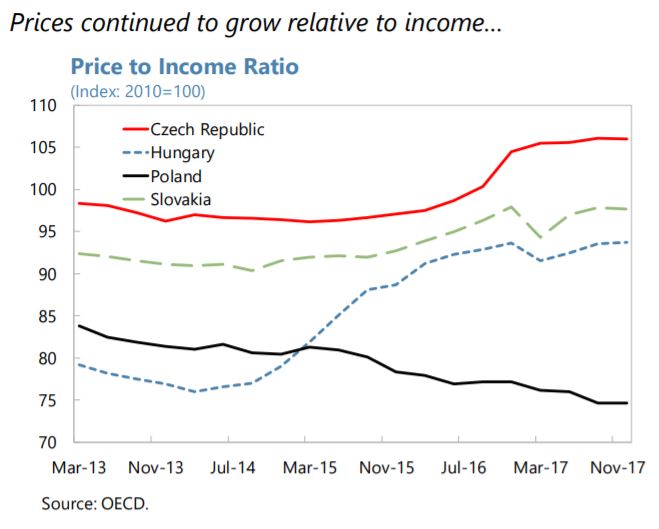
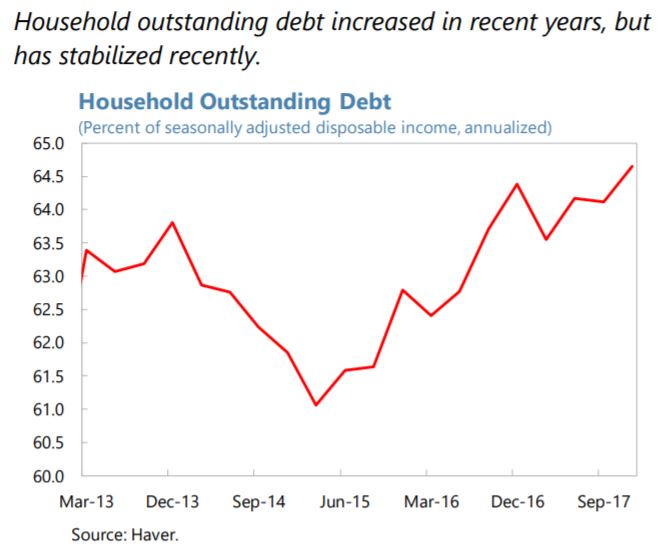
increased by 7½ percent; mortgage loans to households increased by 9½ percent, off the recent peak in mid-2017 of 10½ percent, but nonetheless outpacing nominal income growth. Consumer credit also grew relatively strongly.Some households are highly leveraged. The aggregate household debt-to-income (DTI)
ratio has not increased further over the year, given the strong growth of disposable income. But many households continue to borrow at high loan-to-income multiples (…), associated with escalating price-to-income and price-to-rent ratios (…).The CNB has tightened macroprudential recommendations (…). New, non-binding
recommendations implemented in 2017: Q2 included a 90 percent LTV cap on individual loans and a 15 percent cap on the share of new loans originated with LTV ratios between 80 and 90 percent. In June 2017, the CNB recommended that banks pay extra attention to debt-to-income and debt service-to-income ratios. Reported lending standards have subsequently tightened, and the share of new household mortgage loans with LTVs above 90 percent has declined, with many loans at around 80 percent LTV. However, concerns were expressed that this improvement may have been flattered by inflated valuations.Additional measures are needed to insure against household financial vulnerabilities. DTI ratios on new mortgages are only indirectly addressed by LTV restrictions—to safeguard
household finances, the financial authority needs more comprehensive tools and access to data sufficient for a comprehensive picture of households’ finances.
- The CNB should be given binding powers over maximum LTV, DTI, and Debt-Service-To-Income (DSTI) ratios as soon as possible. Debt-based measures would provide a more comprehensive assessment of financial risks than loan-based measures, and are increasingly standard in advanced economies. In the absence of legislation granting binding powers, the CNB should immediately issue recommendations over DTI and DSTI ratios, to reinforce those over LTVs and better target high leverage.
- If such “demand side” (i.e. borrower-based) tools are not implemented, additional “supply side” measures could be considered, but these would only indirectly address the underlying problem of high household leverage. Risk weight add-ons or minimum risk weights for property exposures could provide insurance against growing real estate exposures, but a substantial increase would likely be required to make a meaningful difference to lending conditions, given that capital ratios are above regulatory requirements. The CNB has discretion over capital requirements under Pillar II, but it is not guaranteed that the effects would “pass through” to mortgage borrowers.
Better data are needed for monitoring risks. The use of DTI and DSTI measures puts great
demands on data—to accurately assess risks and to be fully sure of compliance, the CNB needs access to comprehensive household loan data. Better data on commercial real estate transactions would also be helpful.Macroprudential measures should be supported by addressing fiscal and structural
policies. Increasing house prices in major metropolitan areas reflects equilibrium adjustment, and demand has consistently outstripped supply, especially in Prague. Planning and zoning laws contribute to housing supply constraints that add to pressures on prices. Some progress has been made in streamlining procedures for building permits, but construction levels remain below pre-crisis highs (…). In addition, the tax environment adds to housing demand (…). Without attention to such problems, the housing market is likely to remain tight.”
The IMF’s latest report on Czech Republic says that:
“Construction activity declined after the financial crisis and has yet to recover to levels seen in 2009. The effect is particularly noticeable in Prague, for which housing completions have not kept pace with housing demand. Low numbers of housing starts imply that the problem will continue for some time. Demand has been driven mainly by migration within the country and strong demand for prime properties by foreigners;
Posted by at 6:15 AM
Labels: Global Housing Watch
Subscribe to: Posts