



Wednesday, July 4, 2018
Housing Affordability in New Zealand and Policy Response
The IMF’s latest report on New Zealand says that:
“The housing market is cooling but managing housing-related risks remain challenging.
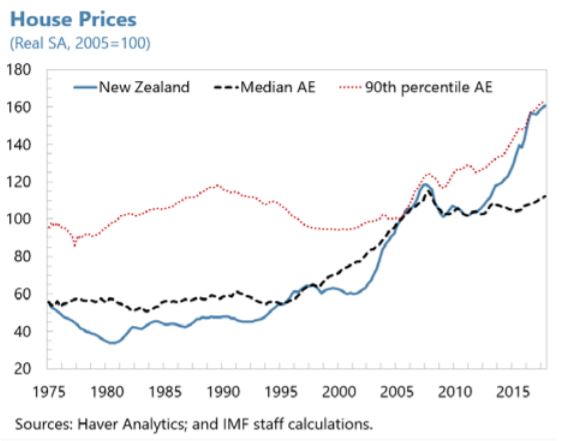
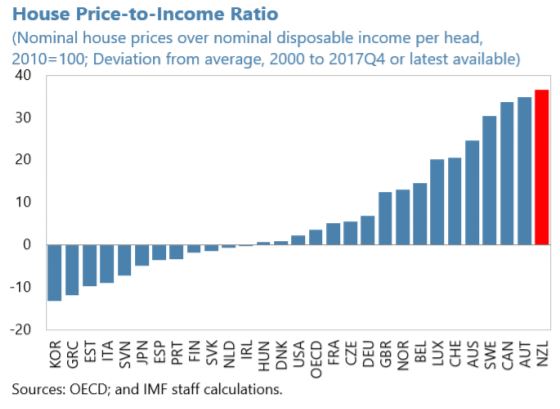
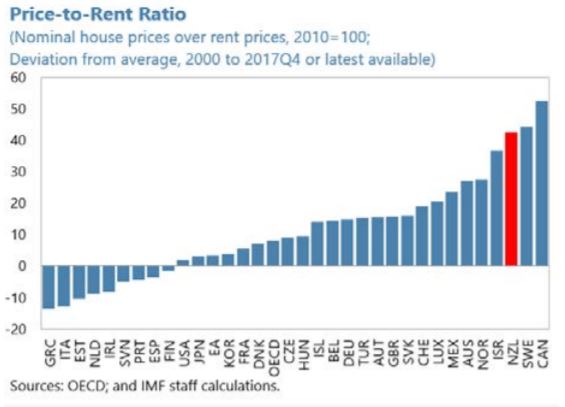
Rising house prices were associated with rapid household credit growth through 2016. Given the slower rise in income, house price-to-income ratios reached unprecedented levels, especially in Auckland where the surge in house prices has been stronger. Household credit growth has moderated in 2017 while household debt continued to rise from already high levels. Given the underlying shortages in housing supply, the moderation in house prices is expected to be slow.Affordability concerns have also become more pressing, especially for first-time home
buyers. The deterioration in housing affordability because of high house prices as measured by housing cost to income has been partially offset by lower interest rates. Lower income groups remain more adversely affected by declining housing affordability. Rising house prices pose increasing difficulties for first-time home buyers entering the home market as it increases the length of time needed to save for a mortgage down payment regardless of the level of interest rates, and lead to higher debt servicing requirements as they need to have a larger mortgage than in the past.The housing policy agenda is ambitious and appropriately focuses on closing key gaps
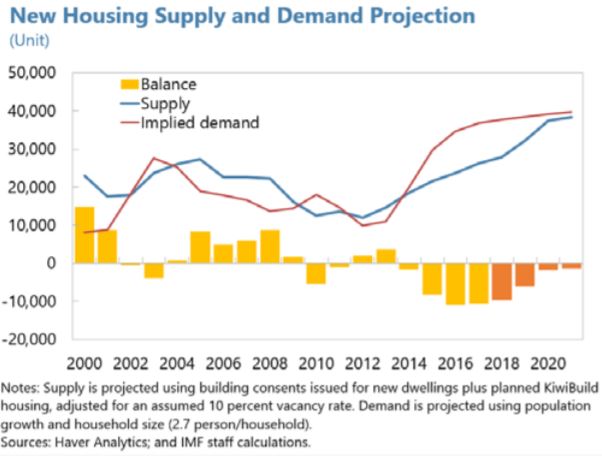
on the supply side and in the tax system. Housing supply shortfalls have contributed to the runup in house prices, reflecting supply constraints amid strong demand fundamentals, including rising net migration, lower interest rates, and stronger income growth. While demand-side drivers have stabilized, they remain robust, and improved housing affordability requires eliminating supply bottlenecks. Supply and demand sides reforms are complementary, and the success of the housing policy agenda will depend on well-coordinated progress on all fronts.Lastly, improving the availability of housing affordability and other related statistical data is important. Further effort to compile and regularly release key housing related indicators such as house prices, housing costs, housing ownership and affordability measures would help to
enhance analysis and inform policy decisions.”

The IMF’s latest report on New Zealand says that:
“The housing market is cooling but managing housing-related risks remain challenging.
Rising house prices were associated with rapid household credit growth through 2016. Given the slower rise in income, house price-to-income ratios reached unprecedented levels, especially in Auckland where the surge in house prices has been stronger. Household credit growth has moderated in 2017 while household debt continued to rise from already high levels.
Posted by at 1:33 PM
Labels: Global Housing Watch
Worries about the yield curve
From a new Econbrowser post by James Hamilton:
“Why does a low or negative spread predict future economic weakness? One factor may be the Fed’s tightening cycle. Historically the inflation rate would at times start climbing above where the Fed wanted it. The Fed responded by raising the short-term rate, the traditional instrument of monetary policy. The market response of long-term rates to the higher short rates was significantly more muted. The result is that the yield spread narrowed as the tightening cycle continued. The Fed often found itself behind the curve, and the last short-term rate hikes were likely a contributing factor to some historical economic recessions.

But we’re still very early in the current tightening cycle. The 3-month Treasury bill has not gone up so far by nearly as much as it did in previous complete cycles, and inflation is still very moderate. So I don’t think it’s time to run for cover just yet. However, if the Fed were to raise the short rate by another 100 basis points without any move up in long rates, we would be into inverted territory, and I would be very concerned. Not a danger sign yet, but definitely an indicator to keep watching.”
From a new Econbrowser post by James Hamilton:
“Why does a low or negative spread predict future economic weakness? One factor may be the Fed’s tightening cycle. Historically the inflation rate would at times start climbing above where the Fed wanted it. The Fed responded by raising the short-term rate, the traditional instrument of monetary policy. The market response of long-term rates to the higher short rates was significantly more muted.
Posted by at 10:37 AM
Labels: Forecasting Forum
Tuesday, July 3, 2018
Revamping inflation targeting in New Zealand 30 years after its inception
A new IMF country report reviews the backdrop to the revamping of the inflation targeting framework in New Zealand. It says that “The Phase One of the Review of the Reserve Bank Act can be regarded as a next step in the gradual evolution of inflation targeting in New Zealand. The new PTA, with its qualitative description of the employment objective, can be regarded as a refinement in the current practice of inflation targeting. The flexible inflation targeting regime was successful in terms of stabilizing output and inflation while maintaining price stability. Recent episodes of inflation undershooting the target serve as an example of uncertainty on the real-time assessment of slack in the economy. The explicit dual mandate will require some changes in the communication of the central bank, including on maximum sustainable employment.”

A new IMF country report reviews the backdrop to the revamping of the inflation targeting framework in New Zealand. It says that “The Phase One of the Review of the Reserve Bank Act can be regarded as a next step in the gradual evolution of inflation targeting in New Zealand. The new PTA, with its qualitative description of the employment objective, can be regarded as a refinement in the current practice of inflation targeting.
Posted by at 7:38 PM
Labels: Inclusive Growth
Monday, July 2, 2018
Can the Income-Expenditure Discrepancy Improve Forecasts?
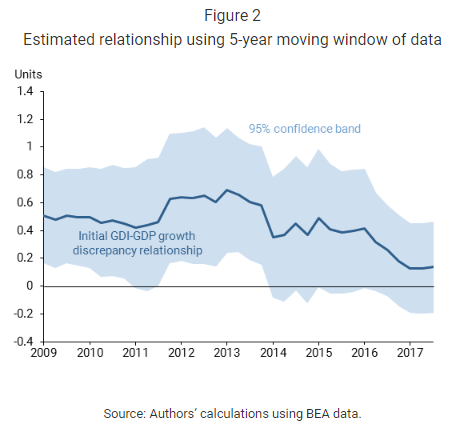
A new paper finds that “Gross domestic income and gross domestic product—GDI and GDP—measure aggregate economic activity using income and expenditure data, respectively. Discrepancies between the initial estimates of quarterly growth rates for these two measures appear to have some predictive power for subsequent GDP revisions. However, this power has weakened considerably since 2011. Similarly, the first revision to GDP growth has less predictive power in forecasting subsequent revisions since 2011. One possible explanation is that evolving data collection and estimation methods have helped improve initial GDP and GDI estimates.”
A new paper finds that “Gross domestic income and gross domestic product—GDI and GDP—measure aggregate economic activity using income and expenditure data, respectively. Discrepancies between the initial estimates of quarterly growth rates for these two measures appear to have some predictive power for subsequent GDP revisions. However, this power has weakened considerably since 2011. Similarly, the first revision to GDP growth has less predictive power in forecasting subsequent revisions since 2011. One possible explanation is that evolving data collection and estimation methods have helped improve initial GDP and GDI estimates.”
Posted by at 9:14 AM
Labels: Forecasting Forum
Saturday, June 30, 2018
Housing: Is This Time Different?
The IMF’s latest report on Ireland says that:
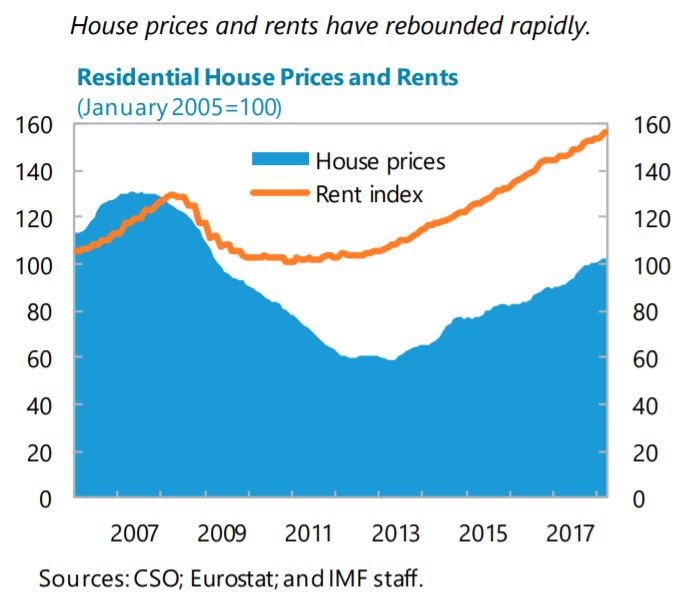
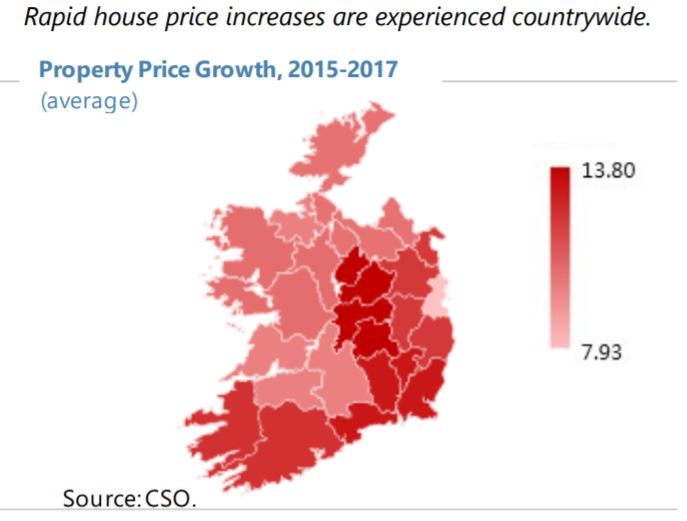
“As in the run-up to the crisis, the ongoing strong economic momentum is accompanied by a surge in house prices and rents. While house prices remain well below the pre-crisis peak, they have rebounded rapidly in Dublin and other regions, posting an average annual increase of 13 percent in March 2018. Rents have also increased at a strong pace (6 percent as of
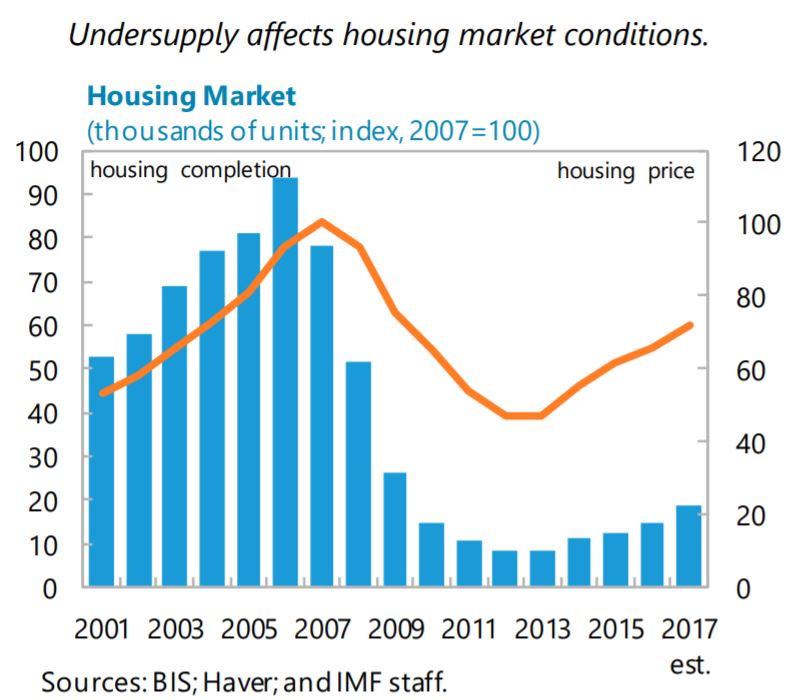
end-2017) and surpassed their pre-crisis level.Unlike in the pre-crisis period, house prices are fueled by a persistent supply shortfall
rather than by bank credit. Housing demand has recovered strongly, reflecting improved labor market conditions, rising incomes, and low interest rates. While mortgage drawdowns and approvals have rapidly increased, albeit from a low base, cash transactions remain relevant. In contrast, the recovery of the housing supply has been modest so far, with house completions falling well below the estimated underlying demand of about 35,000 units per year. The government has taken several measures to help boost supply (…) but these will need time to have an impact. High building costs, impaired balance sheets of construction firms and related funding difficulties, skill shortages, and land hoarding are the main factors holding back supply. In CRE properties, high yield attracted strong investment, largely from abroad, alleviating financing constraints and resulting in a fast supply response. Returns have moderated to levels seen in peers, after years of strong gains.While house prices are not significantly misaligned, upward pressure is likely to persist. Price-to-income and priceto-rent ratios have steadily increased in recent years and at present modestly exceed their historical average. However, model-based measures of house price misalignment are inconclusive with results ranging from some undervaluation (ESRI) to a small overvaluation. While there are no immediate financial stability risks, house price pressures are likely to persist over the medium term, as demand growth is
likely to continue outpacing supply.Against this backdrop, priority should be given to encourage greater housing supply…
- Further rationalization of building regulations and streamlining of planning processes are warranted. Reducing skills gaps in the construction sector, advancing debt restructuring of distressed but viable construction firms, and improving their access to financing are important.
- The establishment of the HBFI could provide funding to financially-constrained developers in the residential market. However, its operations should remain limited in scope and subject to prudent risk assessment and a robust governance structure to minimize risks for public finances.
- With a view to reducing land hoarding, a vacant site levy will be introduced starting
in 2019. However, its rates (3 percent for the first year and 7 percent for the second
and subsequent years) should be reviewed periodically to ensure effectiveness.
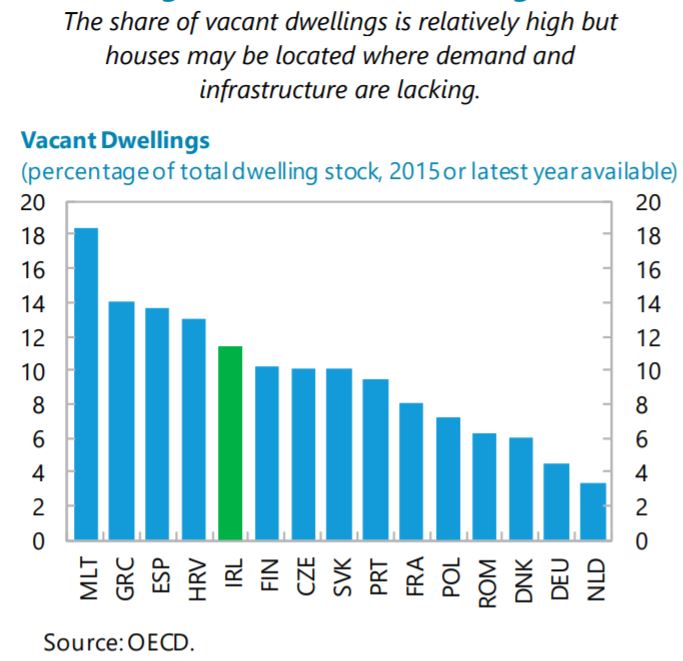
- Ireland has a high level of vacant dwellings, though some of these are located in areas
where demand and infrastructure are lacking. To ensure greater utilization of these properties, consideration should be given to adopting a surcharge on properties that are left vacant in urban areas.…while enacted measures to improve housing affordability need to be well-targeted…
- There is scope to re-calibrate the Help-to-Buy scheme, which provides a tax rebate of up to 5 percent of the dwelling purchase price for FTBs, towards low-income households.
- Measures to stabilize rents should be reconsidered as they may deter new construction. Support for disadvantaged groups should be delivered through well-targeted housing assistance payments.
- The RIHL, which provides loans to risky borrowers outside the banking system, should remain of limited scope and subject to stringent risk assessment to safeguard financial stability, particularly because the use of the RIHL might breach the central bank’s loan-to-income (LTI) limits.
…and macroprudential policy should continue to be deployed proactively. Following
last November’s review of mortgage measures, the central bank has kept the core parameters of the macroprudential framework intact, while halving the proportion of new non-FTB loans allowed to exceed the 3.5 LTI limit to 10 percent. Although currently appropriate, it is crucial that the macroprudential limits are adjusted pre-emptively to ensure that bank and household balance sheets remain resilient to shocks. In addition, as the Central Credit Registry becomes operational in 2018, staff encourages the authorities to shift from a LTI to a debt-to-income limit, which better captures household repayment capacity, once comprehensive data on household debt are available.”
The IMF’s latest report on Ireland says that:
“As in the run-up to the crisis, the ongoing strong economic momentum is accompanied by a surge in house prices and rents. While house prices remain well below the pre-crisis peak, they have rebounded rapidly in Dublin and other regions, posting an average annual increase of 13 percent in March 2018. Rents have also increased at a strong pace (6 percent as of
end-2017) and surpassed their pre-crisis level.
Posted by at 6:48 AM
Labels: Global Housing Watch
Subscribe to: Posts