



Wednesday, June 6, 2012
Labor Markets through the Lens of the Great Recession
Call for Papers
The International Monetary Fund will hold the Thirteenth Jacques Polak Annual Research Conference at its headquarters in Washington DC on November 8-9, 2012.
The conference is intended to provide a forum for discussing innovative research in economics, undertaken by both IMF staff and by outside economists, and to facilitate the exchange of views among researchers and policymakers. Peter Diamond (MIT) will deliver the Mundell-Fleming lecture.
The theme of the conference is “Labor Markets through the Lens of the Great Recession.” The Program Committee welcomes papers that investigate the lessons of the crisis for labor market dynamics, as well as short-run and long-run policy challenges concerning employment growth and structural changes in labor markets in industrial and developing economies. Possible topics include (without being exclusive):
Comparative performance of labor markets in the crisis:
- Output, participation, employment, unemployment
- Variations in Okun’s law across countries
- The age and skill distribution of unemployment
- The role of labor market institutions
- Policy measures, employment, unemployment
- Fiscal policies, output and employment
- Hysteresis in unemployment
- Informal employment and links to growth and financial frictions
Unemployment and the Arab spring
- Wage distributions, inequality, and political economy implications
- Globalization and wage distributions
- Technological progress and wage distributions
- Role and limits of redistribution
Reforms, employment, and unemployment
- Short and long-term effects of labor market reforms
- Short and long-term effects of product market reforms
Please submit a proposal (in Word or PDF format), which should be no shorter than two pages and no longer than five pages by June 8, 2012 (e-mail to ARC@imf.org). Please use the contact author’s name as the name of the file. The Program Committee will evaluate all proposals in terms of originality, analytical rigor, and policy relevance and will contact the authors whose papers have been selected by June 30, 2012. A 15-page work-in-progress draft will be required by August 15, 2012. Further information on the conference program will be posted on the IMF website (www.imf.org).
Call for Papers
The International Monetary Fund will hold the Thirteenth Jacques Polak Annual Research Conference at its headquarters in Washington DC on November 8-9, 2012.
The conference is intended to provide a forum for discussing innovative research in economics, undertaken by both IMF staff and by outside economists, and to facilitate the exchange of views among researchers and policymakers. Peter Diamond (MIT) will deliver the Mundell-Fleming lecture.
The theme of the conference is “Labor Markets through the Lens of the Great Recession.” The Program Committee welcomes papers that investigate the lessons of the crisis for labor market dynamics,
Posted by at 7:43 PM
Labels: Inclusive Growth
Wednesday, May 30, 2012
IMF Photographic Talent Through the Lens
The 42nd annual exhibit of the International Photographic Society (IPS) of the IMF and World Bank Group is on show in the HQ1 Gallery until June 8, featuring 112 photographs by 35 photographers.
 |
| Alex Hoffmaister-Metro Riding |
 |
|
Alex Hoffmaister-Pom Bottle
|
 |
| Alex Hoffmaister-Walking in the Square |
 |
| Angela Lumanau-Scene from Kribi Beach, Cameroon |
 |
| Carmen Machicado-Route A8 |
 |
| Gerda de Corte-On Hold |
 |
| Gerda de Corte-Stars, stripes and a turban |
 |
| Jean Boyd-Petals And Sky |
 |
| Jean Boyd-Woodland |
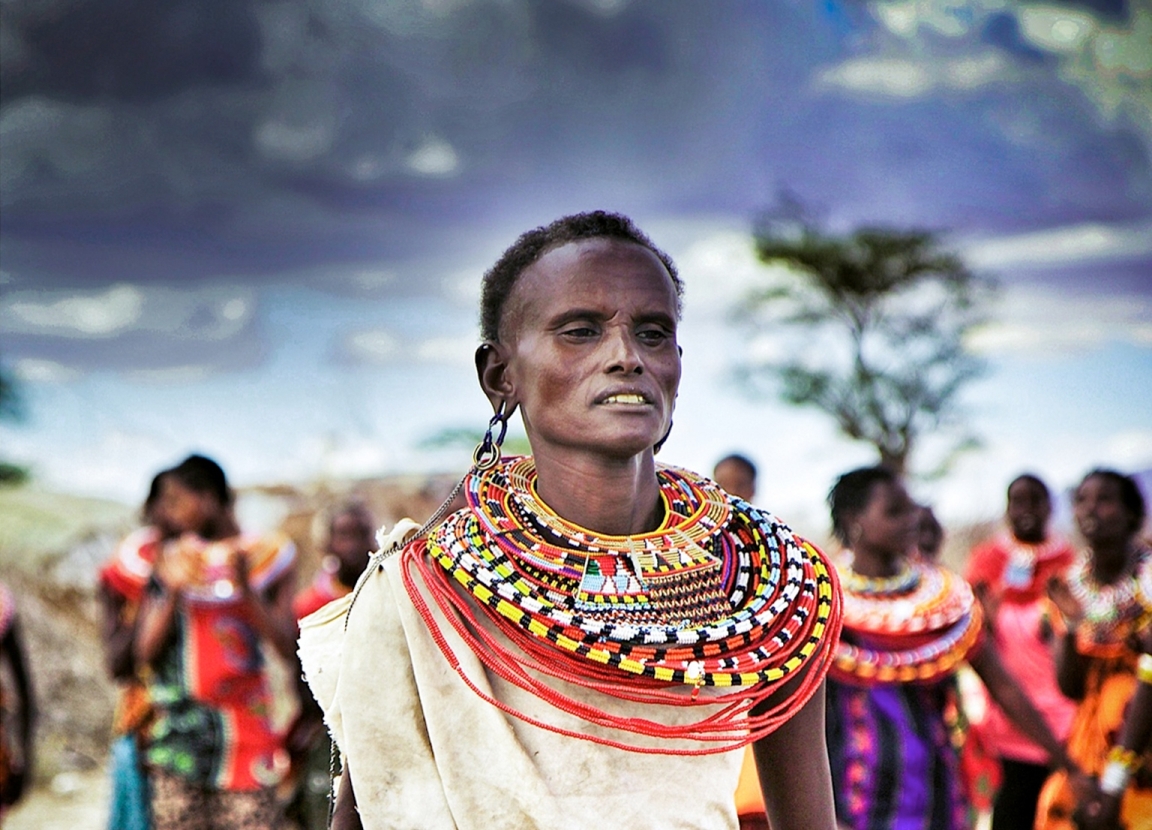 |
| Kemal Cakici – A Jewel in Colors |
 |
| Manorma Rani-Diagonal Lines |
 |
| Mary Wilson-OMG |
 |
| Michele Egan-Sad Captive in Miami Zoo |
 |
| Pritthijit (Raja) Kundu-Blue Vortex |
 |
| Stephan Eggli-Wrong Way |
 |
| Yuan Xiao-Zebra Portrait |
De Corte was among the 12 photographers who received awards at a reception held earlier this month. The jury consisted of three local photographers, including National Geographic magazine’s Sherry Brukbacher, who spoke briefly at the reception. The other two judges were Theo Adamstein, founder of FotoDC, and Ron Aira, a commercial photographer.
High praise
Praising the work of the IMF staff, Brukbacher said the judges “had walked a couple of miles” going around the exhibit several times to decide on the winners. The entries were so good that the jury decided to also give three special honorable mentions to photographs that they considered very close to the top three winners.
Outgoing IPS President Mary Wilson was among those winning an honorable mention for her picture of her father’s shocked expression after a ride on a roller coaster, while his grandsons roared with laughter. “He had no idea what he was getting into,” said Wilson. “I’m glad I was there with camera at the ready.”
Nature and animals loomed large as popular subjects of the prize-winning entries. Michele Egan’s “Sad Captive in Miami Zoo” is a haunting image of a gorilla, his sadness reflected in the faces of the young girls looking at him from the other side of the cage. In contrast Yuan Xiao’s “Zebra Portrait” presents a dignified zebra in the wild.
A winning combination
Founded in 1966 as the IMF Camera Club, the IPS is one of the oldest and most popular clubs of the IMF and World Bank Group. Veterans attribute its success to its combination of instruction, competition, and fun.
The format of the monthly meetings has remained much the same as in the early days. The group meets each month after work to socialize over wine and cheese and listen to a guest speaker. Then there is a friendly photo competition, with the guest speaker serving as the judge. Winning photographs from the monthly competitions are featured in the annual exhibition.
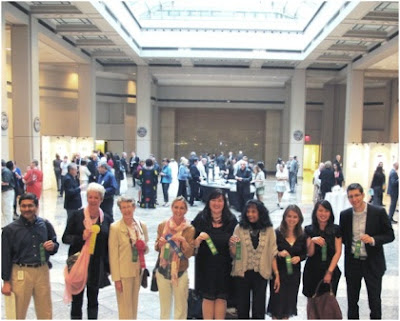 |
| Photography prize winners at the IPS reception. From left to right: Raja Kundu, Michele Egan, Jean Boyd, Gerda de Corte, Mary Wilson (IPS President), Manorama Rani, Carmen Machicado, Angela Lumanau, and Stephan Eggli (IPS Vice President). |
The 42nd annual exhibit of the International Photographic Society (IPS) of the IMF and World Bank Group is on show in the HQ1 Gallery until June 8, featuring 112 photographs by 35 photographers.
Alex Hoffmaister-Metro Riding
Alex Hoffmaister-Pom Bottle
Alex Hoffmaister-Walking in the Square
Angela Lumanau-Scene from Kribi Beach, Cameroon
Carmen Machicado-Route A8
Gerda de Corte-On Hold
Gerda de Corte-Stars, Read the full article…
Friday, May 18, 2012
House Prices in United Arab Emirates
A new IMF report says that “the large property overhang continues to be a drag on the economy. Since mid-2008, real estate prices have fallen by more than 60 percent in Dubai, and to a lesser extent in Abu Dhabi. The large supply overhang and the completion of additional projects in the coming years render an early and broad-based recovery of the sector unlikely.” Read the full report here.
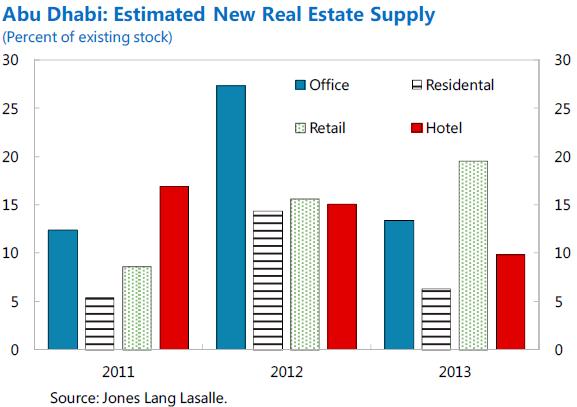
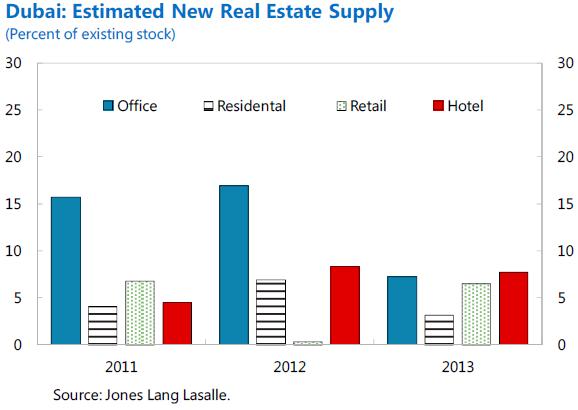
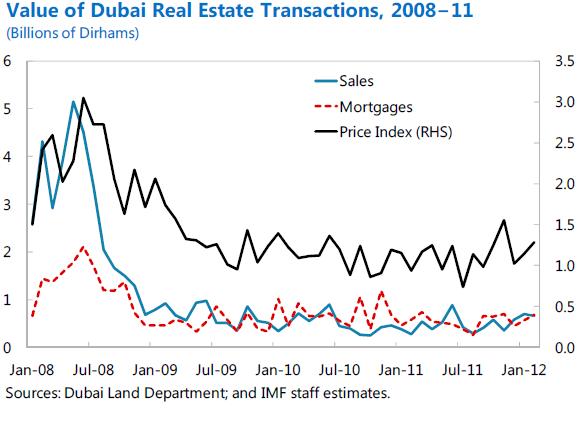
A new IMF report says that “the large property overhang continues to be a drag on the economy. Since mid-2008, real estate prices have fallen by more than 60 percent in Dubai, and to a lesser extent in Abu Dhabi. The large supply overhang and the completion of additional projects in the coming years render an early and broad-based recovery of the sector unlikely.” Read the full report here.
Posted by at 1:37 PM
Labels: Global Housing Watch
Thursday, May 17, 2012
People in Economics
A compilation of interviews published in F&D magazine of Nobel prize winners, policymakers, and intellectual leaders around the world in the fields of finance and economics.
A compilation of interviews published in F&D magazine of Nobel prize winners, policymakers, and intellectual leaders around the world in the fields of finance and economics.
Posted by at 1:26 PM
Labels: Profiles of Economists
Monday, May 14, 2012
IMF BOOK FORUM: The Quest: Energy, Security, and the Remaking of the Modern World
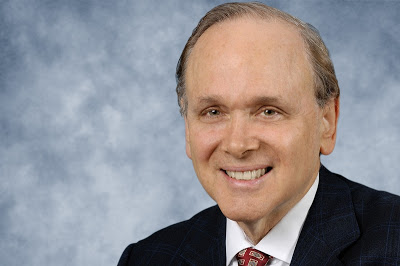
Time Magazine called Pulitzer Prize-winner Daniel Yergin one of the “hundred people who mattered” worldwide in 2011, saying, “If there is one man whose opinion matters more than any other on global energy markets, it’s Daniel Yergin.”
Dr. Yergin is Chairman and Founder of IHS Cambridge Energy Research Associates, one of the leading energy advisory firms in the world, and he serves as CNBC’s Global Energy Expert.
Dr. Yergin is known for his book The Prize: the Epic Quest for Oil Money and Power, which was awarded the Pulitzer Prize. It became a number one New York Times best seller. Both The Prize and Commanding Heights, Yergin’s next book, were made into award-winning television documentaries for PBS and BBC.
The New York Times said recently that “Mr. Yergin, operating as a kind of one-man think tank, has had a virtual monopoly on the subject of energy and geopolitics. Such is his influence that one half expects his competitors to file antitrust litigation against him.”
About the Book:
The Quest tackles “three big and longstanding fears: energy scarcity, energy security and, more and more, the environmental ruin that energy can cause.” (The Economist).
- Will we run out of oil? Will enough energy be available to meet the needs of fast-growing economies, at what cost, and with what technologies?
- How can the security of the world energy system be maintained? Since World War II, many crises have disrupted energy supplies. Will the next crisis come from the cyber vulnerability of energy systems?
- How will energy development affect the environment? Will the world be able to shift in time toward a new age of energy, a radically different mix that relies more on renewables and alternatives?
What the Reviews Say:
- New York Times: “Mr. Yergin is back with a sequel to The Prize. It’s an even better book. It is searching, impartial and alarmingly up to date.”
- Financial Times: “it is impossible to think of a better introduction to the essentials of energy in the 21st century … the value of The Quest is in the clarity and fair-mindedness of Yergin’s thought.
- The Economist: “The Quest is a masterly piece of work and, as a comprehensive guide to the world’s great energy needs and dilemmas, it will be hard to beat.”
Also, read an interview with Daniel Yergin.
IMF BOOK FORUM
Presents
DANIEL YERGIN
The Quest:
Energy, Security, and the Remaking of the Modern World
Monday, May 21, 2012
3.30 to 4.30 pm
Room: HQ1 R-710 (Red Level, Auditorium)
Please send an email to ploungani@imf.org if you’d like to attend
About the Presenter:
Time Magazine called Pulitzer Prize-winner Daniel Yergin one of the “hundred people who mattered” worldwide in 2011, saying, “If there is one man whose opinion matters more than any other on global energy markets,
Posted by at 6:46 PM
Labels: Energy & Climate Change
Subscribe to: Posts