



Friday, November 20, 2015
House Prices in Mexico
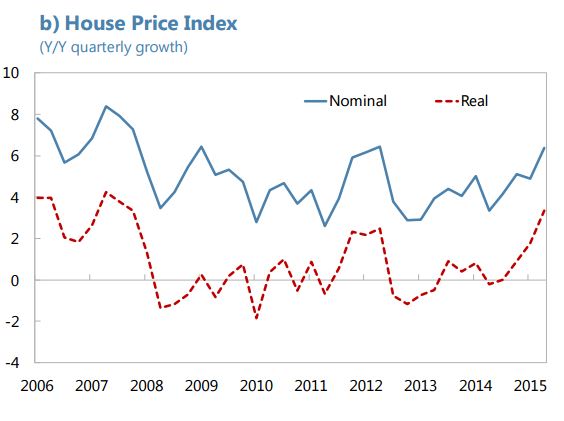
“House prices have been broadly stable in real terms since 2008, and there are no signs of a real estate bubble”, says IMF’s new report on Mexico.
Posted by at 10:00 AM
Labels: Global Housing Watch
Thursday, November 19, 2015
House Prices in Finland
- “Meanwhile, the housing market has cooled and standard metrics suggest that average house prices are broadly in line with fundamentals.”
- “Separately, measures in the reform program to stimulate housing construction should help ease constraints on regional labor mobility. Planned measures include easing requirements for state-subsidized housing construction, reducing restrictions on land use, and streamlining aspects of the permitting and development process.”
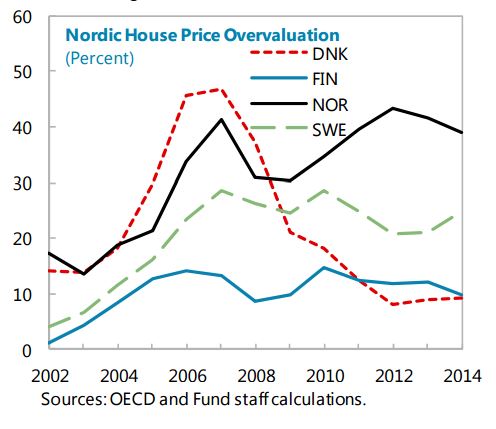
The latest IMF report on Finland says:
- “Meanwhile, the housing market has cooled and standard metrics suggest that average house prices are broadly in line with fundamentals.”
- “Separately, measures in the reform program to stimulate housing construction should help ease constraints on regional labor mobility. Planned measures include easing requirements for state-subsidized housing construction, reducing restrictions on land use, and streamlining aspects of the permitting and development process.”
Posted by at 10:00 AM
Labels: Global Housing Watch
Tuesday, November 17, 2015
Effects of Wage Moderation in the Euro Area
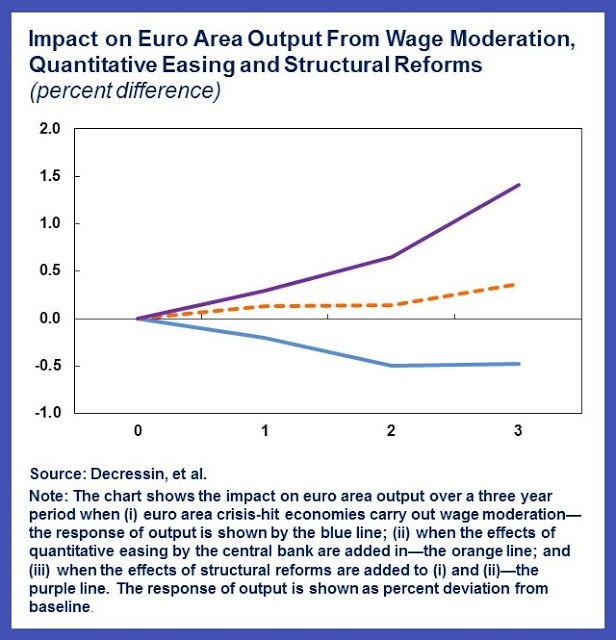
A devaluation is often a way out of financial trouble for a country. But for many crisis-hit countries in the euro area, devaluation is not an option. ‘Internal’ devaluation—through wage moderation, for instance—is often discussed as an alternative solution for these countries to try to mimic the outcomes of an external devaluation. When does such internal devaluation work? My new IMF paper provides evidence on this using the euro area countries as an illustration. The main finding is that for wage moderation to work when a number of countries are undertaking it at the same time, Read the full article…
Posted by at 9:51 PM
Labels: Inclusive Growth
Thursday, November 5, 2015
International Jobs Report
Read the latest International Jobs Report here. Read the full article…
Posted by at 2:58 PM
Labels: Inclusive Growth
Friday, October 30, 2015
Housing Markets: Balancing Risks and Rewards
Posted by at 10:45 AM
Labels: Global Housing Watch
Subscribe to: Posts