



Friday, September 29, 2017
Housing View – September 29, 2017
On cross-country:
- Will house prices continue to rise forever? – ING
- Q2 2017: Europe’s boom continues, but sharp slowdown in the Middle East, Latin America, New Zealand and some parts of Asia – Global Property Guide
- Chinese Money Is Still Leaking Into the World’s Housing Markets – Bloomberg
- UBS Global Real Estate Bubble Index – UBS
On the US:
- Anti-vagrancy laws are not the best way to reduce homelessness – Economist
- Flood Risk Belief Heterogeneity and Coastal Home Price Dynamics: Going Under Water? – NBER
- Apartment Demand for the Next 15 Years: Can We Meet the Need? – U.S. Department of Housing and Urban Development
- 2017 Global Real Estate Portal Report – Mike DelPrete
- Pending Home Sales Dive: Economists Miss the Boat by Over 2 Percentage Points! – MishTalk
- Land Use Regulation and Good Intentions – Journal of Land Use & Environmental Law
On other countries:
- [Canada] 2017 Housing Finance Symposium – CMHC
- [China] Chinese property developers’ shares hit by new house sales curbs – Financial Times
- [China] Chinese Developers Plunge After Officials Tighten Housing Curbs – Bloomberg
- [France] Housing Europe expresses concern about the housing strategy presented by the French government – Housing Europe
- [Sweden] House price responses to a national property tax reform – SSRN
- [United Kingdom] Priced Out? The affordability crisis in London – The Progressive Policy Think Tank
- [United States] Policy changes make landlords wary of the UK housing market – Global Property Guide
On cross-country:
- Will house prices continue to rise forever? – ING
- Q2 2017: Europe’s boom continues, but sharp slowdown in the Middle East, Latin America, New Zealand and some parts of Asia – Global Property Guide
- Chinese Money Is Still Leaking Into the World’s Housing Markets – Bloomberg
- UBS Global Real Estate Bubble Index – UBS
On the US:
- Anti-vagrancy laws are not the best way to reduce homelessness – Economist
- Flood Risk Belief Heterogeneity and Coastal Home Price Dynamics: Going Under Water?
Posted by at 11:18 AM
Labels: Global Housing Watch
Thursday, September 28, 2017
The Unequal Burden of Rising Temperatures: How Can Low-Income Countries Cope?
From a new IMF blog:
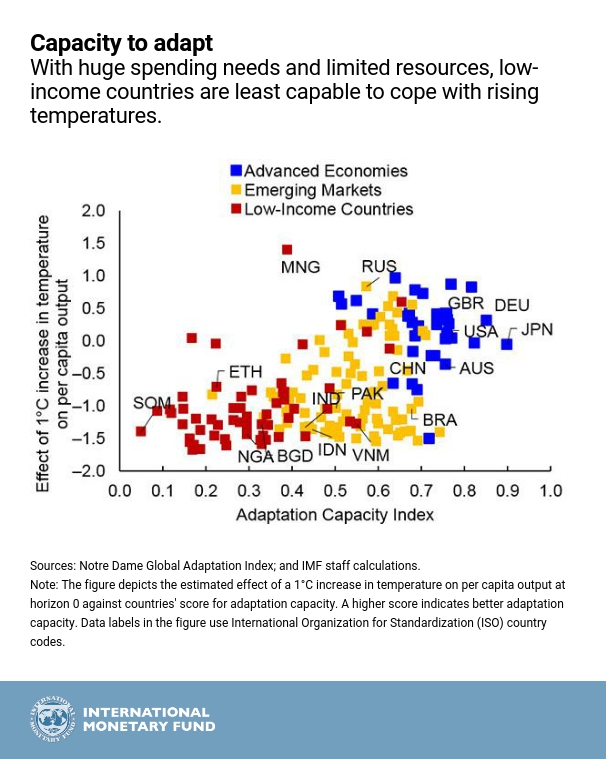
“The Earth’s warming affects countries very unequally. Even though low-income countries have contributed very little to greenhouse gas emissions, they would bear the brunt of the adverse consequences of rising temperatures, since they tend to be situated in some of the hottest parts of the Earth. ”
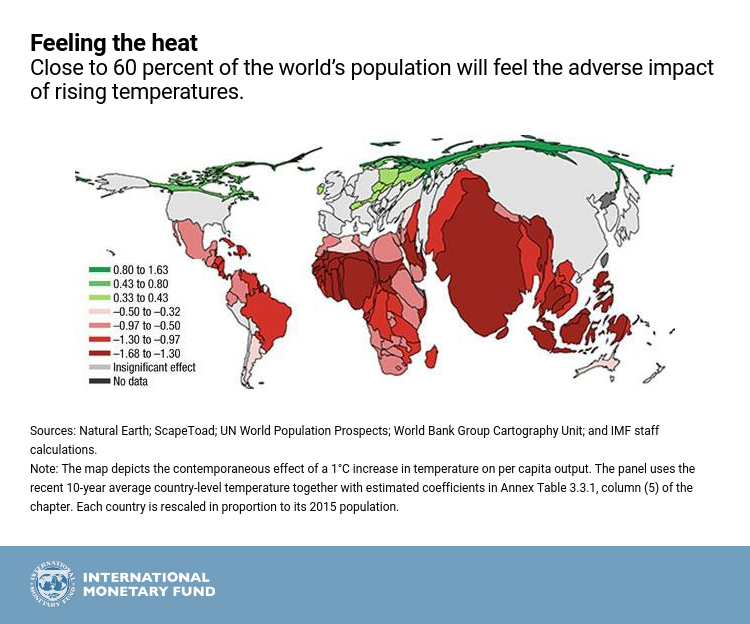
“The international community must play a key role in supporting low-income countries’ efforts to cope with climate change. Advanced and emerging market economies have contributed the lion’s share to actual and projected warming. Hence, helping low-income countries cope with its consequences is both a moral duty and sound global economic policy that helps offset countries’ failures to fully internalize the costs of greenhouse gas emissions.”
Continue reading here.
From a new IMF blog:
“The Earth’s warming affects countries very unequally. Even though low-income countries have contributed very little to greenhouse gas emissions, they would bear the brunt of the adverse consequences of rising temperatures, since they tend to be situated in some of the hottest parts of the Earth. ”
“The international community must play a key role in supporting low-income countries’ efforts to cope with climate change.
Posted by at 9:24 AM
Labels: Energy & Climate Change
Wednesday, September 27, 2017
Better thy Neighbor? Cross-border Effects of Fiscal Actions
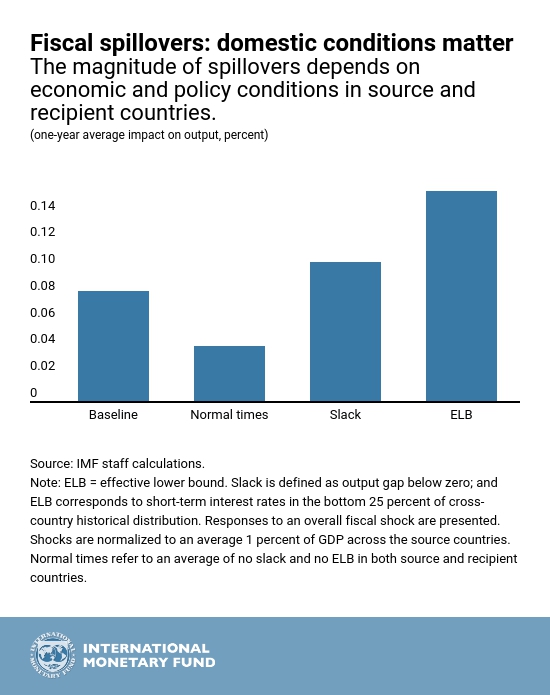
From a new IMF blog: “Our analysis provides information on potential cross-country effects from domestic fiscal policies. For example, fiscal stimulus in Germany through higher public investment would generate meaningful spillovers to neighboring countries in Europe where output remains below potential and interest rates are exceptionally low. Spending on public investment is also likely to produce greater cross-border dividends than tax cuts. Conversely, given cyclical conditions in the United States, a U.S. fiscal stimulus would likely have modest spillovers, especially if implemented through tax policy measures.”
Continue reading here.
From a new IMF blog: “Our analysis provides information on potential cross-country effects from domestic fiscal policies. For example, fiscal stimulus in Germany through higher public investment would generate meaningful spillovers to neighboring countries in Europe where output remains below potential and interest rates are exceptionally low. Spending on public investment is also likely to produce greater cross-border dividends than tax cuts. Conversely, given cyclical conditions in the United States, a U.S.
Posted by at 10:46 AM
Labels: Inclusive Growth
Friday, September 22, 2017
Housing View – September 22, 2017
On cross-country:
- Property markets and real estate companies – Bank for International Settlements
- Global crisis of affordable urban housing – where are the progressive responses? – Foundation for European Progressive Studies
- A Caribbean New Urban Agenda post-Habitat III: Closing the gaps – Habitat International
On the US:
- The Economic Implications of Housing Supply – NBER
- Access to Long-Term Care After a Wealth Shock: Evidence from the Housing Bubble and Burst – NBER
- Foreign Buyers and Home-Price Growth – HousingViews
- Is Homeownership Dead? – House Canary
- Why Houston Housing Is Poised to Get More Expensive and Unequal – Citylab
- California Today: A Political Push for Affordable Housing – New York Times
- 2017 National Rental Housing Landscape – NYU Furman Center
- Housing Finance, Affordability, and Supply in the Digital Age – Urban Institute
On other countries:
- [Belize] Belize’s thriving luxury property market – Global Property Guide
- [Canada] Vancouver: No Fixed Address – Documentary
- [China] China central bank backs mortgage rate hikes in capital – Reuters
- [China] China’s Campaign to Cool House Prices Could Ease as Curbs Bite – Bloomberg
- [China] China’s Dangerous House Price Boom Is Spreading – Bloomberg
- [China] Rural-Urban Migration, Structural Transformation, and Housing Markets in China – NBER
- [China] One-third of China households see home prices rising in fourth-quarter: central bank survey – Reuters
- [Denmark] The Financial Crisis and Diverging House Prices: Evidence from the Copenhagen Metropolitan Area – Tinbergen Institute
- [Egypt] Egypt’s moneyed classes are buying houses like there’s no tomorrow! – Global Property Guide
- [France] France’s housing market is gaining momentum, amidst improving economy – Global Property Guide
- [Ireland] Ireland’s ‘bad bank’ set for new role as property developer – Financial Times
- [Israel] Israel’s decade-long house price boom could be over, as government cooling measures intensify – Global Property Guide
- [Laos] Laos is in the midst of a construction boom – Global Property Guide
- [Oman] Low crude oil prices hurting Oman’s property market – Global Property Guide
- [Taiwan] Taiwan’s housing market is gaining momentum – Global Property Guide
- [United Kingdom] Political uncertainty dampens the UK’s property market – Global Property Guide

Photo by Aliis Sinisalu
On cross-country:
- Property markets and real estate companies – Bank for International Settlements
- Global crisis of affordable urban housing – where are the progressive responses? – Foundation for European Progressive Studies
- A Caribbean New Urban Agenda post-Habitat III: Closing the gaps – Habitat International
On the US:
- The Economic Implications of Housing Supply – NBER
- Access to Long-Term Care After a Wealth Shock: Evidence from the Housing Bubble and Burst – NBER
- Foreign Buyers and Home-Price Growth – HousingViews
- Is Homeownership Dead?
Posted by at 5:00 AM
Labels: Global Housing Watch
Thursday, September 21, 2017
Corruption in Latin America: Taking Stock
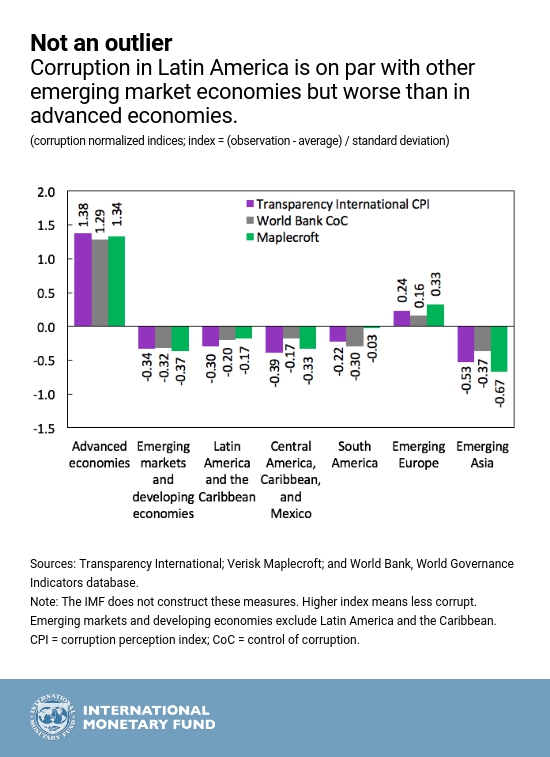
A new IMF blog by David Lipton, Alejandro Werner, and Carlos Gonçalves says that “Corruption continues to make headlines in Latin America. From a scheme to shelter assets leaked by documents in Panama, to the Petrobras and Odebrecht scandals that have spread beyond Brazil, to eight former Mexican state governors facing charges or being convicted, the region has seen its share of economic and political fallout from corruption. Latin Americans are showing increasing signs of discontent and demanding that their governments tackle corruption more aggressively.”
Continue reading here.
A new IMF blog by David Lipton, Alejandro Werner, and Carlos Gonçalves says that “Corruption continues to make headlines in Latin America. From a scheme to shelter assets leaked by documents in Panama, to the Petrobras and Odebrecht scandals that have spread beyond Brazil, to eight former Mexican state governors facing charges or being convicted, the region has seen its share of economic and political fallout from corruption.
Posted by at 1:05 PM
Labels: Inclusive Growth
Subscribe to: Posts