



Tuesday, September 12, 2017
Does Okun’s Law Hold in Swaziland?
No, the causes for high unemployment rate appear to be more structural in nature, as an IMF report documents.
No, the causes for high unemployment rate appear to be more structural in nature, as an IMF report documents.
Posted by at 9:16 AM
Labels: Inclusive Growth
Monday, September 11, 2017
Okun’s Law in Black and White
My paper “Okun’s Law: Fit at Fifty?” (with Larry Ball and Daniel Leigh) has now been published in the October 2017 issue of the Journal of Money, Credit & Banking. For those without access to the journal, here is a link to the penultimate version of the paper, which also provides the data and programs needed to replicate the results of the paper. The main result of the paper is that, fifty five years after it was proposed, Okun’s Law remains visible to the naked eye (see the chart below). We find that, for the United States, Okun’s Law is fairly stable and held up during the Great Recession, substantiating predictions that Paul Krugman made in 2011. We also provide evidence for several other advanced economies, such as Spain and Germany.
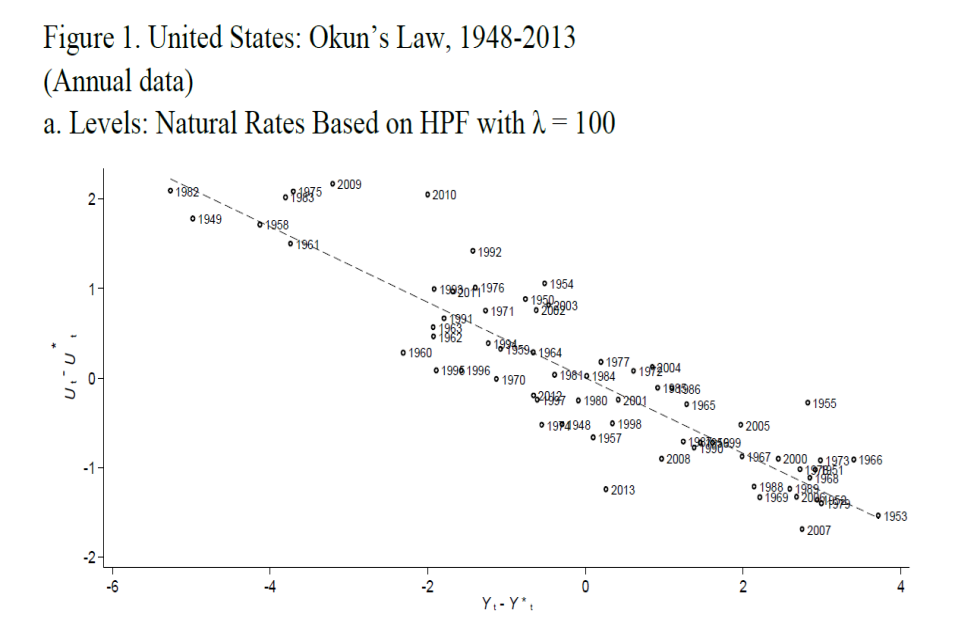
My paper “Okun’s Law: Fit at Fifty?” (with Larry Ball and Daniel Leigh) has now been published in the October 2017 issue of the Journal of Money, Credit & Banking. For those without access to the journal, here is a link to the penultimate version of the paper, which also provides the data and programs needed to replicate the results of the paper. The main result of the paper is that,
Posted by at 2:13 PM
Labels: Inclusive Growth
Friday, September 8, 2017
Housing View – September 8, 2017
On cross-country:
- Global developments in residential property prices – BIS
- Global House Price Index – Knight Frank
- European Mortgage Markets Quarterly Review (Q42016) – EMF
- The Valuation of Property for Lending Purposes – EMF
- Winner Take All? Richard Florida’s ‘New Urban Crisis’ Part of Growing Global Focus on Unequal Cities – World Resources Institute
- Pricey housing markets mean co-living buildings are on the rise – Economist
On the US:
- Why Can’t We Get Cities Right? – New York Times
- How Local Housing Regulations Smother the U.S. Economy – New York Times
- Home Purchases and Household Spending – NBER
- Is Home Sharing Driving Up Rents? Evidence from Airbnb in Boston – Journal of Housing Economics
- Rebuilding Housing in Harvey’s Aftermath: Two Lessons from Hurricanes Katrina and Rita – Harvard Joint Center for Housing Studies
- Uncertainty in the housing market: Evidence from the US states – University of Macedonia
- 8 Big Housing Changes Thanks to Driverless Cars – John Burns Real Estate Consulting
- Real Estate Lending Risks Monitor – Federal Reserve Bank of San Francisco
On other countries:
- [Canada] Why Bother With Stocks in Vancouver’s Relentless Housing Market? – Bloomberg
- [Canada] Vancouver’s housing crisis – RICS Land Journal
- [Canada] Trends in household mobility and housing choices – CMHC
- [China] China’s property market is a major source of financial risk: central bank official – Reuters
- [Ethiopia] Ethiopia is struggling to make housing affordable – Economist
- [Italy] Is social polarization related to urban density? Evidence from the Italian housing market – Landscape and Urban Planning
- [Netherlands] Can Netherlands’ ground-shifting plan prevent flooding? – Financial Times
- [Norway] Irrationality in the housing market? An empirical analysis of the capitalisation of local property taxes in the Norwegian housing market – University of Oslo
- [Spain] The cycle of wage inequality in Spain: The impact of the boom and bust in the housing market – VOX
- [Spain] Se consolida la tendencia positiva del inmobiliario en el 1S17 – BBVA
- [United Arab Emirates] The UAE Property Report 2017 – Cluttons
On cross-country:
- Global developments in residential property prices – BIS
- Global House Price Index – Knight Frank
- European Mortgage Markets Quarterly Review (Q42016) – EMF
- The Valuation of Property for Lending Purposes – EMF
- Winner Take All? Richard Florida’s ‘New Urban Crisis’ Part of Growing Global Focus on Unequal Cities – World Resources Institute
- Pricey housing markets mean co-living buildings are on the rise – Economist
On the US:
- Why Can’t We Get Cities Right?
Posted by at 5:00 AM
Labels: Global Housing Watch
Thursday, September 7, 2017
Stan Fischer: A Class Act
My tribute to Stan Fischer.
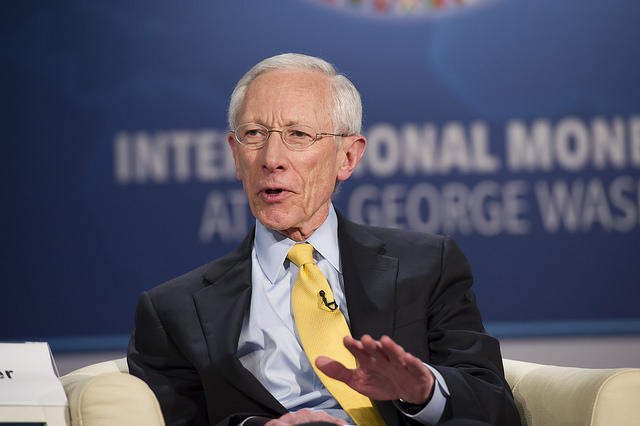
Stanley Fischer, Vice Chair of the Board of Governors of the Federal Reserve System speaks during the seminar The Elusive Pursuit of Inflation during the 2015 IMF/World Bank Spring Meetings on Thursday, April 16 in Washington, D.C. IMF Photo/Ryan Rayburn
My tribute to Stan Fischer.
Stanley Fischer, Vice Chair of the Board of Governors of the Federal Reserve System speaks during the seminar The Elusive Pursuit of Inflation during the 2015 IMF/World Bank Spring Meetings on Thursday, April 16 in Washington, D.C. IMF Photo/Ryan Rayburn
Posted by at 1:12 PM
Labels: Profiles of Economists
Tuesday, September 5, 2017
Oil Prices and Inflation Dynamics: Evidence from Advanced and Developing Economies
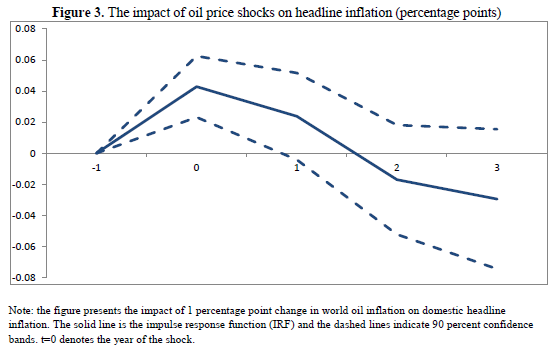
We study the impact of fluctuations in global oil prices on domestic inflation using an unbalanced panel of 72 advanced and developing economies over the period from 1970 to 2015. We find that a 10 percent increase in global oil inflation increases, on average, domestic inflation by about 0.4 percentage point on impact, with the effect vanishing after two years and being similar between advanced and developing economies. We also find that the effect is asymmetric, with positive oil price shocks having a larger effect than negative ones. The impact of oil price shocks, however, has declined over time due in large part to a better conduct of monetary policy. We further examine the transmission channels of oil price shocks on domestic inflation during the recent decades, by making use of a monthly dataset from 2000 to 2015. The results suggest that the share of transport in the CPI basket and energy subsidies are the most robust factors in explaining cross-country variations in the effects of oil price shocks during the this period.
Continue reading here.
We study the impact of fluctuations in global oil prices on domestic inflation using an unbalanced panel of 72 advanced and developing economies over the period from 1970 to 2015. We find that a 10 percent increase in global oil inflation increases, on average, domestic inflation by about 0.4 percentage point on impact, with the effect vanishing after two years and being similar between advanced and developing economies. We also find that the effect is asymmetric,
Posted by at 4:42 PM
Labels: Energy & Climate Change
Subscribe to: Posts