



Wednesday, November 3, 2021
Flattening the curve: Pandemic-Induced revaluation of urban real estate
From a new paper by Arpit Gupta, Vrinda Mittal, Jonas Peeters, and Stijn Van Nieuwerburgh:
“We show that the COVID-19 pandemic brought house price and rent declines in city centers, and price and rent increases away from the center, thereby flattening the bid-rent curve in most U.S. metropolitan areas. Across MSAs, the flattening of the bid-rent curve is larger when working from home is more prevalent, housing markets are more regulated, and supply is less elastic. Housing markets predict an urban revival with urban rent growth exceeding suburban rent growth for the foreseeable future, as working from home recedes.”
From a new paper by Arpit Gupta, Vrinda Mittal, Jonas Peeters, and Stijn Van Nieuwerburgh:
“We show that the COVID-19 pandemic brought house price and rent declines in city centers, and price and rent increases away from the center, thereby flattening the bid-rent curve in most U.S. metropolitan areas. Across MSAs, the flattening of the bid-rent curve is larger when working from home is more prevalent, housing markets are more regulated,
Posted by at 7:45 AM
Labels: Global Housing Watch
Tuesday, November 2, 2021
Conference Board: Are Consumer Expectations Signaling a U.S. Recession?
From The Conference Board.
By Dana M. Peterson & Lynn Franco
“US consumer expectations as measured by The Conference Board Consumer Confidence Index ticked up in October, but this followed three months of declines. Did the declines signal recession in 2022 or just a hiccup related to the Delta variant? We propose the latter.
Indeed, material downshifts in the consumer expectations gauge, with the exception of the pandemic, have preceded US recessions. However, closer examination of the index reveals at least 18 instances since the inception of the measure when there were 10 point or more declines in the index that did not predict recession (Figure 1). Notably, those dips often coincided with shocks to the economy, including wars, bad weather, and happenings in Washington, DC (Figure 2). Indeed, the three month decline in expectations this year occurred while the Delta variant swept across the nation – a sort of shock within the pandemic shock. Notably, consumer expectations were rising earlier this year as vaccinations rose, mobility restrictions lessened, and in-person services began to reopen.”
Continue reading here.
From The Conference Board.
By Dana M. Peterson & Lynn Franco
“US consumer expectations as measured by The Conference Board Consumer Confidence Index ticked up in October, but this followed three months of declines. Did the declines signal recession in 2022 or just a hiccup related to the Delta variant? We propose the latter.
Indeed, material downshifts in the consumer expectations gauge, with the exception of the pandemic, have preceded US recessions.
Posted by at 5:27 PM
Labels: Forecasting Forum
The International Monetary Fund’s View of Social Equity Throughout Its 75 Years of Existence
“The (International Monetary) Fund’s stance on equity has changed in parallel with external circumstances and the demands of its members, driven, sometimes forcefully, by its MDs. Poverty featured prominently in the Fund’s discourse in its early years when the institution began to take into account the voice and needs of its most vulnerable members. The 1980s and 1990s saw the consolidation of concessional financing, which broadened its focus towards equity between individuals and the “high-quality growth” championed by management and, at first, also by member countries. In the research conducted by the institution’s staff, inequality, social factors, and gender issues gradually gained prominence. These factors were included only to a limited extent and temporarily in the Fund’s activity, given the absence of strong support from the Board.
At the beginning of this century, there was growing disaffection with the Fund among developing countries, which demanded to be treated on a more equal footing. The far-reaching institutional and cultural reform of the IMF in the first decade of this millennium helped to put inequality and other macro-critical issues firmly on the Fund’s agenda. It is possible that the fallout from this century’s two major crises is contributing to consolidate inequality, gender, and the environment in the Fund’s activity and discourse. This may also have been assisted by the fact that the IMF has been led by two women in the recent past.
This paper has analysed how equity issues have been incorporated into the debate and design of the Fund’s policies and, through its texts, what stance each agent (management, member countries and staff) has adopted at each point in time. As a possible follow-up to this analysis, it is worth exploring the extent to which the Fund has put this “declaration of intent” into effect in its surveillance and lending activity and whether its implementation has been consistent with the general guidelines on equity. A text-mining analysis of the content of Article IV reports and IMF programmes could help assess the effective implementation of these issues, for which the annual reports provide only an approximation, and to verify the consistency between discourse, policy design and implementation.”
Source: Banco de España. 2021. The International Monetary Fund’s View of Social Equity Throughout Its 75 Years of Existence (p. 18)
Click here to read the full report.
“The (International Monetary) Fund’s stance on equity has changed in parallel with external circumstances and the demands of its members, driven, sometimes forcefully, by its MDs. Poverty featured prominently in the Fund’s discourse in its early years when the institution began to take into account the voice and needs of its most vulnerable members. The 1980s and 1990s saw the consolidation of concessional financing, which broadened its focus towards equity between individuals and the “high-quality growth” championed by management and,
Posted by at 9:25 AM
Labels: Inclusive Growth
Affordable Housing as a Pathway to Economic Opportunity
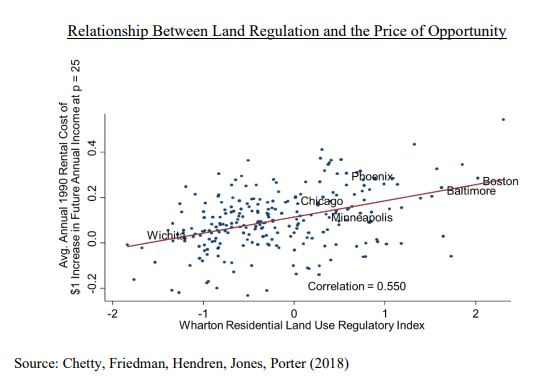
From Raj Chetty’s (Harvard University) Testimony Before the House Financial Services Committee:
“Stable housing in high-opportunity neighborhoods can provide a critical foundation for a variety of outcomes such as future earnings, health, and education. Failing to meet our children’s basic housing needs serves to worsen already-stark racial and economic disparities and bar generations from growing up and joining the middle class.
Today, we have an unprecedented opportunity to expand access to neighborhoods that research shows are foundational to children’s and families’ long-term success. Well-designed expansions of the Housing Choice Voucher program, public housing investments, the Housing Tax Credit, and place-based investments could significantly increase housing supply and access to opportunity. Such investments can give all children an opportunity to grow-up in communities that will support their long-term success.
More broadly, to achieve long-term mobility for all children in the United States, we must reduce historic patterns of segregation that have limited access to opportunity-rich neighborhoods, particularly for Black and Hispanic Americans. Equally important, we must also increase opportunity in communities that do not presently see such outcomes. Expanding access to affordable housing can be valuable on both fronts. We must continue to deploy our resources towards increasing options for low- and middle-income families living in areas currently offering high levels of opportunity, and simultaneously to maintain and expand high-quality housing options and community development efforts in areas that currently offer lower levels of opportunity. These strategies will help ensure that all families have a true choice about where to live, reduce the present bifurcation between ‘high’ and ‘low; opportunity areas across the country, and give all children – irrespective of their race, ethnicity, or family income – a chance of achieving the American Dream.”
From Raj Chetty’s (Harvard University) Testimony Before the House Financial Services Committee:
“Stable housing in high-opportunity neighborhoods can provide a critical foundation for a variety of outcomes such as future earnings, health, and education. Failing to meet our children’s basic housing needs serves to worsen already-stark racial and economic disparities and bar generations from growing up and joining the middle class.
Today, we have an unprecedented opportunity to expand access to neighborhoods that research shows are foundational to children’s and families’ long-term success.
Posted by at 7:06 AM
Labels: Global Housing Watch
Monday, November 1, 2021
Why are relatively poor people not more supportive of redistribution?
Policymaking and research on perhaps some of the most pressing social issues in the contemporary world today, like poverty, inequality, access to resources, and related matters, is both blessed and plagued with the idea that additional evidence on people’s identities and information sets can radically transform the rate of success or failure of policies.
Among other things, one such question has also been the irony of demand for redistributive and poverty alleviation programs not rising commensurately or even remotely as much with the ever-rising level of inequalities in the world. Many studies have attempted to explain this phenomenon by presenting the idea that poor people often have only limited knowledge about their relative deprivation viz other people in the economy. They also believe their income levels to approximately coincide with the average income level of the country, thus convincing themselves of the non-usefulness of any redistribution programs.
This study, by Hoy and Mager, empirically tests some of these theories using randomized surveys and churns out some insightful observations. It redefines the idea of ‘benchmarking’ incomes for designing redistribution programs and explains the importance of information sets in shaping poor people’s preferences for accepting aid.
Click here to read more.
Policymaking and research on perhaps some of the most pressing social issues in the contemporary world today, like poverty, inequality, access to resources, and related matters, is both blessed and plagued with the idea that additional evidence on people’s identities and information sets can radically transform the rate of success or failure of policies.
Among other things, one such question has also been the irony of demand for redistributive and poverty alleviation programs not rising commensurately or even remotely as much with the ever-rising level of inequalities in the world.
Posted by at 1:02 PM
Labels: Inclusive Growth
Subscribe to: Posts