



Saturday, June 4, 2022
Africa: Tackling Some Big Economic Questions
From Conversable Economist:
“Economic development typically involves a group of transitions, like the shift from agriculture to manufacturing to services. The Winter 2022 issue of the Journal of Economic Perspectives (where I work as Managing Editor) includes five papers on aspects of development-related transitions in the nations of Africa. Here are some of the big questions:
Does Africa have a manufacturing path to economic development?
In “Labor Productivity Growth and Industrialization in Africa,” Margaret McMillan and Albert Zeufack investigate Africa’s manufacturing sector. As they point out, a shift from agriculture to low-skilled manufacturing to high-skilled manufacturing to services has been a standard pattern of economic development for countries around the world. However, there are concerns that this path may not work well in the 21st century, because automated production keeps getting cheaper and thus reducing the opportunities for low-skilled jobs.
Some of the signs for industrialization in Africa are encouraging. The most comprehensive information about manufacturing employment in Africa only covers 18 countries, but based on those data, manufacturing employment in Africa’s lowand middle-income countries increased from 6 million to more than 20 million from 2000 to 2018, raising the share of employment in manufacturing from 7.2 percent to 8.4 percent (Kruse et al. 2021). In comparison, the 1990s saw zero growth in Africa’s manufacturing employment. Manufacturing exports from African nations have also grown at an annual average of 9.5 percent per year (Signé 2018). However, while employment and value-added shares of manufacturing in Africa are rising, both remain very low in comparison to the rest of the world …
But when the authors dig into the data, they find that the growth in manufacturing employment in nations of Africa has been primarily happening in small firms with less than 10 employees. Conversely, the growth in productivity in manufacturing in Africa is primarily in large firms, which aren’t adding many jobs. Many of Africa’s large manufacturing firms are in one way or another involves in processing of natural resources, which has been becoming an ever-more automation-intensive process.
Thus, the broad challenge for Africa’s manufacturing sector is for the larger firms to build linkages backward and forward into other African-based manufacturing firms, and for at least some of the small firms to make productivity gains and grow in size, so that they can become an “in-between” sector of manufacturing. One promising change is the African Continental Free Trade Area, started in 2018, which may offer possibilities for African-based manufacturing firms to sell and compete within a larger and more unified market. In addition, there are still some industries like certain kinds of textile manufacturing where low-wage labor can offer a comparative advantage in global production.”
Continue reading here.
From Conversable Economist:
“Economic development typically involves a group of transitions, like the shift from agriculture to manufacturing to services. The Winter 2022 issue of the Journal of Economic Perspectives (where I work as Managing Editor) includes five papers on aspects of development-related transitions in the nations of Africa. Here are some of the big questions:
Does Africa have a manufacturing path to economic development?
In “Labor Productivity Growth and Industrialization in Africa,” Margaret McMillan and Albert Zeufack investigate Africa’s manufacturing sector.
Posted by at 7:10 AM
Labels: Macro Demystified
Friday, June 3, 2022
A Multi-pronged Strategy to Reduce Housing Market Imbalances in Luxembourg
From the IMF’s latest report on Luxembourg:
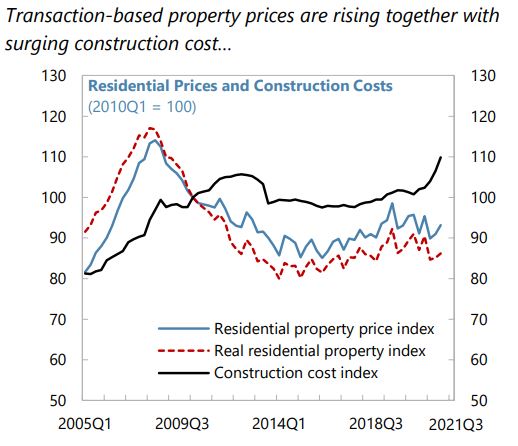
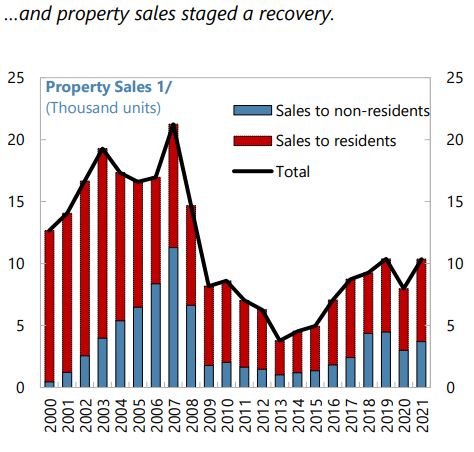
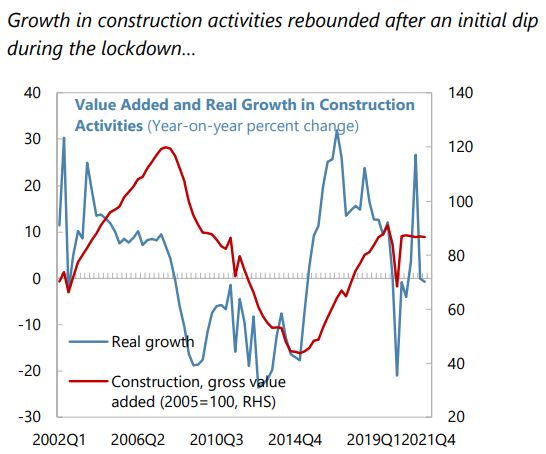
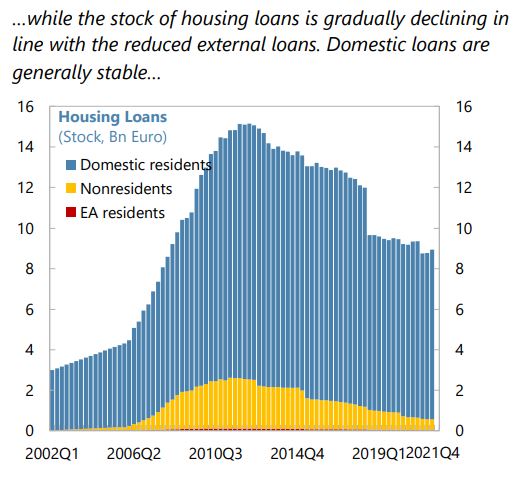
“With residential real estate prices more than doubling in a decade and (60 percent in the last 4 years),
housing is becoming a key challenge in Luxembourg. Although 2/3rd of households are homeowners,
affordability concerns have been on the rise, including for the middle-income. If continued, these
trends could hamper the country’s competitiveness and attractiveness for workers and pose risks for
financial stability in the medium term. Building on previous IMF analytical work, and looking at the
drivers of the recent housing trends as well as the government’s policies, the paper advocates for a
comprehensive strategy to reduce imbalances in the housing market. The approach includes measures
to: i) boost housing supply (e.g., by mobilizing vacant dwellings and unused land, using existing
resources more efficiently by building more, denser, faster, and at a lower cost), while increasing the
share of affordable homes, ii) contain demand pressure and reduce its geographic concentration,
iii) increase residential mobility, and iv) reduce under occupation. The paper also emphasizes the need
for a more effective and coordinated implementation of reforms.”
From the IMF’s latest report on Luxembourg:
“With residential real estate prices more than doubling in a decade and (60 percent in the last 4 years),
housing is becoming a key challenge in Luxembourg. Although 2/3rd of households are homeowners,
affordability concerns have been on the rise, including for the middle-income. If continued, these
trends could hamper the country’s competitiveness and attractiveness for workers and pose risks for
financial stability in the medium term.
Posted by at 10:34 AM
Labels: Global Housing Watch
Housing View – June 3, 2022
On cross-country:
- Will global property prices continue to remain frothy? – BFM
- Financial stability amid Russia’s war in Ukraine – European Central Bank
- Impact of final Basel III on the EU mortgage sector – Copenhagen Economics
- New Housing Supply: Empirical and Theoretical Studies – SSRN
On the US:
- US For-Sale Homes Rise in First Since 2019, Realtor.com Shows – Bloomberg
- U.S. house price inflation to cool as buyers sidelined by higher rates: Reuters poll – Reuters
- Lumber Is the Cheapest in Seven Months as Housing Markets Soften. Futures may sink to as low as $400 per 1,000 board feet, says analyst – Bloomberg
- A recession could throw cold water on the housing market — but that doesn’t mean it’s going to get any easier to buy a home – Business Insider
- Moving From Opportunity: The High Cost of Restrictions on Land Use – Marginal Revolution
- Big U.S. Cities Lost More Residents as Covid-19 Pandemic Stretched On. San Francisco and Chicago population totals are near 2010 levels – Wall Street Journal
- Fed Fears Hit Mortgage Bonds, Attracting Investors. Mortgage REIT Annaly Capital has raised about $3 billion in recent weeks to buy into the battered mortgage-bond market – Wall Street Journal
- County Where It Took 50 Years To Approve New Subdivision Bans New Airbnbs. Officials in Marin County, California, argue a temporary moratorium on new short-term rentals in western portions of the county is necessary to preserve the area’s limited housing stock. – Reason
- Homeownership Remains the American Dream, Despite Challenges. A new survey reveals that nearly three-quarters of Americans place owning a home above career, family and college as a sign of prosperity. – New York Times
- Biden-Harris Administration Launches Initiative to Modernize Building Codes, Improve Climate Resilience, and Reduce Energy Costs – White House
On other countries:
- [Canada] Canada housing boom to halt next year on higher mortgage rates – Reuters poll – Reuters
- [Canada] Ontario needs new housing – and whatever the parties say, it won’t come easy – Globe and Mail
- [New Zealand] New Zealand house prices to sink 9.0% this year, another 2% in 2023 – Reuters
- [Saudi Arabia] Mortgage boom as Saudis queue up to buy first homes. Jump in lending and purchases reflects government push and drive to win support among youth – FT
- [Singapore] Singapore’s sovereign wealth fund swoops for £3.3bn UK student housing deal. Transaction signals confidence in UK rental market despite gloomy economic outlook – FT
- [Singapore] There’s a ‘massive gap’ between housing demand and supply in Singapore, PropertyGuru CEO says – CNBC
- [United Arab Emirates] Foreign demand to keep Dubai property prices on steady upward course: Reuters poll – Reuters
- [United Kingdom] BoE’s Cunliffe seeing evidence of slowdown in housing market – Reuters
- [United Kingdom] Mortgage reform is key to unlocking UK home ownership. The country is a global outlier in managing credit risk – FT
- [United Kingdom] Bringing It Home: Raising Home Ownership by Reforming Mortgage Finance – Tony Blair Institute for Global Change
- [United Kingdom] UK housing market starts to slow as more sellers cut prices. Data from portal Zoopla also indicates average time to sell a home is lengthening – FT
- [United Kingdom] UK mortgage approvals slide to lowest level in two years. Analysts forecast housing market will cool in 2022 but believe large price falls are unlikely – FT
- [United Kingdom] Renters squeezed by higher housing costs and utility bills. Owner-occupiers have more elbow room to reduce their spending to cope with rising inflation, analysis suggests – FT
On cross-country:
- Will global property prices continue to remain frothy? – BFM
- Financial stability amid Russia’s war in Ukraine – European Central Bank
- Impact of final Basel III on the EU mortgage sector – Copenhagen Economics
- New Housing Supply: Empirical and Theoretical Studies – SSRN
On the US:
- US For-Sale Homes Rise in First Since 2019,
Posted by at 5:00 AM
Labels: Global Housing Watch
Thursday, June 2, 2022
Moving From Opportunity: The High Cost of Restrictions on Land Use
From Marginal Revolution:
“People are more productive in cities. As a result, people move to cities to earn higher wages but some of their productivity and wages is eaten up by land prices. How much? In a new paper Philip G. Hoxie, Daniel Shoag, and Stan Veuger show that net wages (that is wages after housing costs) used to increase in cities for all workers but since around 2000 net wages actually fall when low-wage workers move to cities. The key figure is at right.
As I wrote earlier, it used to be that poor people moved to rich places. A janitor in New York, for example, used to earn more than a janitor in Alabama even after adjusting for housing costs. As a result, janitors moved from Alabama to New York, in the process raising their standard of living and reducing income inequality. Today, however, after taking into account housing costs, janitors in New York earn less than janitors in Alabama. As a result, poor people no longer move to rich places. Indeed, there is now a slight trend for poor people to move to poor places because even though wages are lower in poor places, housing prices are lower yet.
Ideally, we want labor and other resources to move from low productivity places to high productivity places–this dynamic reallocation of resources is one of the causes of rising productivity. But for low-skill workers the opposite is happening – housing prices are driving them from high productivity places to low productivity places. Furthermore, when low-skill workers end up in low-productivity places, wages are lower so there are fewer reasons to be employed and there aren’t high-wage jobs in the area so the incentives to increase human capital are dulled. The process of poverty becomes self-reinforcing.
Why has housing become so expensive in high-productivity places? It is true that there are geographic constraints (Manhattan isn’t getting any bigger) but zoning and other land use restrictions including historical and environmental “protection” are reducing the amount of land available for housing and how much building can be done on a given piece of land. As a result, in places with lots of restrictions on land use, increased demand for housing shows up mostly in house prices rather than in house quantities.“
Continue reading here.
From Marginal Revolution:
“People are more productive in cities. As a result, people move to cities to earn higher wages but some of their productivity and wages is eaten up by land prices. How much? In a new paper Philip G. Hoxie, Daniel Shoag, and Stan Veuger show that net wages (that is wages after housing costs) used to increase in cities for all workers but since around 2000 net wages actually fall when low-wage workers move to cities.
Posted by at 10:29 AM
Labels: Global Housing Watch
Subscribe to: Posts