Showing posts with label Global Housing Watch. Show all posts
Monday, October 1, 2018
Sectoral Booms and Misallocation of Managerial Talent: Evidence from the Chinese Real Estate Boom
From a new IMF working paper by Yu Shi:
“This paper identifies a new mechanism leading to inefficiency in capital reallocation at the extensive margin when an economy experiences a sectoral boom. I argue that imperfections in the financial market and capital barriers to entry in the booming sector create a misallocation of managerial talent. Using comprehensive firm-level data from China, I first provide evidence that more productive firms reallocate capital to the booming real estate sector, and demonstrate that the pattern is likely driven by fewer financial constraints on these firms. I then use a structural estimation to verify the talent misallocation. Finally, I calibrate a dynamic model and find that the without the misallocation, the TFP growth in the manufacturing sector would have improved by 0.5% per year.”
From a new IMF working paper by Yu Shi:
“This paper identifies a new mechanism leading to inefficiency in capital reallocation at the extensive margin when an economy experiences a sectoral boom. I argue that imperfections in the financial market and capital barriers to entry in the booming sector create a misallocation of managerial talent. Using comprehensive firm-level data from China, I first provide evidence that more productive firms reallocate capital to the booming real estate sector,
Posted by at 10:31 AM
Labels: Global Housing Watch
House Price Synchronization and Financial Openness: A Dynamic Factor Model Approach
From a new IMF working paper by Mitsuru Katagiri:
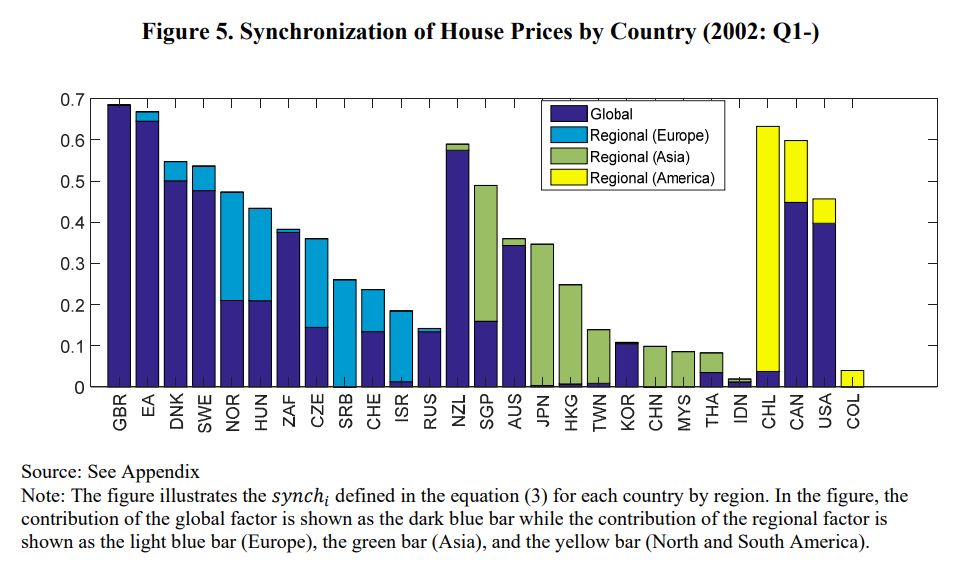
“This paper investigates the developments in house price synchronization across countries by a dynamic factor model using a country- and city-level dataset, and examines what drives the synchronization. The empirical results indicate that: (i) the degree of synchronization has been rising since the 1970s, and (ii) a large heterogeneity in the degree of synchronization exists across countries and cities. A panel and cross-sectional regression analysis show that the heterogeneity of synchronization is partly accounted for by the progress in financial and trade openness. Also, the city-level analysis implies that the international synchronization is mainly driven by the city-level connectivity between large and international cities.”
From a new IMF working paper by Mitsuru Katagiri:
“This paper investigates the developments in house price synchronization across countries by a dynamic factor model using a country- and city-level dataset, and examines what drives the synchronization. The empirical results indicate that: (i) the degree of synchronization has been rising since the 1970s, and (ii) a large heterogeneity in the degree of synchronization exists across countries and cities. A panel and cross-sectional regression analysis show that the heterogeneity of synchronization is partly accounted for by the progress in financial and trade openness.
Posted by at 10:28 AM
Labels: Global Housing Watch
House Prices in Philippines
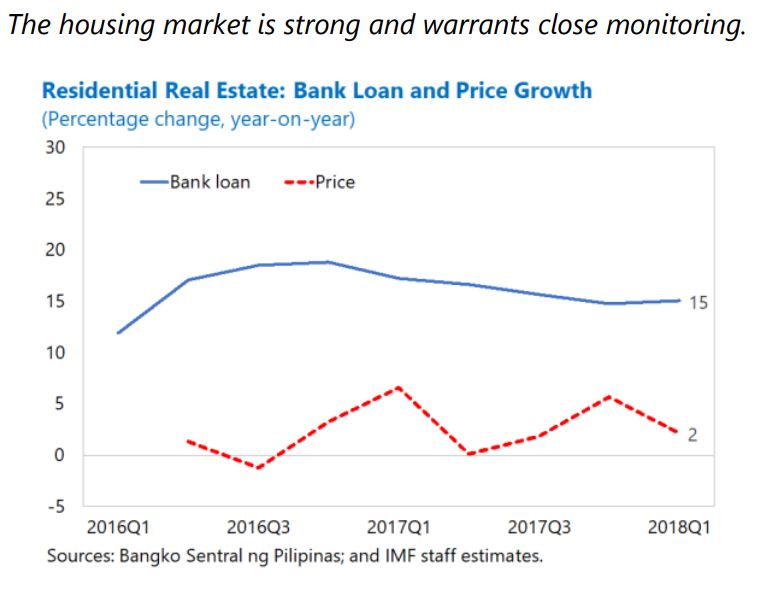
The latest IMF report on Philippines points out that:
Posted by at 10:23 AM
Labels: Global Housing Watch
Friday, September 28, 2018
Housing View – September 28, 2018
On the US:
- Perception of House Price Risk and Homeownership – NBER
- Affordable Housing: Hard Way and Easy Way – Cato Institute
- Barriers to Accessing Homeownership Down Payment, Credit, and Affordability – 2018 – Urban Institute
- Texas Property Taxes Soar as Homeowners Confront Rising Values – Federal Reserve Bank of Dallas
- The housing bubble, the credit crunch, and the Great Recession: A reply to Paul Krugman – Brookings
- America Needs to Revive the American Dream of Homeownership – Bloomberg
- How Much Will Homeowners Spend to Rebuild & Repair After Hurricane Florence? – Harvard Joint Center for Housing Studies
- Affordable housing is just the beginning of YIMBY – VOX
- Builders Slump as U.S. Housing Market Shifts to the Slow Lane – Bloomberg
- Is There a Better Way to Measure Housing Affordability? – Harvard Joint Center for Housing Studies
- Elizabeth Warren’s Ambitious Fix for America’s Housing Crisis – The Atlantic
- School shootings affect school quality, housing value – University of Illinois at Urbana – Champaign
- Building More Houses Isn’t Always the Answer – Bloomberg
On other countries:
- [Chile] ¿Cómo influye la cercanía del Metro en el valor de una propiedad? – CNN
- [China] Understanding Real Estate Price Dynamics: The Case of Housing Prices in Five Major Cities of China – Journal of Housing Economics
- [China] How Much Would China’s GDP Respond to a Slowdown in Housing Activity? – Federal Reserve Bank of Kansas City
- [China] China Developers’ Funding Source at Risk in Sales Crackdown – Bloomberg
- [Germany] Germany sets out measures to tackle affordable housing shortage – Reuters
- [Germany] Germany’s soaring housing prices spark calls for reform – Deutsche Welle
- [Hong Kong] Higher interest rates threaten overvalued property markets – Financial Times
- [Hong Kong] Hong Kong at greatest risk of housing bubble: UBS – Financial Times
- [United Kingdom] Is Richmond the Nimbyest place in London? – Financial Times

Photo by Aliis Sinisalu
On the US:
- Perception of House Price Risk and Homeownership – NBER
- Affordable Housing: Hard Way and Easy Way – Cato Institute
- Barriers to Accessing Homeownership Down Payment, Credit, and Affordability – 2018 – Urban Institute
- Texas Property Taxes Soar as Homeowners Confront Rising Values – Federal Reserve Bank of Dallas
- The housing bubble, the credit crunch,
Posted by at 5:00 AM
Labels: Global Housing Watch
Friday, September 21, 2018
Housing View – September 21, 2018
On cross-country:
- Q2 2018: Global house price boom – strong house price rises continue in Europe and parts of Asia – Global Property Guide
- Eurozone housing market cycle is maturing – ING
- Disillusion mounts in Europe’s housing market – ING
On the US:
- Price-to-Income Ratios are Nearing Historic Highs – Harvard Joint Center for Housing Studies
- Why do so many affordable-housing advocates reject the law of supply and demand? – Washington Post
- The Mortgage Market Is Back a Decade After the Credit Crisis—With New Risks – Bloomberg
- Jeff Bezos Homeless Pledge Follows Amazon Fight Against Housing Tax – Bloomberg
- Census: Renters’ Incomes Still Lagging Behind Housing Costs – Center on Budget and Policy Priorities
- New evidence shows manufactured homes appreciate as well as site-built homes – Urban Institute
- ‘As safe as houses’: How a small corner of the US mortgage market nearly brought down the global financial system – Bank of England
- Does Rising Housing Inventory Signal the Beginning of a Buyer’s Market? – First American
- The Wealth Hiding in Your Neighborhood – Institute for Policy Studies
- Luxury Real Estate Boom Adds to Risk of Climate Disruption – Institute for Policy Studies
- Tough Times Ahead for Housing – Wall Street Journal
On other countries:
- [Brazil] Brazil’s house prices still falling, but outlook positive – Global Property Guide
- [China] China’s Weakest Housing Markets Flash Red in Cautionary Tale – Bloomberg
- [China] One of China’s Wildest Housing Markets Is Broken – Bloomberg
- [China] How China’s plan to develop rental housing backfired – Reuters
- [Chile] Chile’s house prices continue to rise modestly, despite the imposition of 19% VAT on property sales – Global Property Guide
- [Ireland] Ireland sets up land agency as anger grows at housing shortage – Reuters
- [Ireland] Dublin’s Housing Crisis Reaches a Boiling Point – CityLab
- [Malta] Malta house price growth outstrips Hong Kong to take top ranking – Financial Times
- [New Zealand] New Zealand’s house prices are rising again – Global Property Guide
- [South Korea] Korea imposes tougher taxes on properties to curb price surge – Reuters
- [Ukraine] Ukraine’s house price falls accelerating – Global Property Guide
- [United Kingdom] Is UK property still a good investment? – Financial Times
- [United Kingdom] K. House Prices at Risk From Brexit – Bloomberg
Photo by Aliis Sinisalu
On cross-country:
- Q2 2018: Global house price boom – strong house price rises continue in Europe and parts of Asia – Global Property Guide
- Eurozone housing market cycle is maturing – ING
- Disillusion mounts in Europe’s housing market – ING
On the US:
- Price-to-Income Ratios are Nearing Historic Highs – Harvard Joint Center for Housing Studies
- Why do so many affordable-housing advocates reject the law of supply and demand?
Posted by at 5:00 AM
Labels: Global Housing Watch
Subscribe to: Posts