


Wednesday, April 13, 2011
Shirkers of the World, Unite!
British economist Guy Standing has a new book on the Precariat, people living and working precariously in short-term jobs without benefits or social protections. Standing says that a way to a better society would be to have an unconditional basic income for everyone, contributed by the state, augmented through employment. A basic income would allow people to gain control over their time rather than rush feverishly from activity to activity. We would enjoy leisure. Hence my rallying cry “Shirkers of the World, Unite!” when I discussed Standing’s work yesterday at an event at Economic Policy Institute (EPI). Larry Mishel, EPI’s President introduced the event, which also featured noted labor scholars Heidi Hartmann and Eileen Appelbaum. Guy Standing’s previous book, Work After Globalization, has fascinating material—I heartily recommend it. It’s what I thought economics would be all about when I signed up for it some thirty years ago.

British economist Guy Standing has a new book on the Precariat, people living and working precariously in short-term jobs without benefits or social protections. Standing says that a way to a better society would be to have an unconditional basic income for everyone, contributed by the state, augmented through employment. A basic income would allow people to gain control over their time rather than rush feverishly from activity to activity. We would enjoy leisure.
Posted by at 12:10 PM
Labels: Inclusive Growth
Tuesday, April 12, 2011
Econbrowser on Energy Independence
Noted economist Menzie Chinn blogs on whether reduced dependence on imported energy is a worthwhile objective. Chinn and Jim Hamliton, another famous economist, run Econbrowser, which made Time magazine’s list of the Top 25 financial & economic blogs.
Noted economist Menzie Chinn blogs on whether reduced dependence on imported energy is a worthwhile objective. Chinn and Jim Hamliton, another famous economist, run Econbrowser, which made Time magazine’s list of the Top 25 financial & economic blogs.
Posted by at 11:27 PM
Labels: Energy & Climate Change
Thursday, April 7, 2011
IMF Sees Oil Prices Staying High
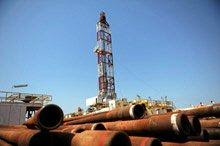
Oil prices are likely to remain high for the foreseeable future, and IMF economists say that governments should be looking to back sustainable alternative sources of energy. IMF analysis released as part of its World Economic Outlook says improvements in oil supply have been slow.
Oil prices are likely to remain high for the foreseeable future, and IMF economists say that governments should be looking to back sustainable alternative sources of energy. IMF analysis released as part of its World Economic Outlook says improvements in oil supply have been slow.
Posted by at 4:59 PM
Labels: Energy & Climate Change
Saturday, April 2, 2011
Oil price hike fuels recession fears

As the price of oil broke through $100 a barrel recently, economists have started whispering the dreaded R word – recession. The last five oil shocks – 1973-74 Arab oil embargo; 1978-79 Iranian Revolution; 1980s Iran-Iraq war; 1990-91 Gulf War and the oil spike of 2007-08 – all triggered global recessions. To continue reading, see the recent article by China Daily.
As the price of oil broke through $100 a barrel recently, economists have started whispering the dreaded R word – recession. The last five oil shocks – 1973-74 Arab oil embargo; 1978-79 Iranian Revolution; 1980s Iran-Iraq war; 1990-91 Gulf War and the oil spike of 2007-08 – all triggered global recessions. To continue reading, see the recent article by China Daily.
Posted by at 1:52 AM
Labels: Energy & Climate Change
Thursday, March 31, 2011
OECD Energy Diversification Changes Largely Reliant on Gas Uptake: IMF
Improvements in energy diversification for OECD nations – a key determinant of energy security – are mostly attributable to the increased importance of natural gas as an energy source, a recent IMF working paper reveals. To read more, see the commercial climate’s Blog article on the paper.
Improvements in energy diversification for OECD nations – a key determinant of energy security – are mostly attributable to the increased importance of natural gas as an energy source, a recent IMF working paper reveals. To read more, see the commercial climate’s Blog article on the paper.
Posted by at 2:04 AM
Labels: Energy & Climate Change
Subscribe to: Posts