

Wednesday, September 18, 2013
Distributional Consequences of Fiscal Consolidation
The IMF released a second working paper on the distributional impacts of fiscal consolidation. Like the previous work, this one concludes that “fiscal consolidations are likely to raise inequality through various channels including their effects on unemployment. Spending-based consolidations tend to worsen inequality more significantly, relative to tax-based consolidations.” For more on the IMF’s recent work on fiscal policy, see this presentation at UNICEF.
The IMF released a second working paper on the distributional impacts of fiscal consolidation. Like the previous work, this one concludes that “fiscal consolidations are likely to raise inequality through various channels including their effects on unemployment. Spending-based consolidations tend to worsen inequality more significantly, relative to tax-based consolidations.” For more on the IMF’s recent work on fiscal policy, see this presentation at UNICEF.
Posted by at 1:30 PM
Labels: Inclusive Growth
Sunday, September 15, 2013
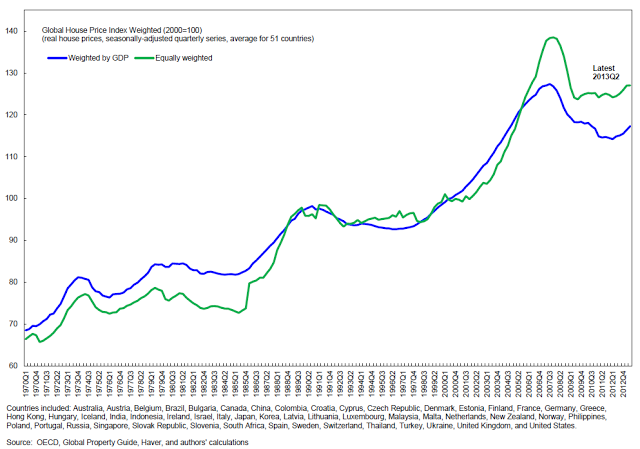
Global House Price Watch
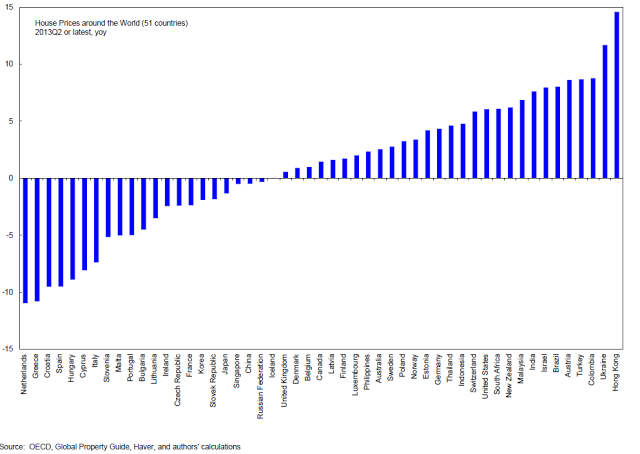
2. … with house prices rising in 30 countries out of 51 included in the index
3. Among OECD countries, increases and declines are more evenly balanced
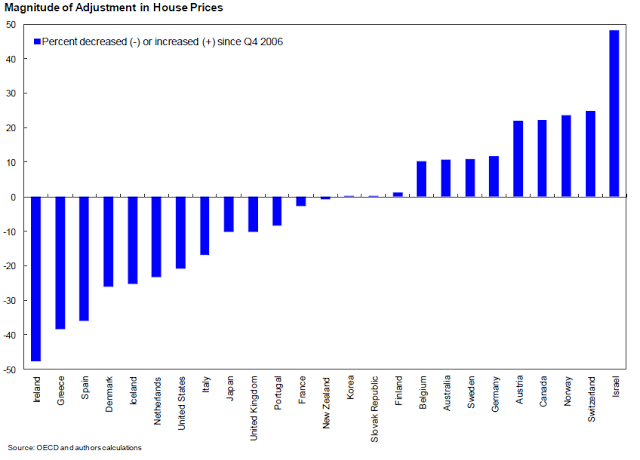
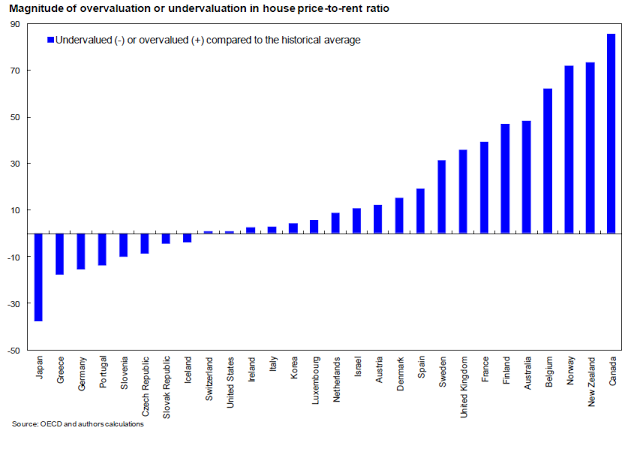
4. In most OECD countries house price-to-rent ratios remain above their historical averages …
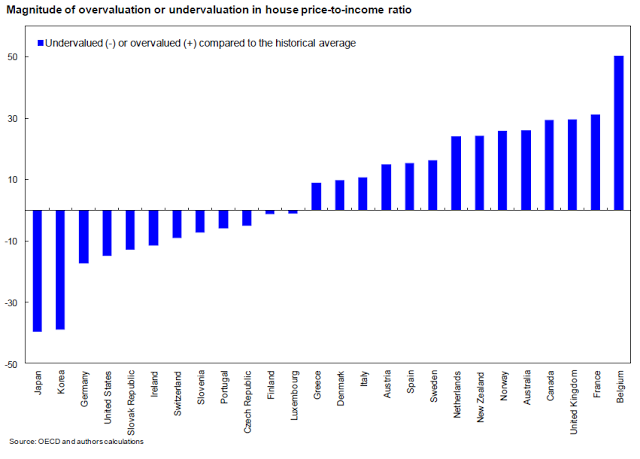
5. … as do house price-to-income ratios
Here’s the full report.
1. Index of global house prices keeps inching up …
2. … with house prices rising in 30 countries out of 51 included in the index
3. Among OECD countries, increases and declines are more evenly balanced
4. In most OECD countries house price-to-rent ratios remain above their historical averages …
5.
Posted by at 10:23 PM
Labels: Global Housing Watch
Tuesday, September 10, 2013
Okun’s Not Broken: Jobs and Growth are Still Linked
I sound like a broken record (young people will not know how a broken record sounds, let alone what a ‘record’ is) but I gave a talk at the New School for Social Research today on how jobs and growth are linked in many countries across the globe. On a personal note: It was difficult not to ‘feel verklempt’ giving a talk at New School–Robert’s Heilbroner’s “The Wordly’s Philosophers” is probably why I became an economist.
I sound like a broken record (young people will not know how a broken record sounds, let alone what a ‘record’ is) but I gave a talk at the New School for Social Research today on how jobs and growth are linked in many countries across the globe. On a personal note: It was difficult not to ‘feel verklempt’ giving a talk at New School–Robert’s Heilbroner’s “The Wordly’s Philosophers” is probably why I became an economist. Read the full article…
Posted by at 8:00 PM
Labels: Inclusive Growth
“Austerity” and Inequality: Engaging UNICEF
In my presentation at UNICEF today I spoke about the impacts of fiscal consolidation (often called “austerity” in the blogosphere) on long-term unemployment, labor’s share of income, and inequality.
Here’s a link to the paper.
 |
| The announcement |
 |
| The view from the UNICEF conference room |
In my presentation at UNICEF today I spoke about the impacts of fiscal consolidation (often called “austerity” in the blogosphere) on long-term unemployment, labor’s share of income, and inequality.
Here’s a link to the paper.
The announcement
The view from the UNICEF conference room Read the full article…
Posted by at 7:33 PM
Labels: Inclusive Growth
House Prices in Austria
“The housing market has experienced strong price growth but from low levels. In nominal terms at end-2012, house prices rose 14.9 percent y-o-y in Vienna compared with 11.5 percent y-o-y for Austria overall. In real terms and from a medium-term perspective, the price increase appears more modest: a cumulative 40 percent over 10 years in Vienna and about 5 percent in the rest of Austria. Housing market activity seems to be driven largely by non-resident buyers and domestic investors seeking an alternative to low fixed-income returns, though continued immigration also likely supported demand for housing in urban areas. Mortgage credit has exhibited slow growth, suggesting the prevalence of equity buyers,” according to the IMF’s annual report on Austria.
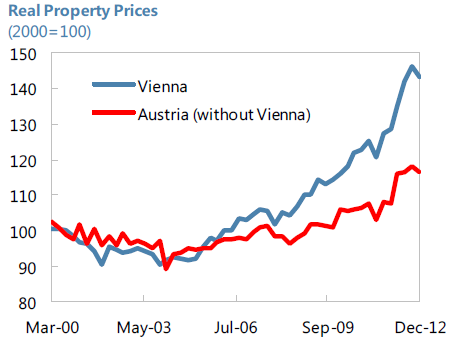
“The housing market has experienced strong price growth but from low levels. In nominal terms at end-2012, house prices rose 14.9 percent y-o-y in Vienna compared with 11.5 percent y-o-y for Austria overall. In real terms and from a medium-term perspective, the price increase appears more modest: a cumulative 40 percent over 10 years in Vienna and about 5 percent in the rest of Austria. Housing market activity seems to be driven largely by non-resident buyers and domestic investors seeking an alternative to low fixed-income returns,
Posted by at 4:01 PM
Labels: Global Housing Watch
Subscribe to: Posts