



Wednesday, September 27, 2017
Better thy Neighbor? Cross-border Effects of Fiscal Actions
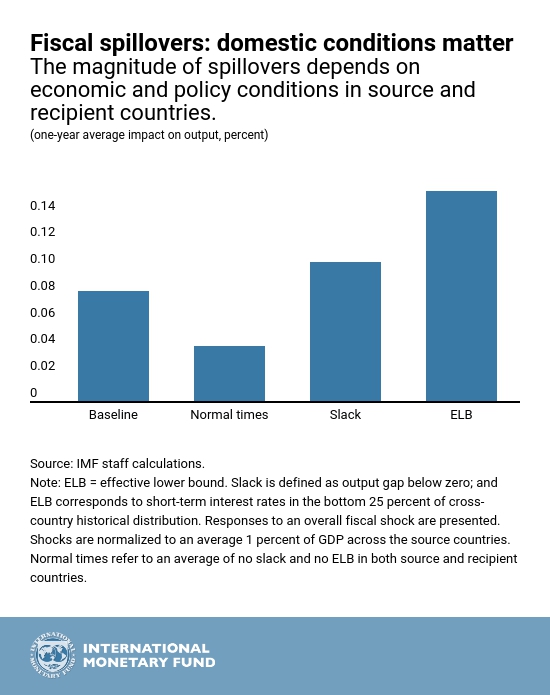
From a new IMF blog: “Our analysis provides information on potential cross-country effects from domestic fiscal policies. For example, fiscal stimulus in Germany through higher public investment would generate meaningful spillovers to neighboring countries in Europe where output remains below potential and interest rates are exceptionally low. Spending on public investment is also likely to produce greater cross-border dividends than tax cuts. Conversely, given cyclical conditions in the United States, a U.S. fiscal stimulus would likely have modest spillovers, especially if implemented through tax policy measures.”
Continue reading here.
From a new IMF blog: “Our analysis provides information on potential cross-country effects from domestic fiscal policies. For example, fiscal stimulus in Germany through higher public investment would generate meaningful spillovers to neighboring countries in Europe where output remains below potential and interest rates are exceptionally low. Spending on public investment is also likely to produce greater cross-border dividends than tax cuts. Conversely, given cyclical conditions in the United States, a U.S.
Posted by at 10:46 AM
Labels: Inclusive Growth
Friday, September 22, 2017
Housing View – September 22, 2017
On cross-country:
- Property markets and real estate companies – Bank for International Settlements
- Global crisis of affordable urban housing – where are the progressive responses? – Foundation for European Progressive Studies
- A Caribbean New Urban Agenda post-Habitat III: Closing the gaps – Habitat International
On the US:
- The Economic Implications of Housing Supply – NBER
- Access to Long-Term Care After a Wealth Shock: Evidence from the Housing Bubble and Burst – NBER
- Foreign Buyers and Home-Price Growth – HousingViews
- Is Homeownership Dead? – House Canary
- Why Houston Housing Is Poised to Get More Expensive and Unequal – Citylab
- California Today: A Political Push for Affordable Housing – New York Times
- 2017 National Rental Housing Landscape – NYU Furman Center
- Housing Finance, Affordability, and Supply in the Digital Age – Urban Institute
On other countries:
- [Belize] Belize’s thriving luxury property market – Global Property Guide
- [Canada] Vancouver: No Fixed Address – Documentary
- [China] China central bank backs mortgage rate hikes in capital – Reuters
- [China] China’s Campaign to Cool House Prices Could Ease as Curbs Bite – Bloomberg
- [China] China’s Dangerous House Price Boom Is Spreading – Bloomberg
- [China] Rural-Urban Migration, Structural Transformation, and Housing Markets in China – NBER
- [China] One-third of China households see home prices rising in fourth-quarter: central bank survey – Reuters
- [Denmark] The Financial Crisis and Diverging House Prices: Evidence from the Copenhagen Metropolitan Area – Tinbergen Institute
- [Egypt] Egypt’s moneyed classes are buying houses like there’s no tomorrow! – Global Property Guide
- [France] France’s housing market is gaining momentum, amidst improving economy – Global Property Guide
- [Ireland] Ireland’s ‘bad bank’ set for new role as property developer – Financial Times
- [Israel] Israel’s decade-long house price boom could be over, as government cooling measures intensify – Global Property Guide
- [Laos] Laos is in the midst of a construction boom – Global Property Guide
- [Oman] Low crude oil prices hurting Oman’s property market – Global Property Guide
- [Taiwan] Taiwan’s housing market is gaining momentum – Global Property Guide
- [United Kingdom] Political uncertainty dampens the UK’s property market – Global Property Guide

Photo by Aliis Sinisalu
On cross-country:
- Property markets and real estate companies – Bank for International Settlements
- Global crisis of affordable urban housing – where are the progressive responses? – Foundation for European Progressive Studies
- A Caribbean New Urban Agenda post-Habitat III: Closing the gaps – Habitat International
On the US:
- The Economic Implications of Housing Supply – NBER
- Access to Long-Term Care After a Wealth Shock: Evidence from the Housing Bubble and Burst – NBER
- Foreign Buyers and Home-Price Growth – HousingViews
- Is Homeownership Dead?
Posted by at 5:00 AM
Labels: Global Housing Watch
Thursday, September 21, 2017
Corruption in Latin America: Taking Stock
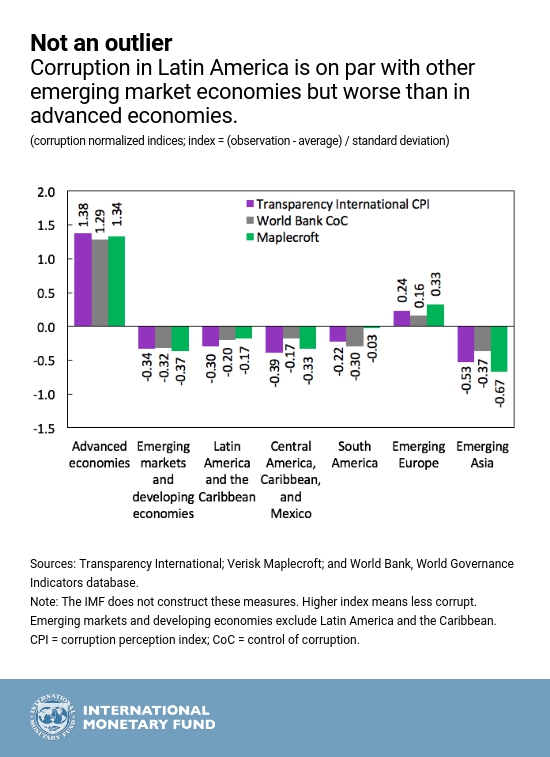
A new IMF blog by David Lipton, Alejandro Werner, and Carlos Gonçalves says that “Corruption continues to make headlines in Latin America. From a scheme to shelter assets leaked by documents in Panama, to the Petrobras and Odebrecht scandals that have spread beyond Brazil, to eight former Mexican state governors facing charges or being convicted, the region has seen its share of economic and political fallout from corruption. Latin Americans are showing increasing signs of discontent and demanding that their governments tackle corruption more aggressively.”
Continue reading here.
A new IMF blog by David Lipton, Alejandro Werner, and Carlos Gonçalves says that “Corruption continues to make headlines in Latin America. From a scheme to shelter assets leaked by documents in Panama, to the Petrobras and Odebrecht scandals that have spread beyond Brazil, to eight former Mexican state governors facing charges or being convicted, the region has seen its share of economic and political fallout from corruption.
Posted by at 1:05 PM
Labels: Inclusive Growth
Growth That Reaches Everyone: Facts, Factors, Tools
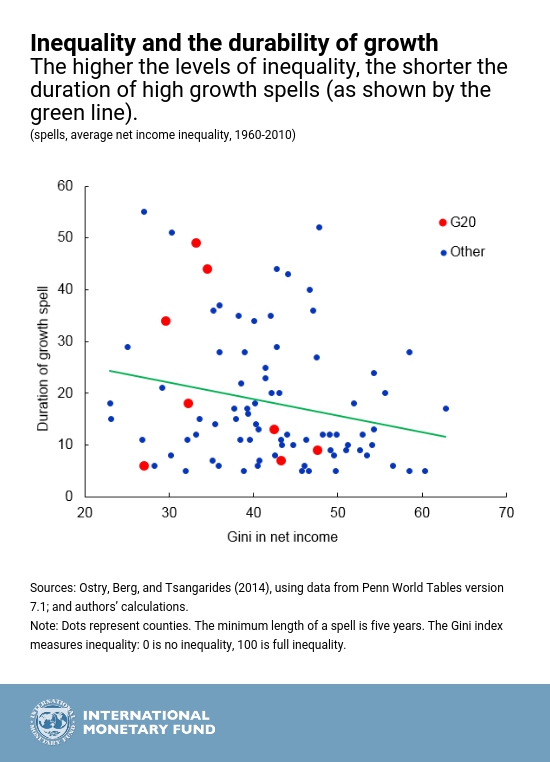
A new IMF blog says that “Over the past few decades, growth has raised living standards and provided job opportunities, lifting millions out of extreme poverty. But, we have also seen a flip side. Inequality has risen in several advanced economies and remains stubbornly high in many that are still developing. This worries policymakers everywhere for good reason. Research at the IMF and elsewhere makes it clear that persistent lack of inclusion—defined as broadly shared benefits and opportunities for economic growth—can fray social cohesion and undermine the sustainability of growth itself.”
Continue reading here.
A new IMF blog says that “Over the past few decades, growth has raised living standards and provided job opportunities, lifting millions out of extreme poverty. But, we have also seen a flip side. Inequality has risen in several advanced economies and remains stubbornly high in many that are still developing. This worries policymakers everywhere for good reason. Research at the IMF and elsewhere makes it clear that persistent lack of inclusion—defined as broadly shared benefits and opportunities for economic growth—can fray social cohesion and undermine the sustainability of growth itself.”
Posted by at 10:03 AM
Labels: Inclusive Growth
Tuesday, September 19, 2017
House Prices in Portugal
The IMF’s new report on Portugal says that: “After a prolonged slump, construction began to pick up in late 2016, boosted by the renovation of rental properties to meet tourist demand and nonresident purchases of residential real estate, including in Lisbon and Porto. House prices have increased by 15 percent in cumulative terms over the past two years through end-March, and now exceed the previous peak recorded prior to the crisis in 2010. (…) New lending has instead been concentrated primarily in mortgages and consumer loans, helping to sustain the strong growth in private consumption and rise in housing prices.”
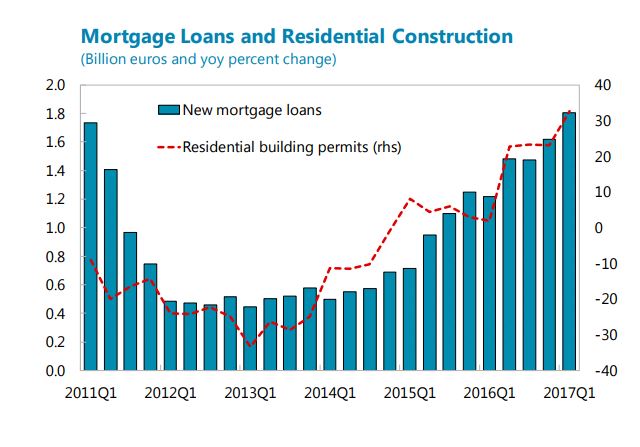
The IMF’s new report on Portugal says that: “After a prolonged slump, construction began to pick up in late 2016, boosted by the renovation of rental properties to meet tourist demand and nonresident purchases of residential real estate, including in Lisbon and Porto. House prices have increased by 15 percent in cumulative terms over the past two years through end-March, and now exceed the previous peak recorded prior to the crisis in 2010.
Posted by at 1:55 PM
Labels: Global Housing Watch
Subscribe to: Posts