



Thursday, July 26, 2018
Housing in Romania
The latest IMF’s report on Romania says that:
“Real estate exposure rose with housing loans increasing from 21 to 54 percent of household loans between 2008 and 2017. These mortgage contracts (mostly at variable rates) expose banks to credit risks in the event of sharp increases in interest rates. The effectiveness of existing macroprudential tools on mortgages is undermined by the Prima Casa program, which allows loan-to-value ratios up to 95 percent. The Romanian banking system has also a large exposure to their own sovereign debt (one of the highest in the EU at around 20 percent of assets in 2017), that could lead to valuation losses in the event of interest rate increases. Finally, despite declining considerably since 2011, about 35 percent of banks’ liabilities and assets remain denominated in foreign exchange (FX), and FX liquidity risks can exist within an environment of ample overall liquidity.”
The latest IMF’s report on Romania says that:
“Real estate exposure rose with housing loans increasing from 21 to 54 percent of household loans between 2008 and 2017. These mortgage contracts (mostly at variable rates) expose banks to credit risks in the event of sharp increases in interest rates. The effectiveness of existing macroprudential tools on mortgages is undermined by the Prima Casa program, which allows loan-to-value ratios up to 95 percent.
Posted by at 5:03 PM
Labels: Global Housing Watch
Saturday, July 21, 2018
Income inequality in the U.S. by state, metropolitan area, and county
An EIU report finds that “Income inequality has risen in every state since the 1970s and in many states is up in the post–Great Recession era. In 24 states, the top 1 percent captured at least half of all income growth between 2009 and 2013, and in 15 of those states, the top 1 percent captured all income growth. In another 10 states, top 1 percent incomes grew in the double digits, while bottom 99 percent incomes fell. For the United States overall, the top 1 percent captured 85.1 percent of total income growth between 2009 and 2013. In 2013 the top 1 percent of families nationally made 25.3 times as much as the bottom 99 percent.”
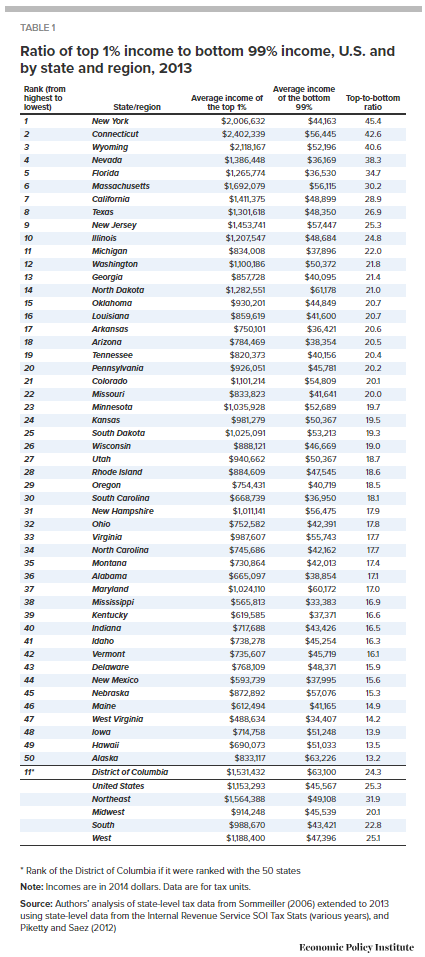
An EIU report finds that “Income inequality has risen in every state since the 1970s and in many states is up in the post–Great Recession era. In 24 states, the top 1 percent captured at least half of all income growth between 2009 and 2013, and in 15 of those states, the top 1 percent captured all income growth. In another 10 states, top 1 percent incomes grew in the double digits, while bottom 99 percent incomes fell.
Posted by at 4:40 PM
Labels: Inclusive Growth
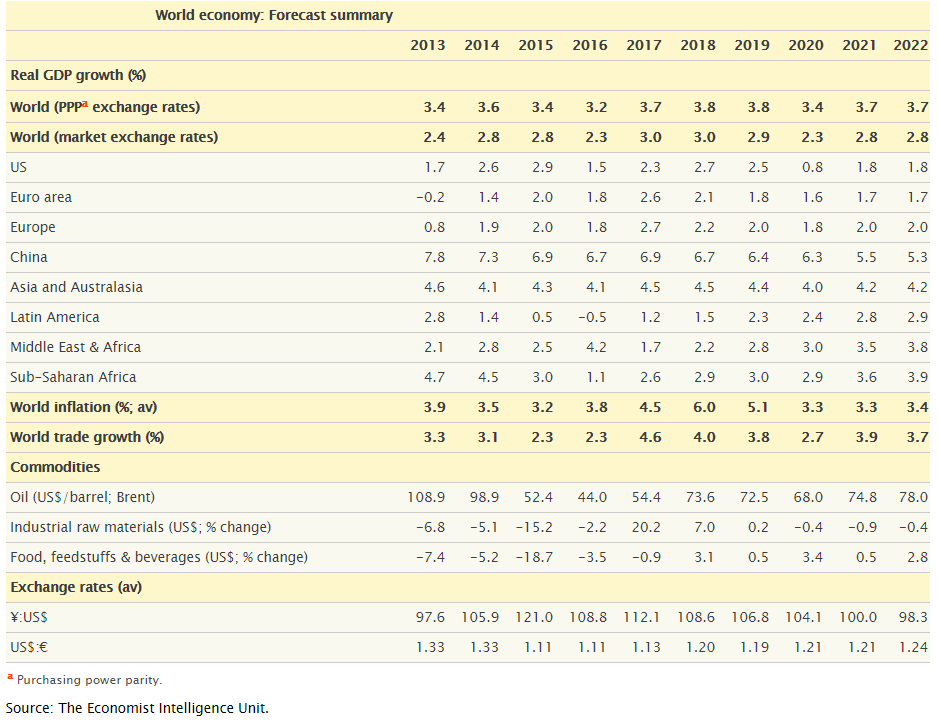
EIU global forecast – Growth will slow in 2019
From the most recent EIU global forecast:
Posted by at 4:36 PM
Labels: Forecasting Forum
Is the Cycle the Trend? Evidence from the Views of International Forecasters
A new IMF working paper by John Bluedorn and Daniel Leigh revisits “the conventional view that output fluctuates around a stable trend by analyzing professional long-term forecasts for 38 advanced and emerging market economies. If transitory deviations around a trend dominate output fluctuations, then forecasters should not change their long-term output level forecasts following an unexpected change in current period output. By contrast, an analysis of Consensus Economics forecasts since 1989 suggest that output forecasts are super-persistent—an unexpected 1 percent upward revision in current period output typically translates into a revision of ten year-ahead forecasted output by about 2 percent in both advanced and emerging markets. Drawing upon evidence from the behavior of forecast errors, the persistence of actual output is typically weaker than forecasters expect, but still consistent with output shocks normally having large and permanent level effects.”
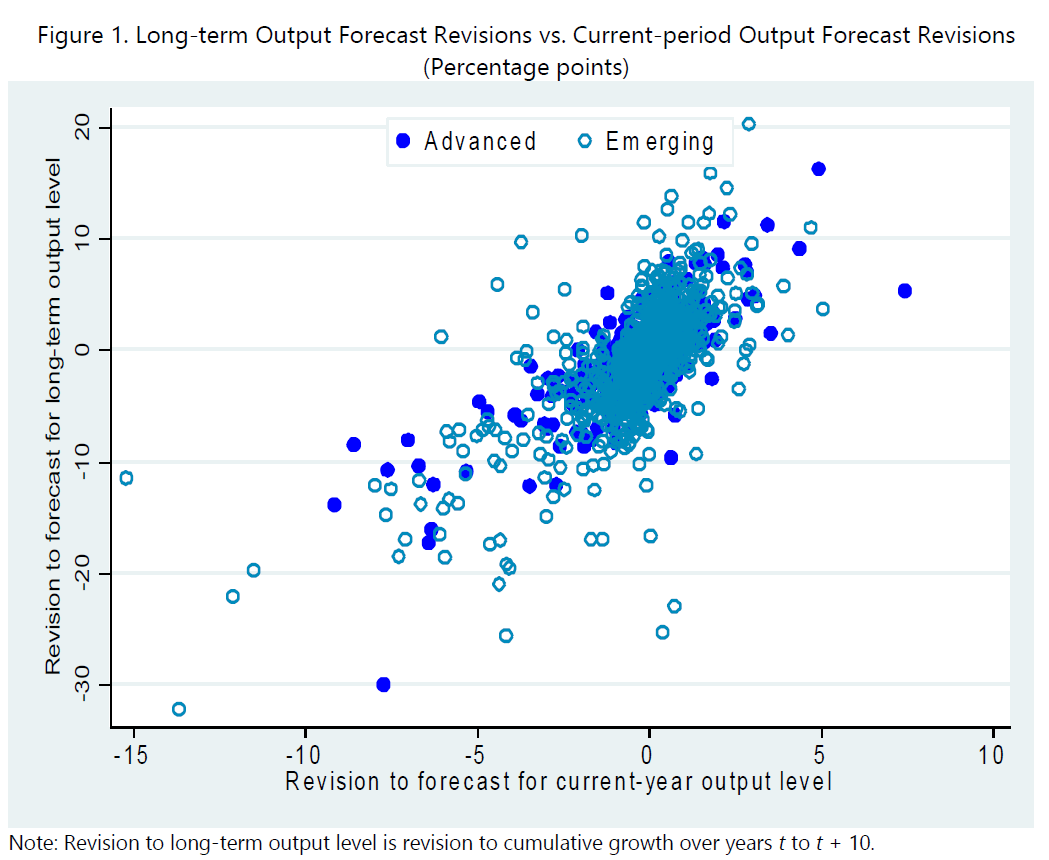
A new IMF working paper by John Bluedorn and Daniel Leigh revisits “the conventional view that output fluctuates around a stable trend by analyzing professional long-term forecasts for 38 advanced and emerging market economies. If transitory deviations around a trend dominate output fluctuations, then forecasters should not change their long-term output level forecasts following an unexpected change in current period output. By contrast, an analysis of Consensus Economics forecasts since 1989 suggest that output forecasts are super-persistent—an unexpected 1 percent upward revision in current period output typically translates into a revision of ten year-ahead forecasted output by about 2 percent in both advanced and emerging markets.
Posted by at 1:11 PM
Labels: Forecasting Forum
The Globalization of Farmland
A new IMF working paper by Rabah Arezki, Christian Bogmans, and Harris Selod provides “both theoretical and empirical evidence of farmland globalization whereby international investors directly acquire large tracts of agricultural land in other countries. A theoretical framework explains the geography of farmland acquisitions as a function of cross-country differences in technology, endowments, trade costs, and land governance. An empirical test of the model using global data on transnational deals shows that international farmland investments are on the aggregate likely motivated by re-exports to investor countries rather than to world markets. This contrasts with traditional foreign direct investment patterns where horizontal as opposed to vertical FDI dominates.”
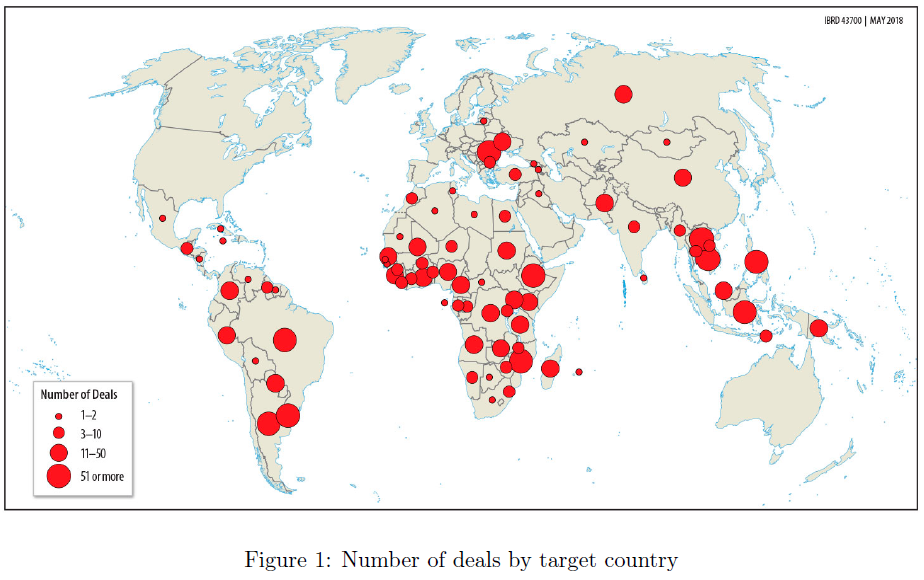
A new IMF working paper by Rabah Arezki, Christian Bogmans, and Harris Selod provides “both theoretical and empirical evidence of farmland globalization whereby international investors directly acquire large tracts of agricultural land in other countries. A theoretical framework explains the geography of farmland acquisitions as a function of cross-country differences in technology, endowments, trade costs, and land governance. An empirical test of the model using global data on transnational deals shows that international farmland investments are on the aggregate likely motivated by re-exports to investor countries rather than to world markets.
Posted by at 1:05 PM
Labels: Inclusive Growth
Subscribe to: Posts