



Sunday, March 15, 2020
Flattening the Pandemic and Recession Curves
From an article by Pierre-Olivier Gourinchas (UC Berkeley):
“We are facing a joint health and economic crisis of unprecedented proportions in recent
history.I want to start by acknowledging that containment of the pandemic is the utmost priority.
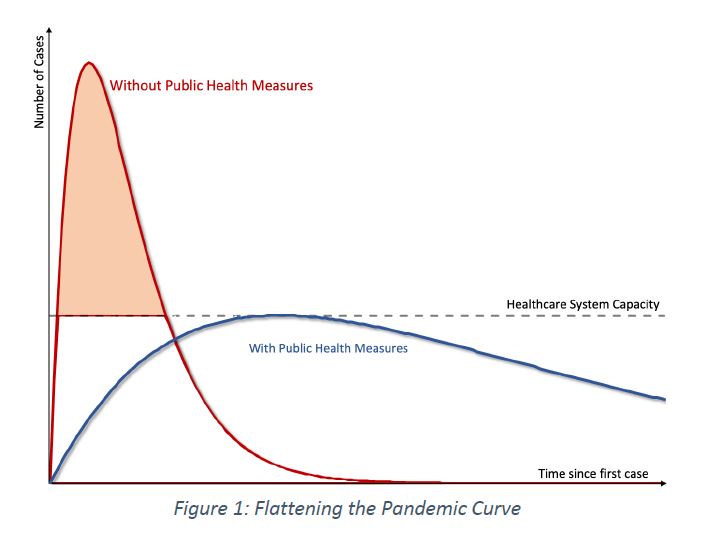
Figure 1 summarizes how public health experts approach the problem.
In the short run, the capacity of any country’s health system is finite (capacity of Intensive Care Units, number of hospital beds, number of skilled health professionals, ventilators….). This puts an upper bound on the number of patients that can be properly treated, at any given point in time and is represented by the flat line in the Figure.
Unchecked, and given what we know of the transmission rate of the coronavirus, the pandemic would quickly overwhelm any health system, leaving many infected patients with deteriorating pulmonary conditions without any treatment. The fatality rate would surge. The threat is almost beyond comprehension. With a 2% case fatality rate baseline for overwhelmed health systems, and 50% of the world population infected, 1% of the world population -76 million people- would die. This scenario corresponds to the red curve in Figure 1. The part of the curve above the capacity of the health care system faces a sharply higher mortality risk (shaded red area).
Instead, public health policy, at least in all semi-decently run countries, aims to “flatten the
curve” by imposing drastic social distancing measures and promoting health practices to reduce the transmission rate. This ‘flattening of the curve’ would spread the pandemic over time, enabling more people to receive proper health treatment – ultimately lowering the fatality rate. This is the blue curve in Figure 1.”Continue reading here.
From an article by Pierre-Olivier Gourinchas (UC Berkeley):
“We are facing a joint health and economic crisis of unprecedented proportions in recent
history.
I want to start by acknowledging that containment of the pandemic is the utmost priority.
Figure 1 summarizes how public health experts approach the problem.
In the short run, the capacity of any country’s health system is finite (capacity of Intensive Care Units,
Posted by at 6:59 PM
Labels: Inclusive Growth
Coronavirus Response Should Include Urgent Fiscal Policy Measures to Address Financial Hardship, Stave Off a Severe Recession
From an article by Chye-Ching Huang and Chad Stone (both at Center on Budget and Policy Priorities):
“The COVID-19 pandemic demands an aggressive direct public health response to contain and treat the virus and strengthen health system capacity. Once policymakers enact legislation that House leaders are now negotiating with the Administration, Congress should move quickly to take further bold steps to achieve the dual and related aims of lessening the threat of a major recession and cushioning the financial blow for millions of Americans, including measures to shore up consumer purchasing power by addressing the loss of income that millions of workers likely will face in the period ahead.
With events involving large numbers of people being canceled and people increasingly avoiding travel, hotels, restaurants, and much more — and with the stock market’s rapid descent — recession looks extremely likely. Indeed, some economists have said that we likely are entering into recession now, and that substantial layoffs and business closures lie ahead. This makes it essential that policymakers act rapidly to take strong fiscal measures to lessen the damage, both to millions of Americans and to the overall economy.
The fiscal policy response should be both aggressive and quick-acting. Since even the fastestacting fiscal stimulus can still take some time to work its way into the economy, policymakers should act very swiftly. There is far more danger in doing too little, too late than too much, too soon.
Among the key sets of measures to institute are measures that can get resources into the hands of tens of millions of low and middle-income households, many of whom will be hit financially by the economic fallout of the pandemic. Doing that is one of the most effective and efficient ways to bolster the economy, as these households spend virtually all income they receive. But it’s only one of a number of steps that should be taken.”
Continue reading here.
From an article by Chye-Ching Huang and Chad Stone (both at Center on Budget and Policy Priorities):
“The COVID-19 pandemic demands an aggressive direct public health response to contain and treat the virus and strengthen health system capacity. Once policymakers enact legislation that House leaders are now negotiating with the Administration, Congress should move quickly to take further bold steps to achieve the dual and related aims of lessening the threat of a major recession and cushioning the financial blow for millions of Americans,
Posted by at 6:54 PM
Labels: Inclusive Growth
Friday, March 13, 2020
Housing View – March 13, 2020
On cross-country:
- Europe’s great house price boom continues, but sharp slowdown in North America, the Middle East and most of Asia-Pacific – Global Property Guide
- World’s priciest homes: How Australian house prices compare to the rest of the world – RealEstate
On the US:
- Urbanization and its Discontents – NBER
- The housing affordability crisis is a reality: Lawmakers need to act, but responsibly – The Hill
- Real Estate and the Wealth of a Nation – American Institute for Economic Research
- Housing Finance At A Glance: A Monthly Chartbook, February 2020 – Urban Institute
- However You Measure It, Parents of White College Graduates Are about 10 Times Wealthier Than Their Black Counterparts – Urban Institute
- The Termination of LIBOR An Update on Implications for the Mortgage Market – Urban Institute
- Institutional Investors Brought Higher Home Prices and Lower Vacancies to the Housing Recovery – Urban Institute
- Five Facts about Our Housing Supply Explain High Rents and Home Prices – Urban Institute
- Is housing a better investment than education? – Quartz
- Plunging Mortgage Rates Might Not End U.S. Housing Doldrums – Wall Street Journal
- Coronavirus Looms Over Crucial Spring Season for Housing Market – Wall Street Journal
On other countries:
- [Germany] Capital Flows, Real Estate, and Local Cycles: Evidence from German Cities, Banks, and Firms – NBER
- [Hong Kong] Hong Kong’s housing market remains resilient – Global Property Guide
- [Lithuania] Lithuania’s house price continues to rise – Global Property Guide
- [Mexico] Mexico’s housing market remains robust – Global Property Guide
- [Romania] Romania’s housing market continues to grow – Global Property Guide
- [Russia] Russia’s housing market getting better – Global Property Guide
- [Thailand] Thailand’s house prices continue to rise – Global Property Guide
On cross-country:
- Europe’s great house price boom continues, but sharp slowdown in North America, the Middle East and most of Asia-Pacific – Global Property Guide
- World’s priciest homes: How Australian house prices compare to the rest of the world – RealEstate
On the US:
- Urbanization and its Discontents – NBER
- The housing affordability crisis is a reality: Lawmakers need to act,
Posted by at 5:00 AM
Labels: Global Housing Watch
Friday, March 6, 2020
Operationalizing Inclusive Growth: Per-Percentile Diagnostics to Inform Redistribution Policies
A new IMF working paper by Alexei Kireyev and Andrei Leonidov;
“Inclusive growth, narrowly defined in this paper as growth that helps reduce inequality, is achieved if consumption of the poor increases faster than consumption of the rich. The paper presents a simple accounting framework for a per-percentile consumption diagnostics that could inform redistribution policies. The proposed framework is illustrated in application to Iraq and Tunisia.”
A new IMF working paper by Alexei Kireyev and Andrei Leonidov;
“Inclusive growth, narrowly defined in this paper as growth that helps reduce inequality, is achieved if consumption of the poor increases faster than consumption of the rich. The paper presents a simple accounting framework for a per-percentile consumption diagnostics that could inform redistribution policies. The proposed framework is illustrated in application to Iraq and Tunisia.”
Posted by at 4:52 PM
Labels: Inclusive Growth
Housing View – March 6, 2020
On cross-country:
- Decoding the New Housing Reality – Housing Europe
On the US:
- The Great Wall Street Housing Grab – New York Times
- How the Democratic Candidates Would Tackle the Housing Crisis – New York Times
- How Bloomberg, Sanders and Warren Responded to a Survey on Housing – New York Times
- Evidence Shows Military Service Reduces the Racial Homeownership Gap – Urban Institute
- Why Do Black College Graduates Have a Lower Homeownership Rate Than White People Who Dropped Out of High School? – Urban Institute
- Reverse Mortgage Use Differs by Race and Ethnicity. Here’s Why It Matters – Urban Institute
- Is the Sudden Increase in Black Homeownership Too Good to Be True? – Urban Institute
- Breaking Down the Black-White Homeownership Gap – Urban Institute
- Vacant “Zombie” Foreclosures Increase to 3.1 Percent Nationwide – ATTOM
- For Those Living in Public Housing, It’s a Long Way to Work – Citylab
- Housing Discrimination and Pollution Exposures in the United States – NBER
- Does Information About Climate Risk Affect Property Values? – NBER
- Vote Warren for a Pro-Housing President – Harvard Political Review
- Digging Deeper into the Story: The Widespread Implications of the Growth in High Income Renters on Low- and Middle-Income Renter Households – Harvard Joint Center for Housing Studies
On other countries:
- [Chile] Property prices in Chile continue to rise – Global Property Guide
- [Ireland] Ireland’s central banker warns on homes spending spree – Financial Times
- [Slovak Republic] Slovak Republic’s house price rising continuously – Global Property Guide
On cross-country:
- Decoding the New Housing Reality – Housing Europe
On the US:
- The Great Wall Street Housing Grab – New York Times
- How the Democratic Candidates Would Tackle the Housing Crisis – New York Times
- How Bloomberg, Sanders and Warren Responded to a Survey on Housing – New York Times
- Evidence Shows Military Service Reduces the Racial Homeownership Gap – Urban Institute
- Why Do Black College Graduates Have a Lower Homeownership Rate Than White People Who Dropped Out of High School?
Posted by at 5:00 AM
Labels: Global Housing Watch
Subscribe to: Posts