


Thursday, February 26, 2026
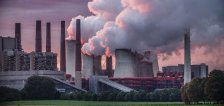
Bridging inequality: The interplay of renewable energy, digitization, and financial globalization in G7, E7, and N11 economies
From a paper by Md Qamruzzaman, Md. Adnan Hoque, and Md. Ratib Khan:
“This study examines the impact of renewable energy consumption, financial globalisation, digitisation, trade freedom, and financial development on income inequality across the G7, E7, and N11 economies from 1990 to 2022. Using CS-ARDL as the baseline estimator to account for cross-sectional dependence and long-run dynamics, the analysis is reinforced with the AMG, CCEMG, and Driscoll–Kraay estimators for robustness, while the dynamic panel GMM addresses potential endogeneity. Nonlinear and distributional heterogeneity were explored using Panel Threshold Regression, Quantile Regression (QR-MM), and Markov Switching models. The results consistently indicate that renewable energy, digitisation, financial globalisation, and trade freedom contribute to reducing income inequality, whereas financial development exacerbates disparities, with the effects being more pronounced in emerging economies (E7 and N11) than in advanced economies (G7). Threshold and quantile analyses reveal that renewable energy and digitisation exert more substantial equalising effects once institutional quality and digital penetration surpass critical levels under conditions of higher inequality. Regime-switching estimations showed a stabilising role during economic stress. These findings suggest that expanding renewable energy and digital infrastructure, and maintaining open trade policies, can help mitigate inequality, particularly in emerging economies, though the benefits of financial development require inclusive frameworks and regulatory safeguards. By integrating multiple advanced econometric techniques, this study provides new evidence on the interconnected roles of globalisation, the energy transition, and digital transformation in shaping income distribution across different economic contexts.”
From a paper by Md Qamruzzaman, Md. Adnan Hoque, and Md. Ratib Khan:
“This study examines the impact of renewable energy consumption, financial globalisation, digitisation, trade freedom, and financial development on income inequality across the G7, E7, and N11 economies from 1990 to 2022. Using CS-ARDL as the baseline estimator to account for cross-sectional dependence and long-run dynamics, the analysis is reinforced with the AMG, CCEMG, and Driscoll–Kraay estimators for robustness,
Posted by at 6:27 PM
Labels: Energy & Climate Change
Tuesday, February 24, 2026
Income Inequality and Economic Growth: A Meta-Analytic Approach
From a paper by Lisa Capretti, and Lorenzo Tonni:
“The empirical literature on the relationship between income inequality and economic growth has
produced highly heterogeneous and often conflicting results. This paper investigates the sources of this heterogeneity using a meta-analytic approach that systematically combines and analyzes evidence from relevant studies published between 1994 and 2025. We find an economically small but statistically significant negative average effect of income inequality on subsequent economic growth, together with strong evidence of substantial heterogeneity and selective publication based on statistical significance, but no evidence of systematic directional bias. To explain the observed heterogeneity, we estimate a meta-regression. The results indicate that both real-world characteristics and research design choices shape reported effect sizes. In particular, inequality measured net of taxes and transfers is associated with more negative growth effects, and the adverse impact of inequality is weaker – or even reversed – in high-income economies relative to developing countries. Methodological choices also matter: cross-sectional studies tend to report more negative estimates, while fixed-effects, instrumental-variable, and GMM estimators are associated with more positive estimates in panel settings.”
From a paper by Lisa Capretti, and Lorenzo Tonni:
“The empirical literature on the relationship between income inequality and economic growth has
produced highly heterogeneous and often conflicting results. This paper investigates the sources of this heterogeneity using a meta-analytic approach that systematically combines and analyzes evidence from relevant studies published between 1994 and 2025. We find an economically small but statistically significant negative average effect of income inequality on subsequent economic growth,
Posted by at 3:23 PM
Labels: Inclusive Growth
Sunday, February 22, 2026
Thank you, Richard Baldwin: A founder’s legacy and VoxEU’s next chapter
From a VoxEU post by Beatrice Weder di Mauro:
“VoxEU launched in June 2007 with a simple but ambitious idea: that rigorous economics could speak clearly, quickly, and accessibly to the world’s most urgent policy debates. As its founding Editor-in-Chief Richard Baldwin steps down, this column marks this moment with thanks for his vision, his energy, and his service to the economics profession and to the public.
President Centre for Economic Policy Research; President Professor of Global Economics, Climate and Nature Finance Geneva Graduate Institute (IHEID); Visiting Professor Hoffmann Global Institute for Business and Society INSEAD
When VoxEU launched in June 2007, it was an experiment with a simple but ambitious idea: that rigorous economics could speak clearly, quickly, and accessibly to the world’s most urgent policy debates. It was Richard Baldwin’s idea, and it has become one of the most influential innovations in the global economics community. As Richard steps down as Editor-in-Chief at the end of this year, we want to mark this moment with deep thanks for his vision, his energy, and his extraordinary service to the profession and to the public.
VoxEU did not appear by accident. It was born from Richard’s conviction that economics needed a better bridge between frontier research and real-time events. Academic publication is necessarily careful and slow. Policy, by contrast, is fast, noisy, and often hungry for evidence. Richard saw that this gap was not a small inconvenience but a structural weakness in how societies use knowledge. VoxEU was his answer: a place where economists could contribute analysis at the speed of the news cycle, without sacrificing the discipline and integrity of scholarly standards.
From the outset, Richard insisted on two things that became VoxEU’s hallmark. First, intellectual seriousness: VoxEU would be a platform for evidence, not opinion for its own sake. Second, lucid communication: authors would be encouraged to write for a broad, global readership encompassing policymakers, journalists, practitioners, and fellow scholars. These principles may sound straightforward, but anyone who has tried to follow them at scale knows how rare that combination is. Maintaining them for eighteen years has required editorial judgement, perseverance, and a founder’s willingness to do the unglamorous work, day after day.
Over time, VoxEU has grown into a remarkable global public good. Thousands of columns have presented new research, debated policy trade-offs, and translated complex ideas into usable insight. Its reach is international and genuinely pluralistic, spanning every continent and most subfields of economics. It has become a first stop for people trying to understand what economists know (and what they disagree about) in the face of fast-moving events.”
Continue reading here.
From a VoxEU post by Beatrice Weder di Mauro:
“VoxEU launched in June 2007 with a simple but ambitious idea: that rigorous economics could speak clearly, quickly, and accessibly to the world’s most urgent policy debates. As its founding Editor-in-Chief Richard Baldwin steps down, this column marks this moment with thanks for his vision, his energy, and his service to the economics profession and to the public.
President Centre for Economic Policy Research; President Professor of Global Economics,
Posted by at 7:28 PM
Labels: Profiles of Economists
The IMF, Structural Adjustment, and Poverty: A Cross-National Difference-in-Differences Analysis,1980-2019
From a paper by Shih-Yen Pan , Lawrence P. King & Elias Nosrati:
“The International Monetary Fund (IMF) has been one of the world’s most powerful international
organisations in setting the parameters for economic reforms in the developing world. In this study,
using annual cross-national data from 1980–2019, we investigate the impact of the IMF’s lending programmes on poverty incidence in participant countries. Departing from the prevailing practice of relying on instrumental variables, we employ a novel difference-in-differences approach that ensures clean comparisons between ‘treatment’ and ‘control’ units based on their programme participation histories. Besides providing a quantitative estimate of the average programme effect, we evaluate whether the IMF’s alleged anti-poverty focus in recent decades has made any difference. We find that IMF programme participation leads to large increases (4.2-5 percent of the total population) in the proportion of a country’s population living under the $6.85=day international poverty line (2017 PPP) and the country-specific Societal Poverty Line. We also find that the poverty reduction measures incorporated by the IMF into its programmes have not been effective in mitigating the poverty-increasing programme effects. Overall, our findings suggest that IMF programmes have been detrimental to the welfare of vulnerable populations in participant countries.”
From a paper by Shih-Yen Pan , Lawrence P. King & Elias Nosrati:
“The International Monetary Fund (IMF) has been one of the world’s most powerful international
organisations in setting the parameters for economic reforms in the developing world. In this study,
using annual cross-national data from 1980–2019, we investigate the impact of the IMF’s lending programmes on poverty incidence in participant countries. Departing from the prevailing practice of relying on instrumental variables,
Posted by at 7:26 PM
Labels: Inclusive Growth
Saturday, February 21, 2026
Global Housing Watch
On cross-country:
- Global House Price Index Change (Q4 2025) – Global Property Guide
Working papers and conferences:
- When Houses Outrun Paychecks: The Lost Decades of Housing Affordability – St. Louis Fed
- Seminar: Nonpayment and Eviction in the Rental Housing Market- VIOS Spring 52 on April 29 – CEPR
- Urban slums: Stepping-stone for some and traps (or shields) for others – VoxEU
- Dollar funding and housing markets: the role of non-US global banks – BIS
On China:
- Chinese homebuyers are enraged by shoddy building standards. Crooked walls and broken promises are harming China’s property market – The Economist
- China housing market shows no clear turning point as price declines continue – South China Morning Post
On Australia and New Zealand:
- [Australia] We joke that to afford a home in Australia we must wait for our parents to die. It feels like a deal with the devil – The Guardian
- [Australia] Building 1.2m homes will barely put a dent in Australia’s housing affordability, one expert says. Here’s why. Thinking ‘supply is the answer’ lets politicians dodge a much more difficult conversation about tax – for investors and owners – The Guardian
- [Australia] Australia plans to sell off defence land to developers – but could it deliver homes instead? – The Conversation
- [New Zealand] New Zealand Residential Property Market Analysis 2026 – Global Property Guide
- [New Zealand] New Zealand home prices dip in January, holiday lull hits demand – Reuters
On other countries:
- [Canada] Canada Home Prices Slide Again as Snowstorm Chills Buying – Bloomberg
- [Canada] Canadian Home Sales — January 2026 – Scotiabank
- [Canada] Canada: Housing prices down in January – National Bank of Canada
- [Egypt] Egypt Residential Property Market Analysis 2026 – Global Property Guide
- [Ireland] Limiting short-term tourism lets won’t increase housing supply but will damage rural economies. While Airbnb-style apartments in urban areas should be restricted, regional Ireland, where tourism is the biggest employer, should be left alone – The Irish Times
- [Italy] Milan Has an Affordable Housing Crisis. Can the Olympic Village Help?The accommodation for athletes includes a video game lounge, massage room and a range of food options. Starting from September, it will house students — or at least those who can afford the rent. – New York Times
- [Romania] Romania’s Residential Property Market Analysis 2026 – Global Property Guide
- [South Africa] South Africa’s Residential Property Market Analysis 2026 – Global Property Guide
- [Spain] Spain Unveils Public Investment Fund To Tackle Housing Crisis – Barron’s
- [Thailand] Thailand’s Residential Property Market Analysis 2026 – Global Property Guide
- [United Kingdom] January’s Gains Endure as High Supply Tempers February U.K. House-Price Growth, Rightmove Says. Rightmove said the number of homes for sale was at an 11-year high – Wall Street Journal
- [United Kingdom] UK flat prices fall after sharp drop in London. Fall is in contrast to other property types and reflects desire for more space and reluctance to pay high service charge – FT
- [United Kingdom] UK Residential Land Prices May Have Bottomed, Knight Frank Says – Bloomberg
- [United Arab Emirates] UAE Residential Property Price Report – January 2026 – REIDIN
- [Venezuela] Los precios de las viviendas en Venezuela suben mientras venezolanos en el exterior evalúan comprar. La captura de Nicolás Maduro y las expectativas de inversión petrolera han empujado el alza de los precios. – New York Times
On cross-country:
- Global House Price Index Change (Q4 2025) – Global Property Guide
Working papers and conferences:
- When Houses Outrun Paychecks: The Lost Decades of Housing Affordability – St. Louis Fed
- Seminar: Nonpayment and Eviction in the Rental Housing Market- VIOS Spring 52 on April 29 – CEPR
- Urban slums: Stepping-stone for some and traps (or shields) for others – VoxEU
- Dollar funding and housing markets: the role of non-US global banks – BIS
On China:
- Chinese homebuyers are enraged by shoddy building standards.
Posted by at 5:00 AM
Labels: Global Housing Watch
Subscribe to: Posts