Showing posts with label Inclusive Growth. Show all posts
Tuesday, January 31, 2017
Macroeconomic Structural Policies and Income Inequality in Low-Income Developing Countries
Below is the executive summary of a new IMF report:
“Despite strong growth over the past two decades, income inequality remains high in many low-income developing countries (LIDCs). As shown by earlier work, including by the IMF, high levels of inequality can impair both the future pace and the sustainability of growth and macroeconomic stability, thereby also limiting countries’ ability to reach the Sustainable Development Goals.
This note explores how policies and reforms aimed at boosting growth affect the extent of income inequality in LIDCs and how complementary policy measures can be used to offset adverse distributional effects of such reforms. It examines: (i) the distributional consequences of selective economic reforms and macro-structural policies that are generally considered to be growth-enhancing; (ii) the channels and mechanisms through which inequality is likely to be affected, given structural characteristics common to most LIDCs; and (iii) the scope for complementary policies to ensure that a reform package can boost growth without widening inequality. The study complements recent work on the inequality-growth trade-offs (including Ostry, Berg, and Tsangarides, 2014; and Organization for Economic Cooperation and Development (OECD), 2015), and by using a more granular model-based analysis to identify the mechanisms through which specific reforms affect growth and inequality.
The note identifies macro-distributional challenges that can be expected to confront LIDCs, given structural characteristics common to these economies. Specifically, the note examines how features such as high levels of informality, limited geographic or inter-sectoral labor mobility, large inter-sectoral productivity differences, lack of access to finance, and low levels of infrastructure can make growth-inequality trade-offs particularly challenging for these economies. The main focus is on identifying the key channels through which growth-oriented reforms can influence income distribution, rather than identifying the universe of reforms that could have adverse distributional effects. For illustrative purposes, the note zooms in on a set of macro-structural reforms that have been regarded as growth-promoting in LIDCs (see IMF, 2015a)—specifically, selected fiscal reforms (tax policy measures, higher public infrastructure investment); financial sector reforms; and reforms to the agricultural sector.
The findings confirm that these macro-structural policies can have important distributional consequences in LIDCs, with the impact dependent both on the design of reforms and on country-specific economic characteristics. Results from cross-country statistical analysis and detailed country-case studies suggest that: (i) the distributional impact of tax policies depends not only on the specific tax instruments chosen (with indirect taxes usually seen as being regressive and direct income taxation usually seen as progressive), but also on how the additional budgetary resources are deployed; (ii) better and more infrastructure investment can both boost growth and lower inequality levels; (iii) financial sector reforms can exacerbate inequality if financial access is limited to a small share of the population and labor mobility is constrained; and (iv) reforms that boost agricultural output can worsen income inequality in situations where the agricultural sector is large and productivity gains benefit mostly the rural better-off.
Accompanying measures can make reforms supportive of growth while limiting adverse distributional effects. Some reforms may boost growth and welfare for all with distributional consequences that may not be undesirable from an economic and/or social point of view. Other reforms can bring economic gains only to a few with distributional consequences that may be considered unwelcome by societies. While there is no one-size-fits-all recipe, the note explores how targeted policy interventions, implemented in conjunction with pro-growth reforms, can be deployed to contain any adverse distributional effects of the reform measures—recognizing that societal views on what constitutes an undesirable distributional outcome will differ from country to country. The analysis focuses on the macroeconomic mechanisms through which such interventions can contain or offset any adverse distributional impact of pro-growth reforms; the note does not examine how these interventions can best be implemented in the presence of weak domestic administrative capacity or political economy constraints. Some policy interventions cited, such as conditional cash transfers, can be challenging to administer in countries with weak capacity, while measures to enhance labor mobility, such as strengthening land ownership rights, can take time and be politically very difficult to implement.”
Below is the executive summary of a new IMF report:
“Despite strong growth over the past two decades, income inequality remains high in many low-income developing countries (LIDCs). As shown by earlier work, including by the IMF, high levels of inequality can impair both the future pace and the sustainability of growth and macroeconomic stability, thereby also limiting countries’ ability to reach the Sustainable Development Goals.
This note explores how policies and reforms aimed at boosting growth affect the extent of income inequality in LIDCs and how complementary policy measures can be used to offset adverse distributional effects of such reforms.
Posted by at 8:36 AM
Labels: Inclusive Growth
Friday, January 20, 2017
Toward Inclusive Globalization
Jonathan Ostry writes: “Economists tend to be advocates of globalization. The benefits of specialization and exchange are evident within a country’s borders: no one would seriously suggest that impeding the flows of goods, labour and capital within a country would raise national welfare. Globalization extends the possibilities of specialization beyond national boundaries. Recent work suggests, however, that while globalization is great in theory, vigilance is needed about it in practice.
The three main components of globalization – goods, labour, and capital – are associated with different costs and benefits. The preponderance of the evidence suggests that trade has positive impacts on aggregate incomes, but many people do lose out. The economic benefits of migration are very high, but it too has distributional consequences and impacts on social cohesion.
The case for globalization is weakest when it comes to free flows of capital across national boundaries (“financial globalization”). The growth benefits claimed for these policies have proven elusive. At the same time, they are associated with an increase in inequality. Hence they pose a dilemma for proponents of globalization.
There are also interactions between financial globalization and other policies. In particular, financial globalization binds the conduct of domestic fiscal policy and leads to greater consolidation, which also has distributional effects.”
Continue reading here.
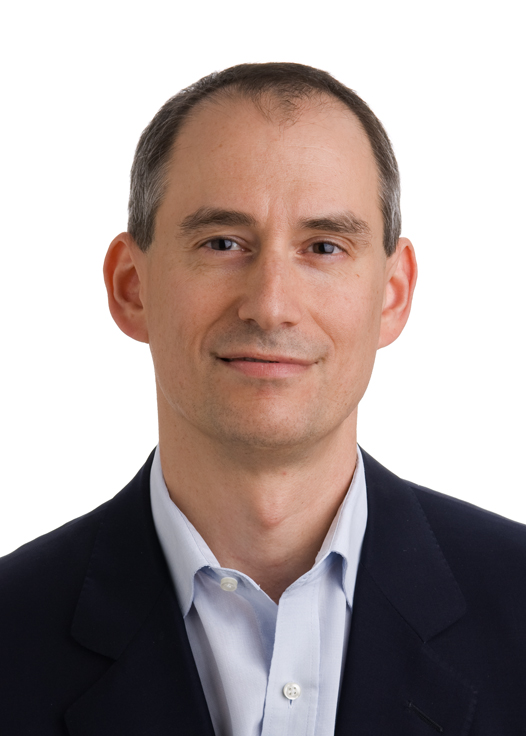
Jonathan Ostry writes: “Economists tend to be advocates of globalization. The benefits of specialization and exchange are evident within a country’s borders: no one would seriously suggest that impeding the flows of goods, labour and capital within a country would raise national welfare. Globalization extends the possibilities of specialization beyond national boundaries. Recent work suggests, however, that while globalization is great in theory, vigilance is needed about it in practice.
The three main components of globalization –
Posted by at 8:57 AM
Labels: Inclusive Growth
Monday, January 16, 2017
An Economy for the 99%
According to a new report by Oxfam: “Eight men own the same wealth as the 3.6 billion people who make up the poorest half of humanity [The 8 men are Bill Gates, Amancio Ortega, Warren Buffet, Carlos Slim, Jeff Bezos, Mark Zuckerberg, Larry Ellison, and Michael Bloomberg] (…). Oxfam’s report, ‘An economy for the 99 percent’, shows that the gap between rich and poor is far greater than had been feared. It details how big business and the super-rich are fuelling the inequality crisis by dodging taxes, driving down wages and using their power to influence politics. It calls for a fundamental change in the way we manage our economies so that they work for all people, and not just a fortunate few. New and better data on the distribution of global wealth – particularly in India and China – indicates that the poorest half of the world has less wealth than had been previously thought. Had this new data been available last year, it would have shown that nine billionaires owned the same wealth as the poorest half of the planet, and not 62, as Oxfam calculated at the time.” See the press release here.
According to a new report by Oxfam: “Eight men own the same wealth as the 3.6 billion people who make up the poorest half of humanity [The 8 men are Bill Gates, Amancio Ortega, Warren Buffet, Carlos Slim, Jeff Bezos, Mark Zuckerberg, Larry Ellison, and Michael Bloomberg] (…). Oxfam’s report, ‘An economy for the 99 percent’, shows that the gap between rich and poor is far greater than had been feared.
Posted by at 5:48 AM
Labels: Inclusive Growth
Thursday, January 12, 2017
IMF Executive Board Discusses Macroeconomic Prospects and Challenges in LIDCs
From the IMF Executive Board Discussion:
The sharp realignment of global commodity prices has been a major setback for commodity-exporting LIDCs, while generally benefitting others. As a result, growth prospects have become increasingly divergent.
In an era of subdued commodity prices, prospects for commodity exporters are heavily influenced by how successfully they can implement policies to confront high fiscal deficits, reduced foreign reserves, and elevated economic and financial stress.
The quantity, quality and accessibility of infrastructure in LIDCs is considerably lower than in other economies and enhancing the role of the private sector in its delivery is a priority for many.
Continue reading here.
From the IMF Executive Board Discussion:
The sharp realignment of global commodity prices has been a major setback for commodity-exporting LIDCs, while generally benefitting others. As a result, growth prospects have become increasingly divergent.
In an era of subdued commodity prices, prospects for commodity exporters are heavily influenced by how successfully they can implement policies to confront high fiscal deficits, reduced foreign reserves, and elevated economic and financial stress.
The quantity,
Posted by at 12:19 PM
Labels: Inclusive Growth
Wednesday, January 11, 2017
Inclusive Growth and the IMF
In recent years, the IMF has put on its plate several issues that appear to go beyond its ‘bread and butter’ focus on fiscal and monetary policies. These issues include: employment & migration; gender; inequality; corruption; financial inclusion; climate change. Why has the institution done so? The answer is simple: they have become critical to the IMF’s mission. These issues directly affect economic performance and stability in many countries, and thus fall under the IMF’s mandate.
Is there a unifying framework for all these new issues? There is and it can be summarized in two words: Inclusive Growth. Both words are important. We do want growth. Understanding the sources of productivity and long-run growth, and which structural policies will deliver them, thus remains an important part of the IMF’s agenda. So when we talk about inclusive growth, we are not advocating as role models either the former Soviet Union or present day North Korea—those are examples of ‘inclusive misery,’ not inclusive growth.
We want growth but we also want to make sure:
- that people have jobs – this is the basis for people to feel included in society and to have a sense of dignity. (IMF Management set up a “Jobs & Growth” working group to emphasize the importance of this work.)
- that women and men have equal opportunities to participate in the economy—hence our focus on gender;
- that the poor and the middle class share in the prosperity of a country—hence the work on inequality and shared prosperity;
- that, as happens for instance when countries discover natural resources, wealth is not captured by a few—this is why we worry about corruption and governance
- that there is financial inclusion—which makes a difference in investment, food security and health outcomes;
- that growth is shared just not among this generation but with future generations— hence our work on building resilience to climate change and natural disasters.
In short, a common thread through all our initiatives is that they seek to promote inclusion. What we are after is strong growth but one that is broadly shared, where major segments of society feel they have had an opportunity to make a better life for themselves.
These are not just fancy words. We are putting these ideas into action in our work.
Continue reading here.

In recent years, the IMF has put on its plate several issues that appear to go beyond its ‘bread and butter’ focus on fiscal and monetary policies. These issues include: employment & migration; gender; inequality; corruption; financial inclusion; climate change. Why has the institution done so? The answer is simple: they have become critical to the IMF’s mission. These issues directly affect economic performance and stability in many countries, and thus fall under the IMF’s mandate.
Posted by at 9:28 AM
Labels: Inclusive Growth
Subscribe to: Posts