Showing posts with label Global Housing Watch. Show all posts
Monday, June 16, 2014
Era of Benign Neglect of House Price Booms is Over
While the recent recovery in global housing markets is a welcome development, we need to guard against another unsustainable boom. says IMF’s Deputy Managing Director Min Zhu in a blog. He also gave the opening remarks at the Bundesbank/German Research Foundation/IMF Conference that took place recently.

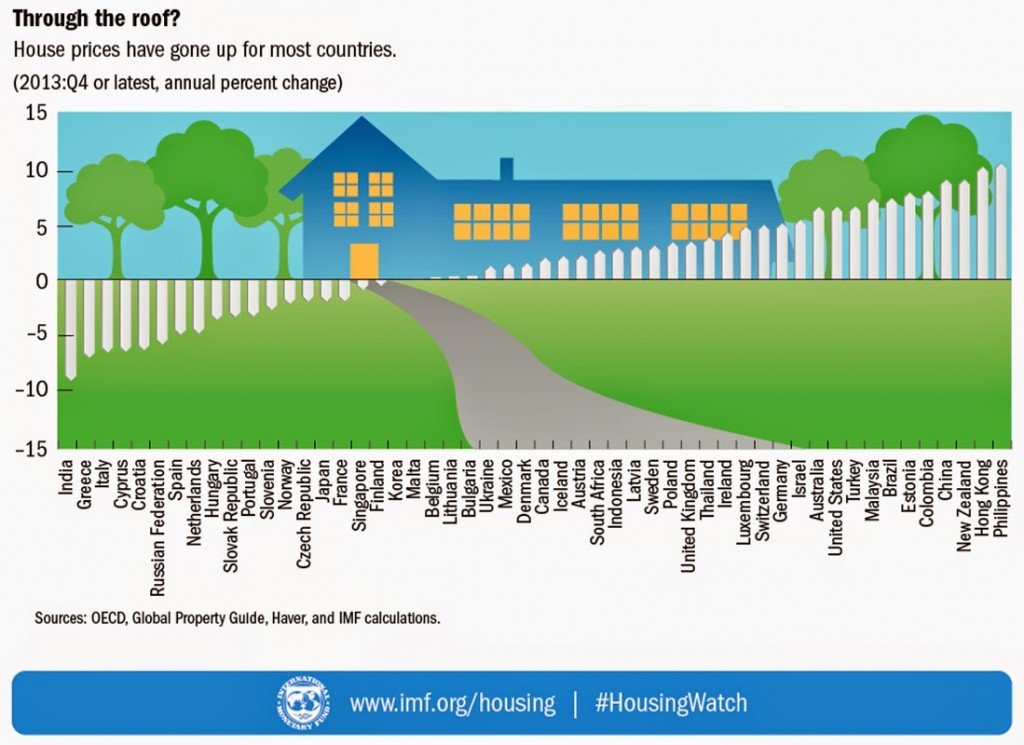
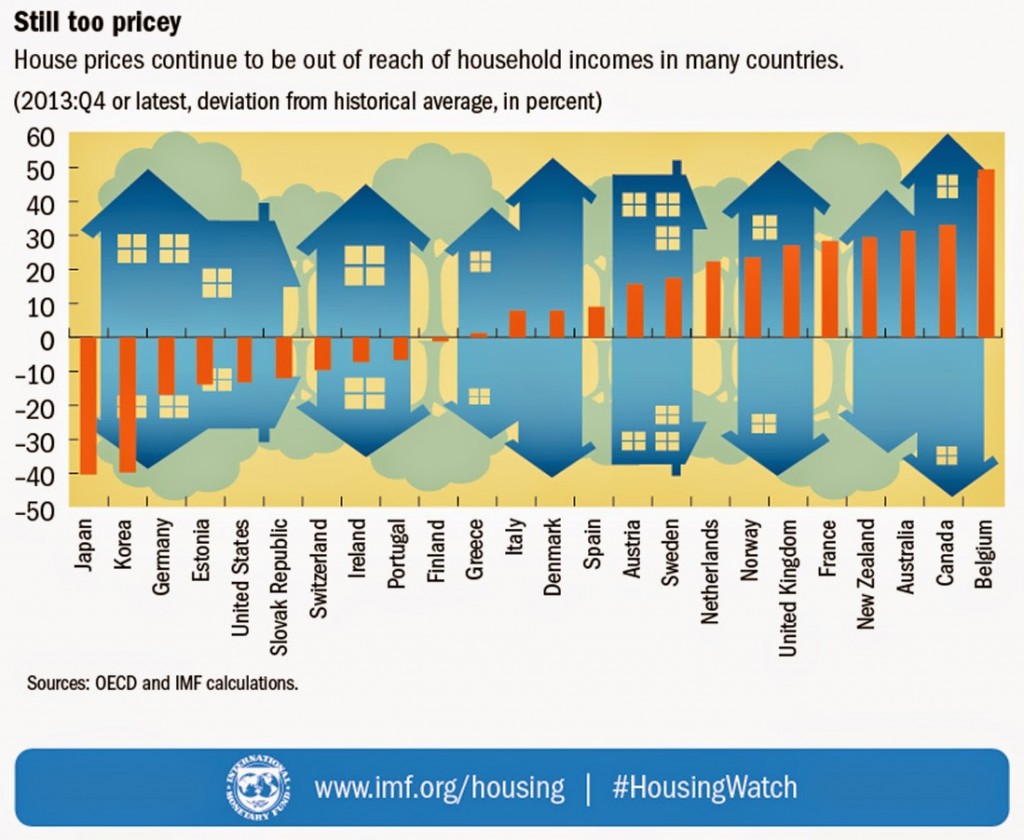

While the recent recovery in global housing markets is a welcome development, we need to guard against another unsustainable boom. says IMF’s Deputy Managing Director Min Zhu in a blog. He also gave the opening remarks at the Bundesbank/German Research Foundation/IMF Conference that took place recently.
Posted by at 1:03 AM
Labels: Global Housing Watch
Monday, June 9, 2014
House Prices in New Zealand
“By historical and international comparisons and some measures of affordability New Zealand’s house prices appear elevated (…). This in part reflects a limited housing stock from low housing investment in recent years and geographical constraints preventing a rapid housing supply response. With house price inflation running high, there remains the risk that expectations-driven, self-reinforcing demand dynamics and price overshooting could take hold.
The government’s steps to help alleviate supply bottlenecks, measures to tighten standards for
mortgage lending (…), and an increase in mortgage rates should help ease price pressures. But a sudden price correction—possibly triggered by a shock to household incomes or borrowing costs—could reduce consumer confidence, impact overall economic activity,
and hurt banks’ balance sheets,” according to the IMF’s new economic report on New Zealand.
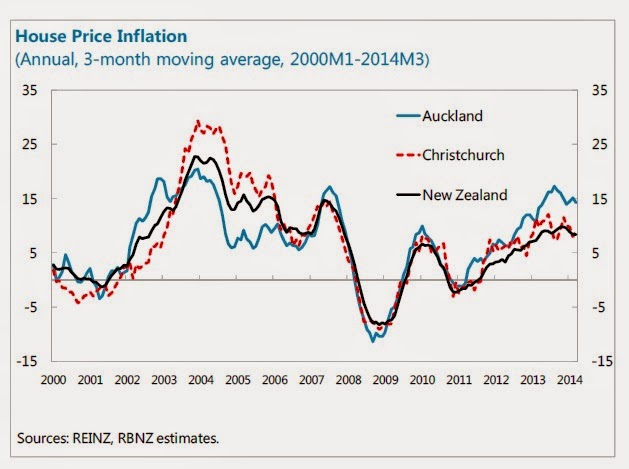
“By historical and international comparisons and some measures of affordability New Zealand’s house prices appear elevated (…). This in part reflects a limited housing stock from low housing investment in recent years and geographical constraints preventing a rapid housing supply response. With house price inflation running high, there remains the risk that expectations-driven, self-reinforcing demand dynamics and price overshooting could take hold.
The government’s steps to help alleviate supply bottlenecks, measures to tighten standards for
mortgage lending (…),
Posted by at 10:32 PM
Labels: Global Housing Watch
Wednesday, May 28, 2014
House Prices in Switzerland
“With monetary conditions remaining accommodative and housing prices [in Switzerland] growing faster than incomes, measures to curb mortgage demand especially from the more vulnerable households need to be strengthened,” says the latest IMF’s annual report on Switzerland. Read the report here for a dedicated section on the housing market.
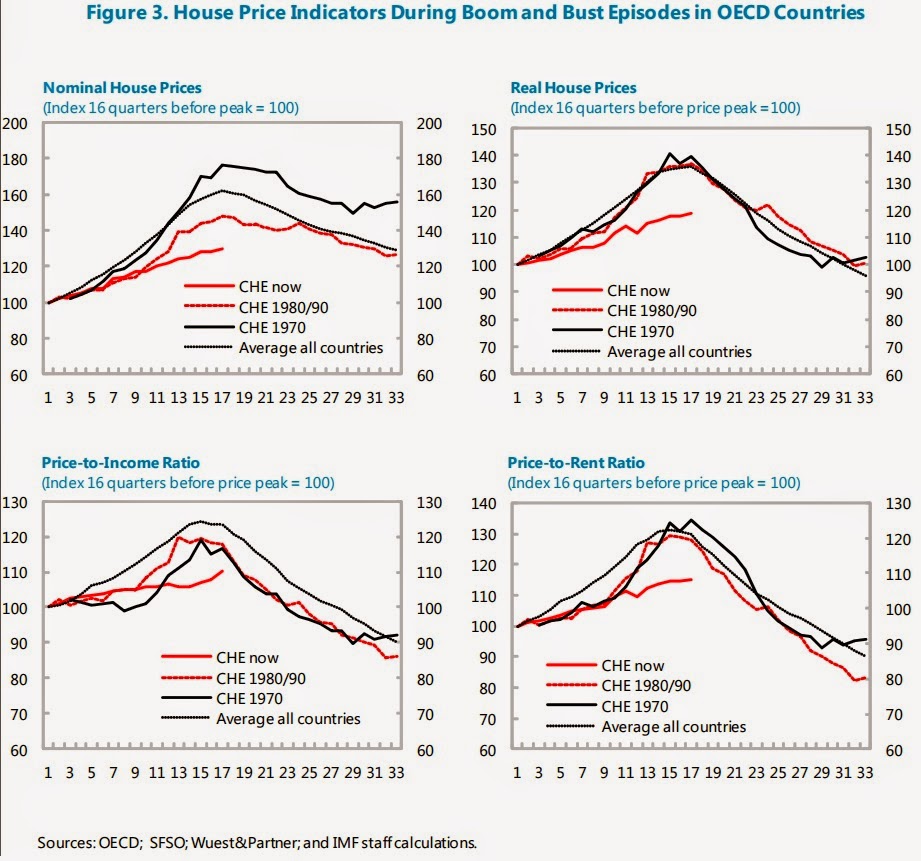
“With monetary conditions remaining accommodative and housing prices [in Switzerland] growing faster than incomes, measures to curb mortgage demand especially from the more vulnerable households need to be strengthened,” says the latest IMF’s annual report on Switzerland. Read the report here for a dedicated section on the housing market.
Posted by at 8:53 PM
Labels: Global Housing Watch
House Prices in Finland
“(…) the level of overvaluation [in house prices in Finland] is lower than in other Nordic countries. However, the national average conceals rapid growth in prices in large metropolitan areas (…),” according to the IMF’s economic report on Finland.
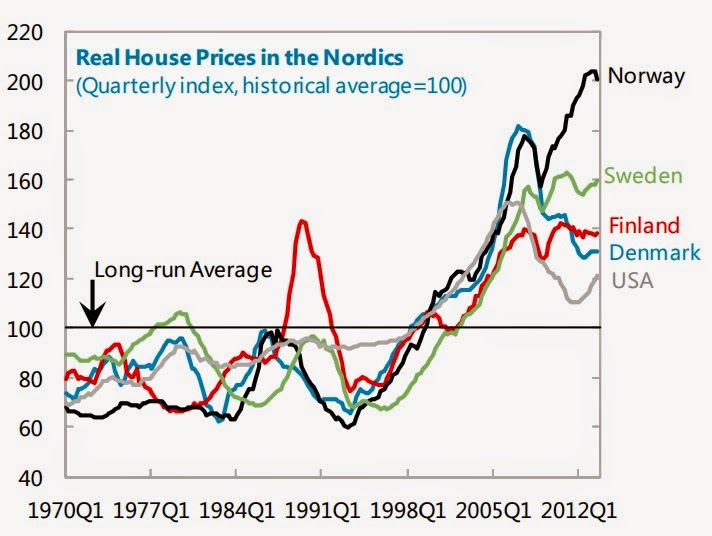
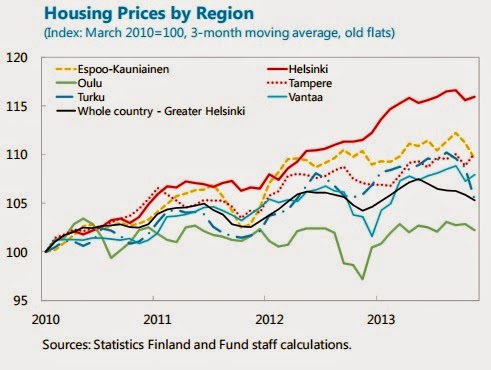
More specifically, it says that “House prices have risen the fastest in metropolitan areas. The pace of house price growth has been pronounced in Helsinki and other highly developed areas despite the crisis, but less so in other regions, especially where there have been declines in manufacturing and industry. Similar dynamics are evident in the relative prices of smaller dwellings compared to larger properties or detached homes, underscoring the upward pressures on house prices in highly populated areas.” The report also talks about macroprudential policies, read the full report here.
“(…) the level of overvaluation [in house prices in Finland] is lower than in other Nordic countries. However, the national average conceals rapid growth in prices in large metropolitan areas (…),” according to the IMF’s economic report on Finland.
More specifically, it says that “House prices have risen the fastest in metropolitan areas. The pace of house price growth has been pronounced in Helsinki and other highly developed areas despite the crisis,
Posted by at 8:01 PM
Labels: Global Housing Watch
House Prices in Colombia
“House prices rose significantly in recent years, fuelled by a robust expansion of income and credit growth and government subsidies. If prices were to fall, banks’ non-performing loans could increase. However, the risk is mitigated by low households’ loan-to-value ratios (about 55 percent), fixed borrowing rates, and a low exposure of banks to mortgage loans. High growth in credit to the private sector, including consumer loans, has been a concern in recent years (IMF Country Report 13/35), but has been abating,” says IMF’s annual economic report on Colombia.
“House prices rose significantly in recent years, fuelled by a robust expansion of income and credit growth and government subsidies. If prices were to fall, banks’ non-performing loans could increase. However, the risk is mitigated by low households’ loan-to-value ratios (about 55 percent), fixed borrowing rates, and a low exposure of banks to mortgage loans. High growth in credit to the private sector, including consumer loans, has been a concern in recent years (IMF Country Report 13/35), but has been abating,”
Posted by at 4:25 PM
Labels: Global Housing Watch
Subscribe to: Posts