Showing posts with label Global Housing Watch. Show all posts
Thursday, July 10, 2014
House Prices in Spain
“House prices dropped by a third and the correction continues,” says the latest IMF’s economic report on Spain.

“House prices dropped by a third and the correction continues,” says the latest IMF’s economic report on Spain.
Posted by at 5:09 PM
Labels: Global Housing Watch
Friday, July 4, 2014
House Prices in United Arab Emirates
“(…) residential property prices in Dubai have been increasing quickly, though the momentum appears to have slowed in recent months. Some data sources suggest that Dubai’s residential sale prices have already reached their previous peak in nominal terms. The recovery in Abu Dhabi’s residential market has started much later than in Dubai and the price level is still well below its peak, says the IMF’s new economic report on United Arab Emirates.
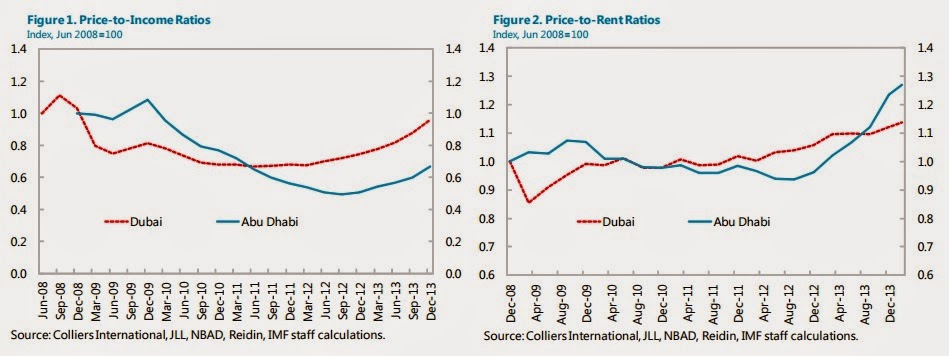
“(…) residential property prices in Dubai have been increasing quickly, though the momentum appears to have slowed in recent months. Some data sources suggest that Dubai’s residential sale prices have already reached their previous peak in nominal terms. The recovery in Abu Dhabi’s residential market has started much later than in Dubai and the price level is still well below its peak, says the IMF’s new economic report on United Arab Emirates.
Moreover, Read the full article…
Posted by at 12:42 AM
Labels: Global Housing Watch
House Prices in France
“(…) the gradual correction of real estate prices which is underway–real prices are 9 percent below pre-crisis peak (…),” according to the IMF’s new economic report on France.
“(…) the gradual correction of real estate prices which is underway–real prices are 9 percent below pre-crisis peak (…),” according to the IMF’s new economic report on France.
Posted by at 12:22 AM
Labels: Global Housing Watch
Friday, June 27, 2014
House Prices in Colombia
“Housing prices have increased substantially in recent years. House prices have nearly doubled in real terms over the last decade and are 20 percent above the peak in 1996, driven mainly by prices in the capital and two other cities. (…) Mortgages have increased more recently but credit risks appear to be largely under control,” according to a new IMF report on Colombia.
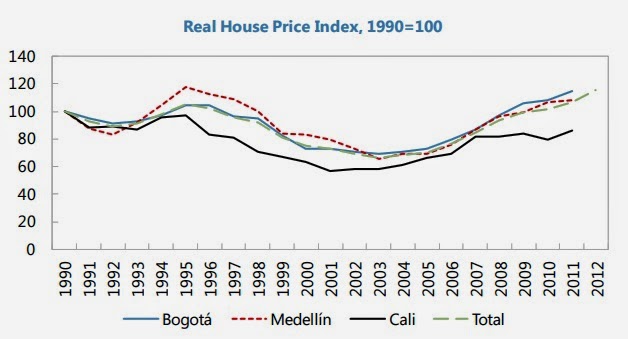
“Housing prices have increased substantially in recent years. House prices have nearly doubled in real terms over the last decade and are 20 percent above the peak in 1996, driven mainly by prices in the capital and two other cities. (…) Mortgages have increased more recently but credit risks appear to be largely under control,” according to a new IMF report on Colombia.
Posted by at 8:50 PM
Labels: Global Housing Watch
Thursday, June 26, 2014
House Prices in Poland
Posted by at 6:30 PM
Labels: Global Housing Watch
Subscribe to: Posts