Showing posts with label Global Housing Watch. Show all posts
Tuesday, July 18, 2017
Housing in St. Kitts and Nevis
The IMF latest report on St. Kitts and Nevis points out that: “The government, through the National Housing Corporation (NHC), is devoting significant resources to foster home ownership through several programs, although not particularly targeting lowest income households. One program provides grants up to $10,000 to make critical repairs and basic improvements to homes (by 2016, assistance was granted to 150 households). And under the Habitat Independence 30 Programme, by 2016 the NHC sourced EC$15 million to facilitate the completion of 115 homes. By 2016, the NHC and the National Bank assisted 43 individuals to construct homes on their lots. The NHC has also introduced a mortgage payment assistance system (named ‘Pay As You Earn’), which progressively sets interest rates on mortgages according to income levels of the applicant. This system was created to address the high incidence of NPLs listed with the NHC. The government is now introducing another housing scheme, “Unity Housing Solutions,” which will provide housing for more than 300 families. “
The IMF latest report on St. Kitts and Nevis points out that: “The government, through the National Housing Corporation (NHC), is devoting significant resources to foster home ownership through several programs, although not particularly targeting lowest income households. One program provides grants up to $10,000 to make critical repairs and basic improvements to homes (by 2016, assistance was granted to 150 households). And under the Habitat Independence 30 Programme, by 2016 the NHC sourced EC$15 million to facilitate the completion of 115 homes.
Posted by at 5:18 PM
Labels: Global Housing Watch
Housing in United Arab Emirates
The IMF’s latest report on United Arab Emirates notes that “The authorities expect housing market to bottom out in 2017, in part due to Expo 2020 investment. Discussions with market analysts suggest that the real estate market is close to balance but is facing headwinds ahead because of rising supply, government’s fiscal restraint, higher interest rates, and stronger exchange rate.”
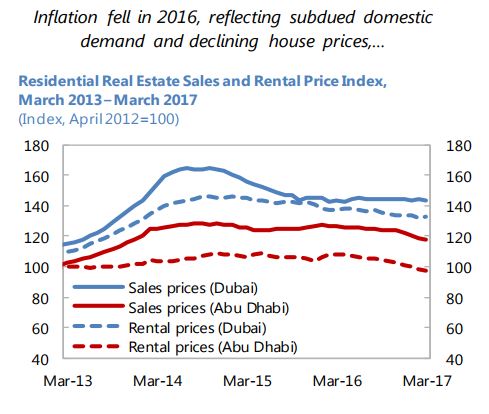
The IMF’s latest report on United Arab Emirates notes that “The authorities expect housing market to bottom out in 2017, in part due to Expo 2020 investment. Discussions with market analysts suggest that the real estate market is close to balance but is facing headwinds ahead because of rising supply, government’s fiscal restraint, higher interest rates, and stronger exchange rate.”
Posted by at 5:14 PM
Labels: Global Housing Watch
Housing in Poland
The IMF’s latest report on Poland notes that “the stock of foreign-currency mortgages continues to decline”.
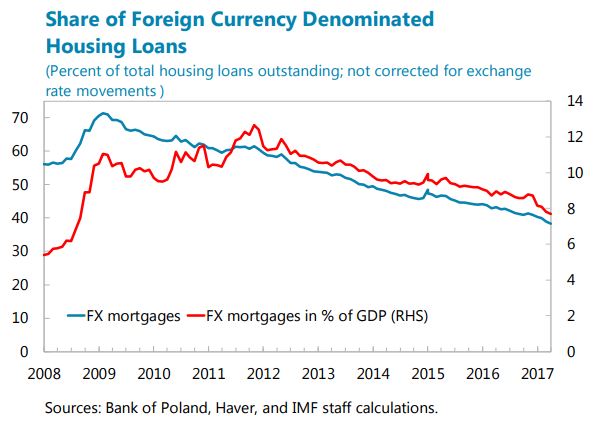
The IMF’s latest report on Poland notes that “the stock of foreign-currency mortgages continues to decline”.
Posted by at 5:09 PM
Labels: Global Housing Watch
Monday, July 17, 2017
Housing View – July 17, 2017
On cross-country:
- How Advanced Economies Tackle Housing Market Imbalances: Lessons for Canada – IMF
- Confronting the Urban Housing Crisis in the Global South: Adequate, Secure, and Affordable Housing – World Resource Institute
- Housing and the tax system: how large are the distortions in the euro area? – European Central Bank
On the US:
- Homeownership and the Racial Wealth Divide – Federal Reserve Bank of St. Louis
- Are Immigrant and Minority Homeownership Rates Gaining Ground in the US? – SSRN
- HUD Secretary Shaun Donovan on all things housing – Milken Institute
- Linking Residents to Opportunity: Gentrification and Public Housing – US Department of Housing and Urban Development
On other countries:
- [Australia] The Rise and Rise of Medium Density Housing – CoreLogic
- [Canada] Macroprudential Tools at Work in Canada – IMF
- [Ghana] Housing transformation and livelihood outcomes in Accra, Ghana – ScienceDirect
- Israel Faces End of Decade-Long Housing Boom – Bloomberg
- [Japan] The Reverse Mortgage Market in Japan and Its Challenges – U.S. Department of Housing and Urban Development
- [Norway] Chart of the Week: Norway’s Home-Price Boom – IMF
- UK Residential Market Update – Knight Frank
- [United Kingdom] English Housing Survey 2015 to 2016: potential for stock improvements – UK Gov
On cross-country:
- How Advanced Economies Tackle Housing Market Imbalances: Lessons for Canada – IMF
- Confronting the Urban Housing Crisis in the Global South: Adequate, Secure, and Affordable Housing – World Resource Institute
- Housing and the tax system: how large are the distortions in the euro area? – European Central Bank
On the US:
- Homeownership and the Racial Wealth Divide – Federal Reserve Bank of St.
Posted by at 5:00 AM
Labels: Global Housing Watch
Thursday, July 13, 2017
How Advanced Economies Tackle Housing Market Imbalances: Lessons for Canada
A new IMF study on says that:
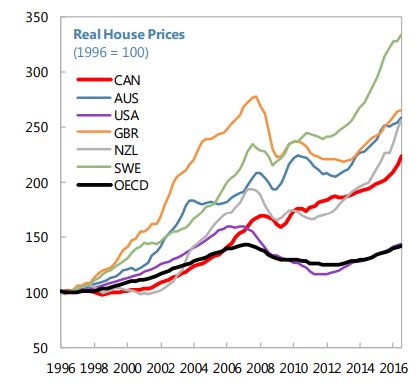
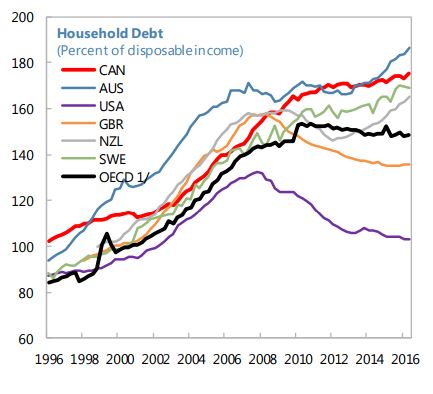
“Low interest rates and abundant liquidity globally has led to significant demand pressures on housing markets around the world. Economies have tackled growing imbalances with the continued tightening of prudential-based tools and, in some cases, targeted tax measures. While the outcomes of these policies are not straightforward to assess, and up-to-date empirical evidence is not readily available for the individual economy cases, the measures likely have slowed down increases in house prices and household indebtedness, and improved the resilience of the financial sector to housing market related shocks. The trend towards coordinating prudential measures with tax-based measures is likely to improve the overall effectiveness of macroprudential policy in cases when speculative and investment demand play a major role.”
Another IMF study on Canada says that:
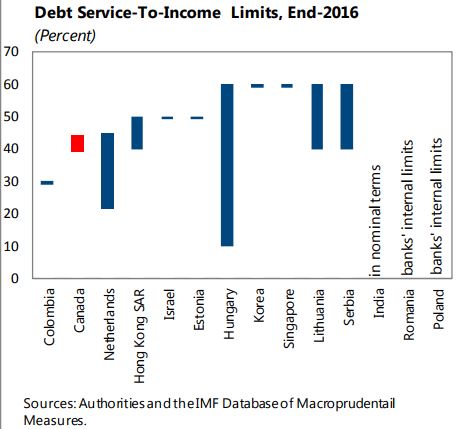
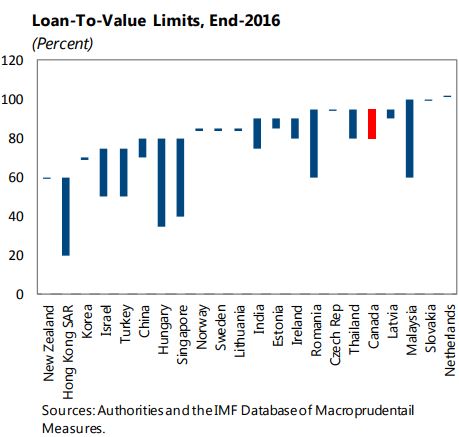
“The aim of this paper is to assess which macroprudential policy measures have been effective in containing house price and mortgage credit growth in Canada and other economies. Our analysis indicates that macroprudential policy measures have had a moderating effect on house prices and mortgage credit in Canada since 2010. International experience suggests that lower caps on debt-service-to-income (DSTI) ratios and loan-to-value ratios could be effective in containing both mortgage credit and house price growth.”
A new IMF study on says that:
“Low interest rates and abundant liquidity globally has led to significant demand pressures on housing markets around the world. Economies have tackled growing imbalances with the continued tightening of prudential-based tools and, in some cases, targeted tax measures. While the outcomes of these policies are not straightforward to assess, and up-to-date empirical evidence is not readily available for the individual economy cases, the measures likely have slowed down increases in house prices and household indebtedness,
Posted by at 12:26 PM
Labels: Global Housing Watch
Subscribe to: Posts