Showing posts with label Global Housing Watch. Show all posts
Friday, December 29, 2017
Housing View – December 29, 2017
On cross-country:
- Demographic Patterns of Reurbanisation and Housing in Metropolitan Regions in the US and Germany – Comparative Population Studies
On the US:
- A Shared Future: Data Democratization and Spatial Heterogeneity in the Housing Market – The Joint Center for Housing Studies
- LTV vs. LTI Constraints: When Did They Bind, and How Do They Interact? – University of Copenhagen
- Asymmetric effects of monetary policy in regional housing markets – Norges Bank
- Fannie and Freddie Continue in Limbo while Congress Looks for a Permanent Fix for the Housing Finance Market – Cato Institute
- Housing Disease and Public School Finances – NBER
- Investors Pile Into Suburban Rental Housing – Wall Street Journal
On other countries:
- [Singapore] Singapore authorities’ housing market warning may fall on deaf ears – Reuters

Photo by Aliis Sinisalu
On cross-country:
- Demographic Patterns of Reurbanisation and Housing in Metropolitan Regions in the US and Germany – Comparative Population Studies
On the US:
- A Shared Future: Data Democratization and Spatial Heterogeneity in the Housing Market – The Joint Center for Housing Studies
- LTV vs. LTI Constraints: When Did They Bind, and How Do They Interact? – University of Copenhagen
- Asymmetric effects of monetary policy in regional housing markets – Norges Bank
- Fannie and Freddie Continue in Limbo while Congress Looks for a Permanent Fix for the Housing Finance Market – Cato Institute
- Housing Disease and Public School Finances – NBER
- Investors Pile Into Suburban Rental Housing – Wall Street Journal
On other countries:
- [Singapore] Singapore authorities’
Posted by at 12:08 PM
Labels: Global Housing Watch
Monday, December 25, 2017
Housing in Bolivia
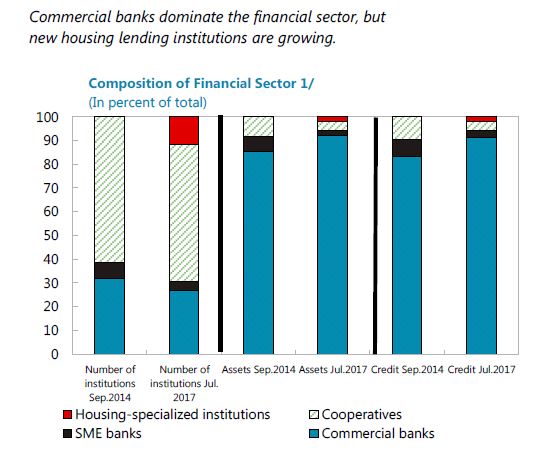
The IMF’s latest report on Bolivia says that:
“The FSL [Financial Services Law] has resulted in rapid credit growth directed to specific sectors and social housing (…) Housing lending should be closely monitored and the authorities should finalize and publish a housing price index. (…) More market-oriented mechanisms to improve financial access should be considered and the housing loan portfolio monitored closely.”
The IMF’s latest report on Bolivia says that:
“The FSL [Financial Services Law] has resulted in rapid credit growth directed to specific sectors and social housing (…) Housing lending should be closely monitored and the authorities should finalize and publish a housing price index. (…) More market-oriented mechanisms to improve financial access should be considered and the housing loan portfolio monitored closely.”
Posted by at 3:17 PM
Labels: Global Housing Watch
Friday, December 22, 2017
Housing View – December 22, 2017
On cross-country:
- Institutional settings and urban sprawl: evidence from Europe – Journal of Housing Economics
- Bubbles and crashes: A vicious cycle of self- fulfilling investor sentiment – London School of Economics
- Houses, up and down: An international comparison of house price movement – Federal Reserve Bank of St. Louis
- Integrating national policies to deliver compact, connected cities: an overview of transport and housing – Coalition for Urban Transitions
- Space matters: Understanding the real effects of macroeconomic variations in cross-country housing price movements – Economic Letters
- The Crisis in Affordable Housing Is a Problem for Cities Everywhere – World Resources Institute
On the US:
- The Long View of Housing Wealth Effects – Columbia University
- Why Housing Supply Matters – Oregon Office of Economic Analysis
- Reactions to the tax plan: Curbed, New York Times, Reuters, Seattle Times, Seeking Alpha
- Owned Now Rented Later? Housing Stock Transitions and Market Dynamics – Syracuse University
- BuildZoom Research: A Year in Review – BuildZoom
- Measuring population estimates of housing insecurity in the United States: A comprehensive approach – Equitable Growth
- What “affordable housing” really means – Vox
- What Would it Take to Make Neighborhoods More Equitable and Integrated? – Harvard Joint Center for Housing Studies
- The Libertarian: How Housing Got So Expensive – Hoover Institution
- A Decline in Multifamily Housing Permits Offsets a Gain in Single-Family Permits – American Institute for Economic Research
- The Best Housing Market in a Decade, Now What? – Freddie Mac
On other countries:
- [Australia] Does Population Growth Cause Rising Dwelling Prices? – LF Economics
- [Canada] Non-residents focus on new condos in Vancouver, Toronto – Reuters
- [China] Smaller cities drive China’s new home prices in Nov, defying curbs – Reuters
- [Czech Republic] Czech central bank acts to cool buoyant property market – Financial Times
- [Germany] Germany a hot destination for overseas buyers – Global Property Guide
- [Peru] Rapid Rural-to-Urban Migration to Lima: A Need for a Sustainable Housing Reform – Lehigh University
- [Spain] A Decade After Bubble, Spanish Real Estate a Hot Buy Again – Bloomberg
- [United Arab Emirates] Mortgages: Catch me if you can – Reidin
- [United Arab Emirates] Dubai / Abu Dhabi Residential Property Price Indices: November 2017 Results – Reidin
- [United Kingdom] Is owning a house cheaper than renting it? – Medium
Photo by Aliis Sinisalu
On cross-country:
- Institutional settings and urban sprawl: evidence from Europe – Journal of Housing Economics
- Bubbles and crashes: A vicious cycle of self- fulfilling investor sentiment – London School of Economics
- Houses, up and down: An international comparison of house price movement – Federal Reserve Bank of St. Louis
- Integrating national policies to deliver compact, connected cities: an overview of transport and housing – Coalition for Urban Transitions
- Space matters: Understanding the real effects of macroeconomic variations in cross-country housing price movements – Economic Letters
- The Crisis in Affordable Housing Is a Problem for Cities Everywhere – World Resources Institute
Posted by at 5:00 AM
Labels: Global Housing Watch
Sunday, December 17, 2017
House Prices in Cyprus
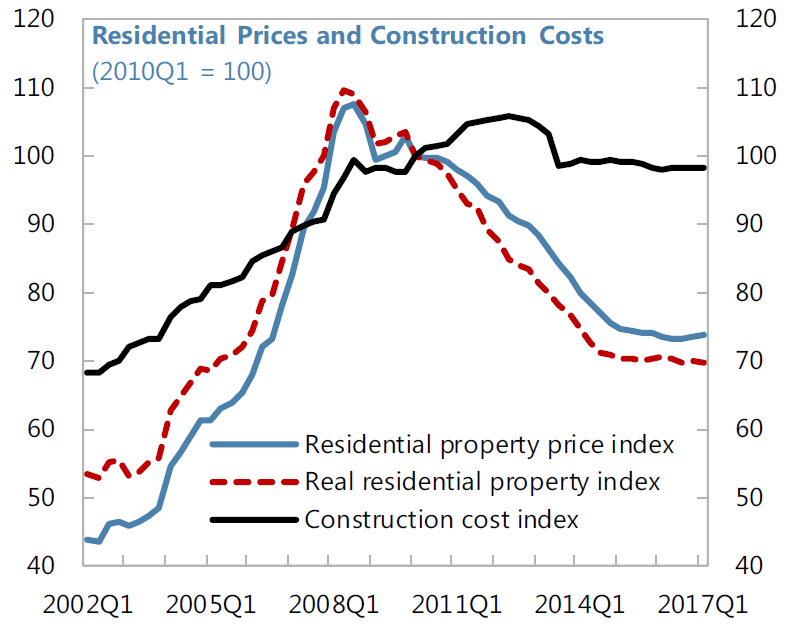
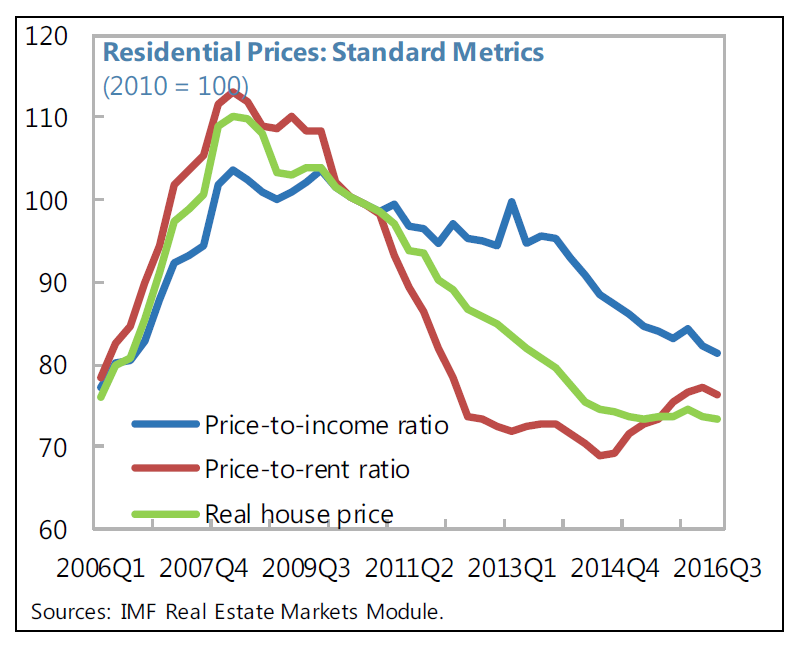
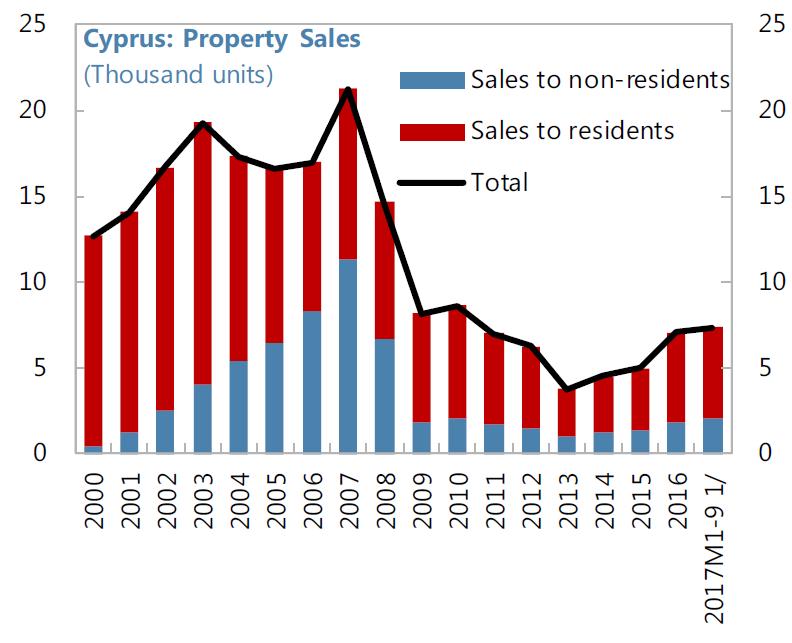
The IMF’s latest report on Cyprus says that:
“After falling sharply, property prices are now rising marginally while transactions are recovering, especially in the luxury segment. Prices declined 30 percent (residential) and 50 percent (retail) relative to the 2008–09 peak, stabilized in 2015, and rose moderately since mid-2016. Price-to-rent and price-to-income ratios have returned to historical levels.6 With at least two thirds of loans collateralized with real estate, moderate price growth will increase banks’ NPL cover and borrowers’ net worth. However, prices have also benefited from the limited number of foreclosures, while turnover is more active in the luxury market owing in part to the CbI scheme.
Increased construction activity has supported the recovery, and associated risks appear manageable. Tax and other incentives targeting the property sector helped to stabilize prices and bring jobs and economic growth. The fact that large luxury construction projects are mainly foreign financed or financed through pre-selling helps to limit financial stability risks. The CbI scheme is a general investment scheme, although real estate is the major beneficiary. Regulatory improvements to the CbI—with stricter controls on intermediaries (including real estate agents and lawyers)—are being considered, but there are no plans to amend the eligibility criteria. Some construction projects will generate future revenue streams (e.g., the casino and marinas) that will underpin their value. However, resale prices of residential units could be affected if too many are built, which could spread to prices of other properties. While developers have not relied on domestic bank financing so far, caution is needed to prevent a recurrence of such bank exposure, and tightening of lending standards is warranted for developers and in the event foreign demand spills over to the housing market for the general population. To comply with EU requirements, VAT will be imposed on transactions of buildable land, thereby partly offsetting—from a tax-incidence perspective—the previous elimination of the IPT and reduction in property transfer fees.”
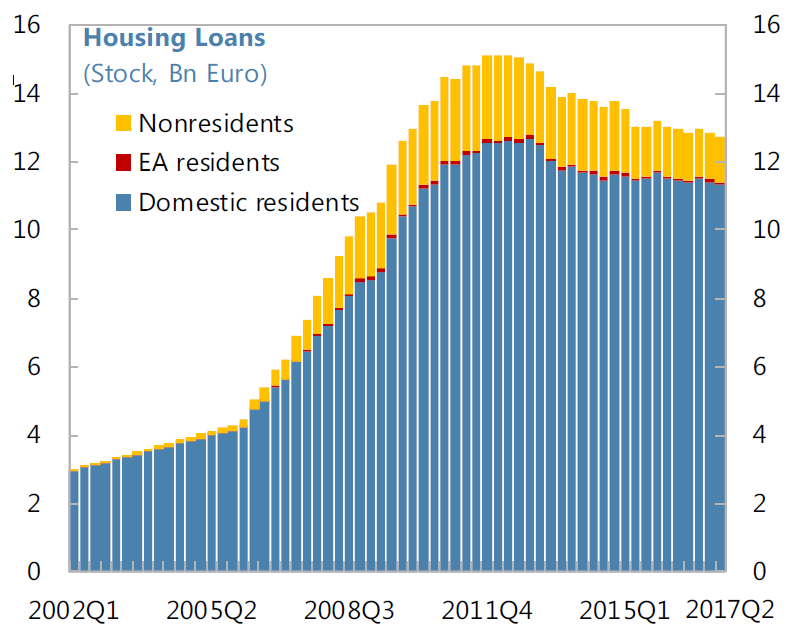
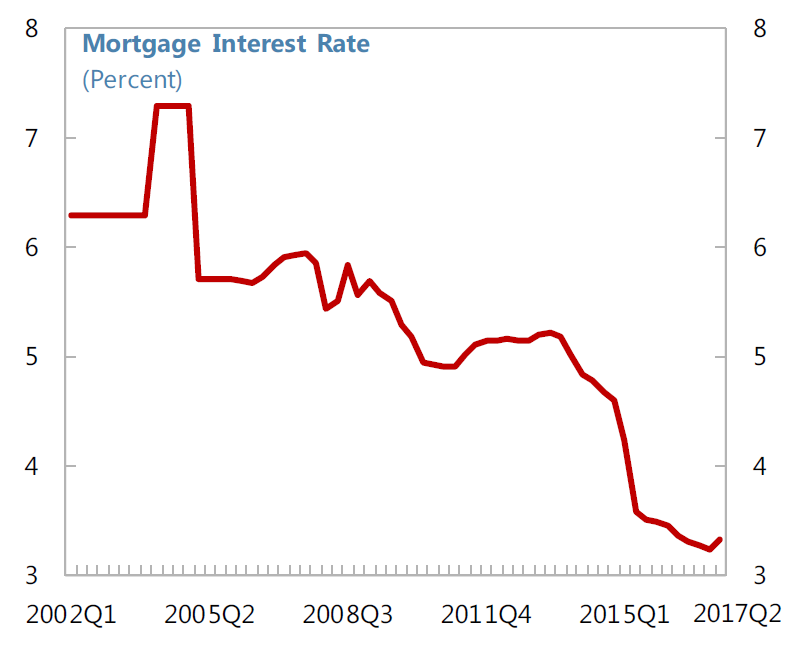
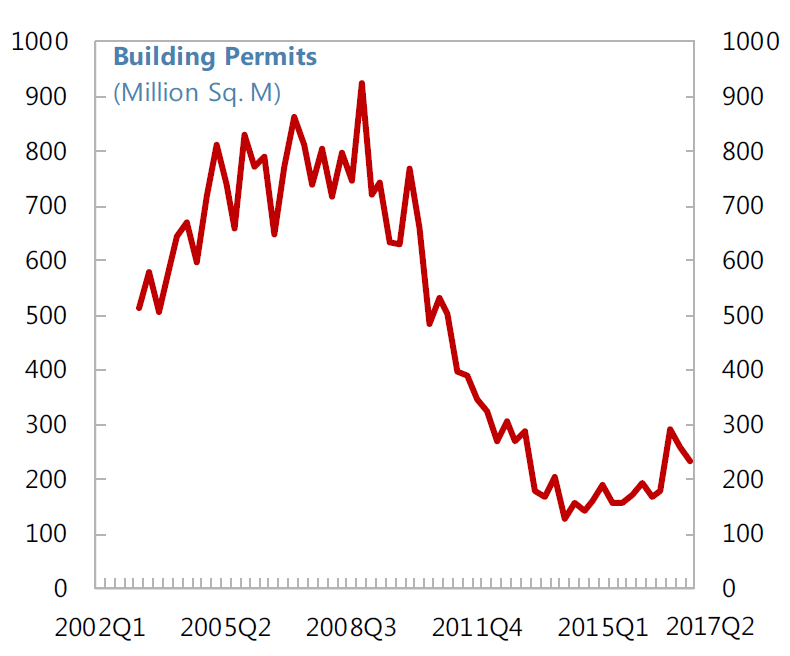
The IMF’s latest report on Cyprus says that:
“After falling sharply, property prices are now rising marginally while transactions are recovering, especially in the luxury segment. Prices declined 30 percent (residential) and 50 percent (retail) relative to the 2008–09 peak, stabilized in 2015, and rose moderately since mid-2016. Price-to-rent and price-to-income ratios have returned to historical levels.6 With at least two thirds of loans collateralized with real estate, moderate price growth will increase banks’ NPL cover and borrowers’ net worth.
Posted by at 5:01 PM
Labels: Global Housing Watch
Housing Market in Finland
The IMF’s latest report on Finland says that:
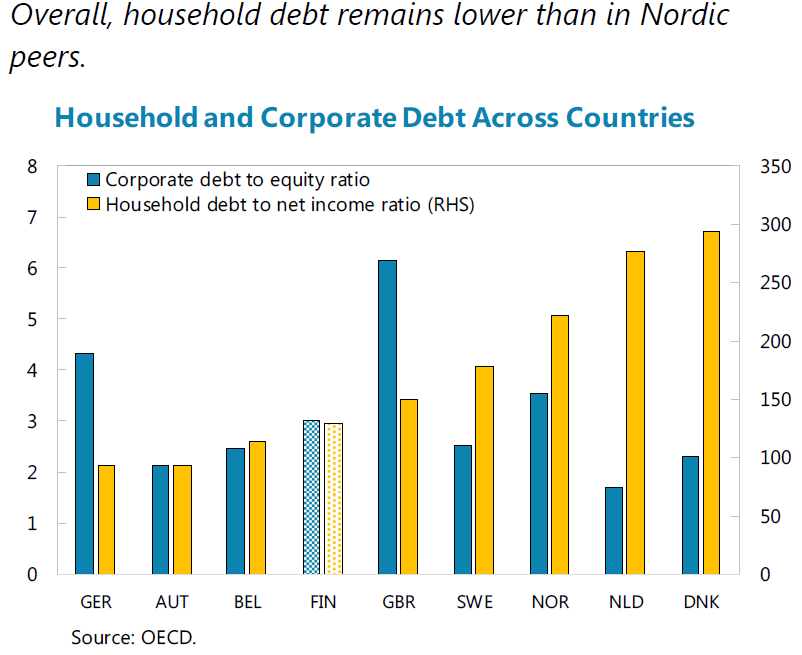
“House prices do not show signs of overvaluation. House prices relative to rent and incomes are close to their long run averages. Real house prices in the Helsinki metropolitan area have increased gradually since 2012, reflecting greater demand, whereas they have declined for the rest of Finland.
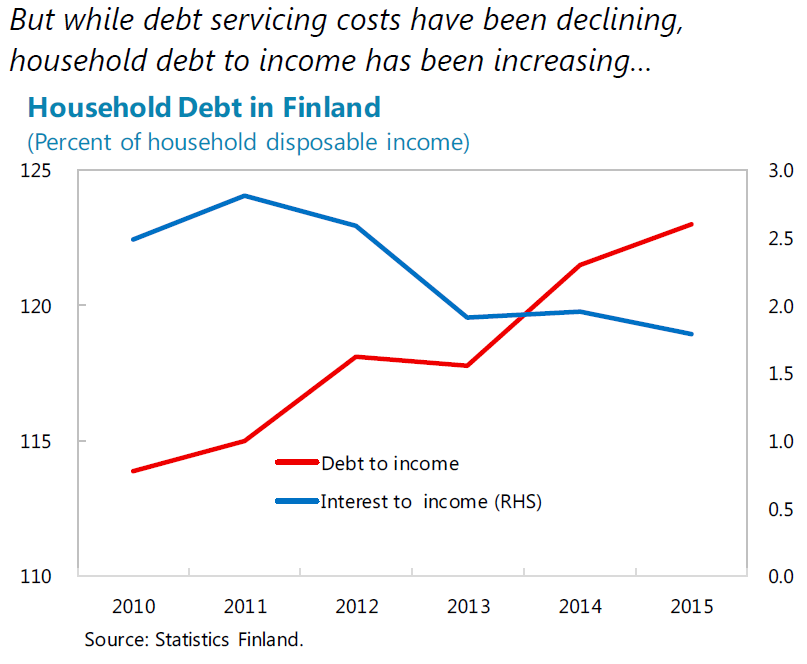
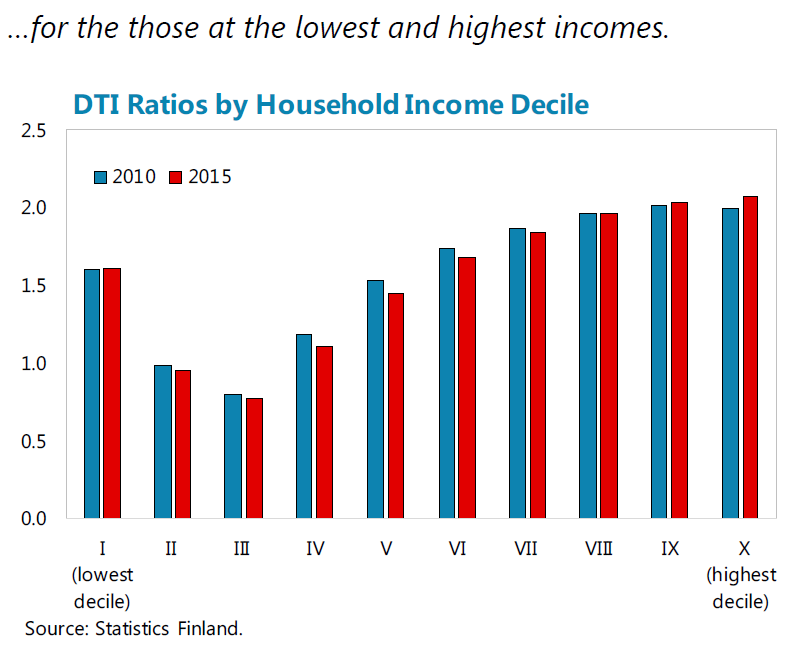
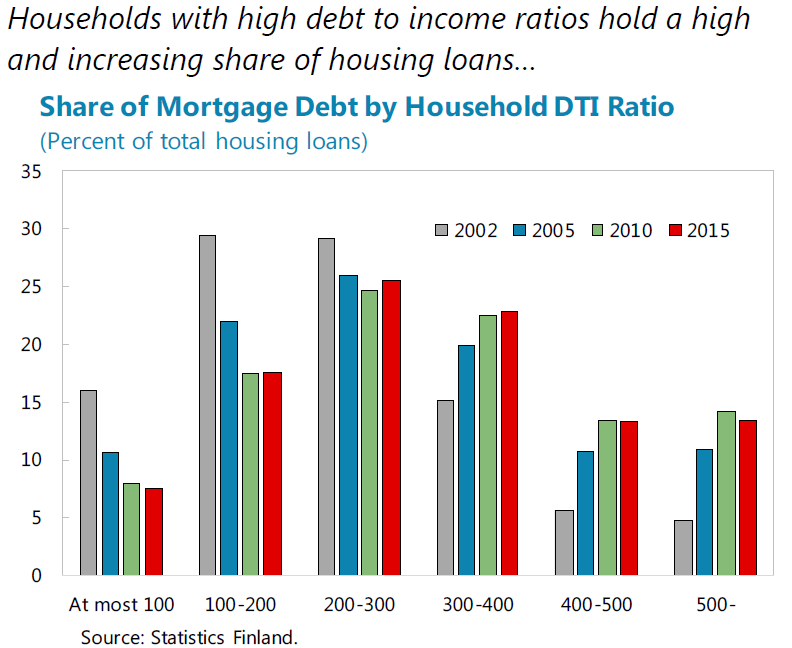
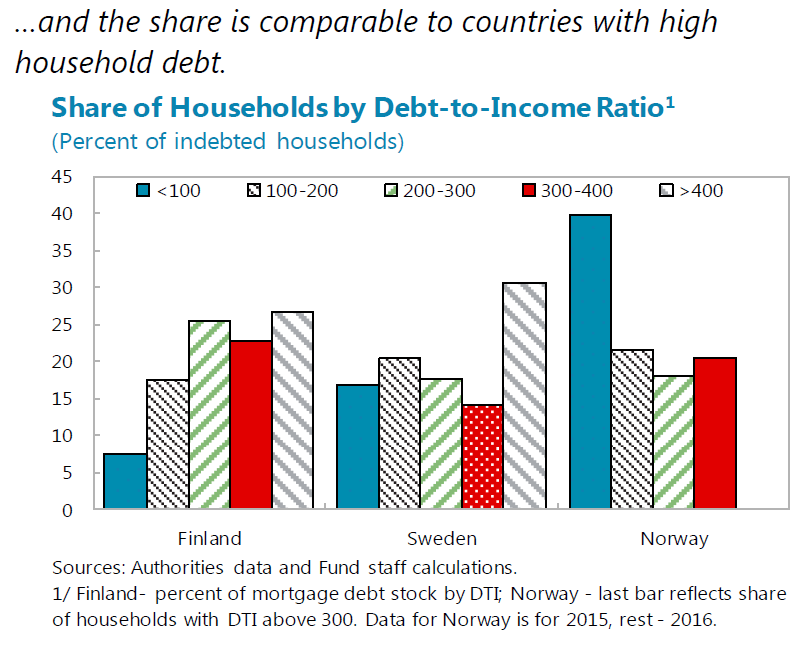
Some households are vulnerable (…). Household saving rates are negative, unsecured consumer credit is growing strongly, and a large share of mortgage loans is held by highly indebted borrowers: over a quarter of mortgage debt is to mortgagees with debt to income ratios higher than 400 percent. Some households would therefore be vulnerable to interest rate increases, as most mortgages are variable rate loans (although about 40 percent of mortgages have contracts that lengthening loan maturity instead of increasing payments).
Increasing imbalances in the household sector make it important to give the FIN-FSA additional tools:
Additional macroprudential measures for borrowers should be introduced to allow the macroprudential authority to better target household vulnerabilities that are not well covered by existing Loan-To-Collateral limits. These could include caps on loans in relation to values of houses and personal incomes, and debt servicing to income. The Bank of Finland and FIN-FSA are currently working together to analyze appropriateness of different tools, and plans to propose legislation for additional measures once the SRB is introduced.
A comprehensive credit registry would be particularly helpful to monitor and assess household credit. The Ministry of Justice has ordered a study on its implementation in Finland.”
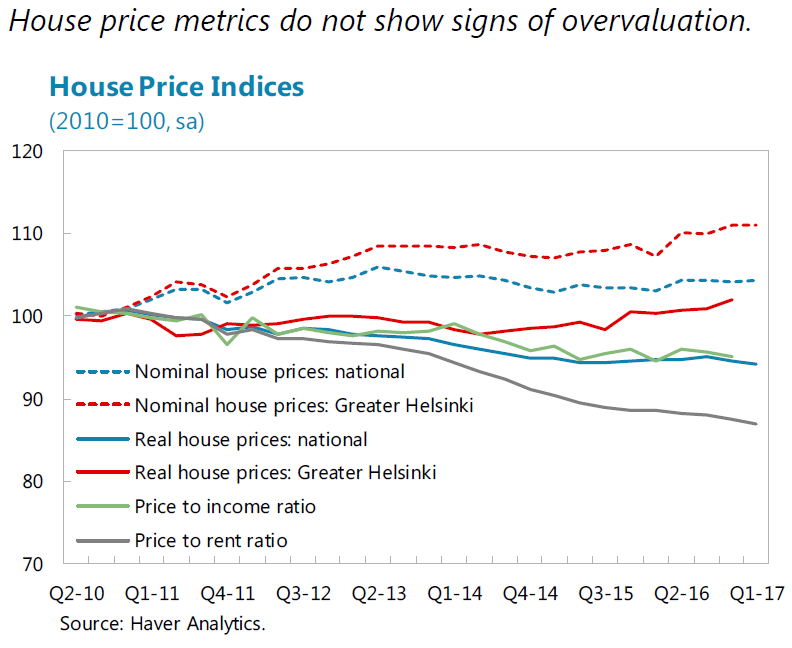
The IMF’s latest report on Finland says that:
“House prices do not show signs of overvaluation. House prices relative to rent and incomes are close to their long run averages. Real house prices in the Helsinki metropolitan area have increased gradually since 2012, reflecting greater demand, whereas they have declined for the rest of Finland.
Some households are vulnerable (…). Household saving rates are negative, unsecured consumer credit is growing strongly,
Posted by at 4:33 PM
Labels: Global Housing Watch
Subscribe to: Posts