Showing posts with label Global Housing Watch. Show all posts
Wednesday, January 24, 2018
Household Credit, Global Financial Cycle, and Macroprudential Policies: Credit Register Evidence from an Emerging Country
From a new IMF working paper by Mircea Epure, Irina Mihai; Camelia Minoiu, and José-Luis Peydró:
“We analyze the effects of macroprudential policies on local bank credit cycles and interactions with international financial conditions. For identification, we exploit the comprehensive credit register containing all bank loans to individuals in Romania, a small open economy subject to external shocks, and the period 2004-2012, which covers a full boom-bust credit cycle when a wide range of macroprudential measures were deployed. Although household leverage is known to be a key driver of financial crises, to our knowledge this is the first paper that employs a household credit register to study leverage and macroprudential policies over a full economic cycle. Our results show that tighter macroprudential conditions are associated with a significant decline in household credit, with substantially stronger effects for foreign currency (FX) loans than for local currency loans. The effects on FX loans are higher for: (i) ex-ante riskier borrowers proxied by higher debt-service-toincome ratios and (ii) banks with greater exposure to foreign funding. Moreover, tighter macroprudential policy has stronger dampening effects on FX lending when global risk appetite is high and foreign monetary policy is expansionary. Finally, quantitative effects are in general larger for borrower rather than lender macroprudential policies.”
From a new IMF working paper by Mircea Epure, Irina Mihai; Camelia Minoiu, and José-Luis Peydró:
“We analyze the effects of macroprudential policies on local bank credit cycles and interactions with international financial conditions. For identification, we exploit the comprehensive credit register containing all bank loans to individuals in Romania, a small open economy subject to external shocks, and the period 2004-2012, which covers a full boom-bust credit cycle when a wide range of macroprudential measures were deployed.
Posted by at 5:05 PM
Labels: Global Housing Watch
The Effectiveness of Housing Market Policies in Hong Kong
From the IMF’s latest report on Hong Kong:
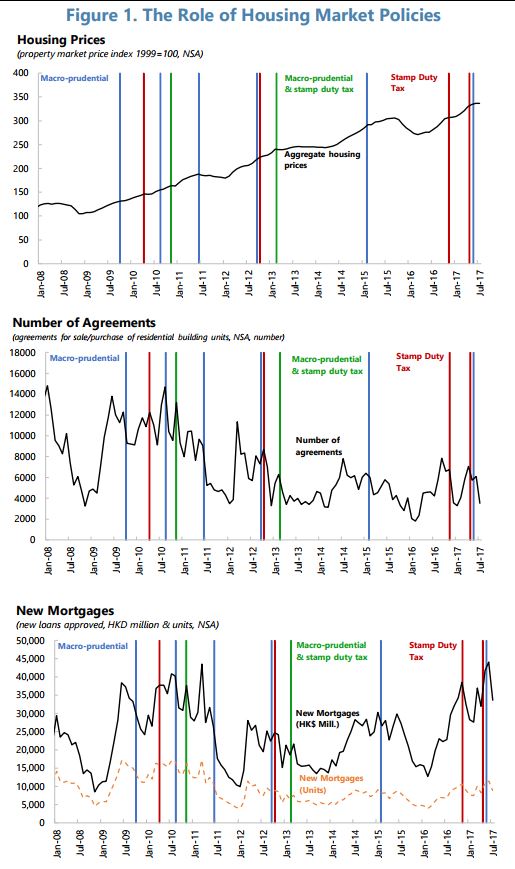
“During the last decade, Hong Kong SAR has experienced a large increase in house prices and credit, prompting the authorities to respond with several rounds of tightening macro-prudential rules and increasing stamp duty taxes. This chapter analyzes the effectiveness of these measures, and finds that they have helped reduce house price appreciation. The estimated impact of a 10 percent LTV tightening is a reduction of house prices of 4.8 percent over the next year. The estimated impact of a 1 percent increase in the ad valorem stamp duty tax is a reduction of house prices of 1.2 percent over the next year. Without these policies, house prices would have been 12.5 percent higher, and the mortgage credit-GDP ratio 15 percent higher.”
From the IMF’s latest report on Hong Kong:
“During the last decade, Hong Kong SAR has experienced a large increase in house prices and credit, prompting the authorities to respond with several rounds of tightening macro-prudential rules and increasing stamp duty taxes. This chapter analyzes the effectiveness of these measures, and finds that they have helped reduce house price appreciation. The estimated impact of a 10 percent LTV tightening is a reduction of house prices of 4.8 percent over the next year.
Posted by at 4:00 PM
Labels: Global Housing Watch
Tuesday, January 23, 2018
Housing, Household Debt and Policy
Global Housing Watch Newsletter: January 2018
This post is written by Fang Yao. Fang is a Senior Analyst in the Economics Department of the Reserve Bank of New Zealand.
The housing market played a prominent role in the 2007-2009 ‘great recession’ in the United States, and housing markets in other jurisdictions have also been worryingly volatile since the turn of the century. Elevated household debt and high house prices, combined with subdued inflation outcomes, pose a challenge for both monetary and macro-prudential policy. A recent conference aimed to enhance understanding of the linkages between housing, household spending and savings (borrowing) and explore policy responses.
The conference on Housing, Household Debt and Policy took place in Wellington, and it was organized by the Reserve Bank of New Zealand on December 11-12, 2017. The organizing committee was composed by Christie Smith (Reserve Bank of New Zealand), Fang Yao (Reserve Bank of New Zealand), Robert Kirkby (Victoria University of Wellington), and Jonathan Chiu (Victoria University of Wellington and the Bank of Canada).
First day
Grant Spencer, Acting Governor of the Reserve Bank of New Zealand, provided opening remarks. His speech stressed the importance of better understanding housing and household behaviours, and in particular, using micro data analysis to inform policy decisions.
Christopher Carroll (Johns Hopkins University) then gave a keynote address on “The normal science of heterogeneous-agents macroeconomics”. Carroll questions the micro foundations of representative agent models, likening them to Ptolemaic astronomy, in which geocentric planetary motion is predicted using increasingly ad hoc geometric epicycles rather than underlying laws of motion. He encourages the integration of heterogeneous micro behavior into macro models, taking aggregation seriously, and proposes the use of micro data to test competing hypotheses about consumer behavior.
Carlos Garriga (Federal Reserve Bank of St. Louis) then presented his joint work with Aaron Hedlund (University of Missouri). Their paper analyses how arrangements in the mortgage market impact the dynamics of housing (boom-bust episodes) and the economy using a structural equilibrium model with incomplete markets and endogenous adjustment costs. In response to mortgage rates and credit conditions, the model can generate movement in house prices, residential investment, and homeownership consistent with the U.S. housing boom-bust cycle. The propagation of shocks to the macro economy is asymmetric with much higher consumption sensitivity during the bust than the boom, due to the endogenous fragility caused by mortgage debt.
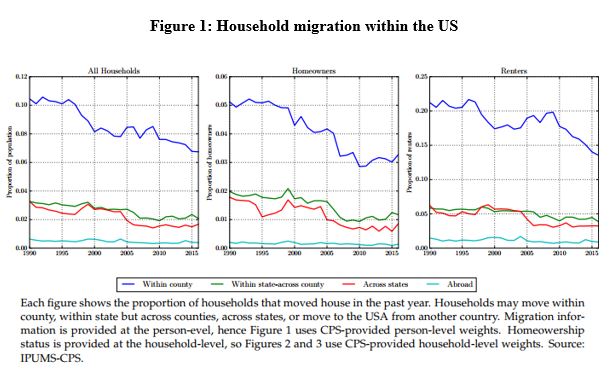
Following Garriga, James Graham (New York University) discussed how household’s consumption spending responds to aggregate, regional, local and neighborhood house price shocks. Using a large panel of consumers over the period of 2004-2015, he finds that aggregate price movements are associated with the largest consumption movements, but that neighborhood-level price movements have a stronger effect than city-level price movements. He explains this empirical finding by noting that households are more likely to move across counties or neighborhoods than they are to move between cities, states, or regions. Thus, a house price increase in a particular neighborhood generates a wealth effect for households likely to move to other neighborhoods.
In the following session, Fang Yao (Reserve Bank of New Zealand) presented joint work with Jonathan Chiu (Victoria University of Wellington and the Bank of Canada), Robert Kirkby (Victoria University of Wellington), and Karam Shaar (Victoria University of Wellington). Their paper that identifies the marginal propensity to consume (MPC) out of housing wealth, using New Zealand micro data. The authors find an asymmetric interaction between the housing wealth effect and household leverage. In particular, when house prices are growing, household leverage weakens the MPC out of housing wealth. This result – that leverage weakens the marginal propensity to consume – stands in sharp contrast to Mian and Sufi (2013), who find that US consumers’ MPCs are larger when leverage is high, though in their data house prices are falling.
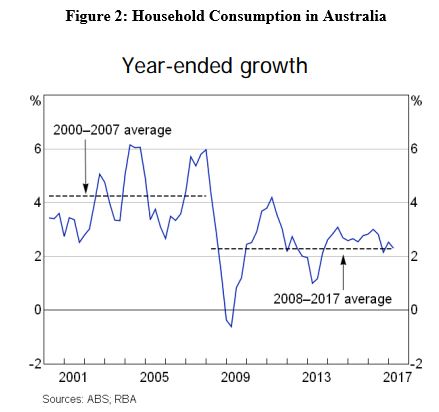
Fiona Price (Reserve Bank of Australia), with co-author Giancarlo La Cava (Reserve Bank of Australia), studies a related topic using Australian household micro data. Their results suggest that a ‘debt overhang channel’ may exist in Australia: higher levels of housing debt (relative to income and assets) and lower debt-servicing capacity are found to reduce growth in spending.
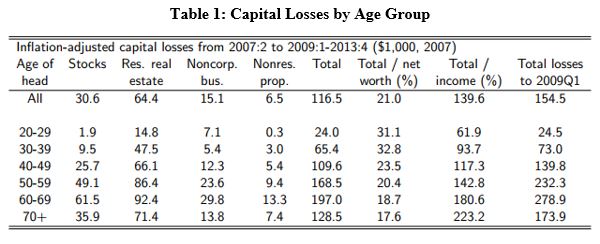
Dirk Krueger (University of Pennsylvania) concluded the first day with the second keynote address, titled “intergenerational redistribution in the great recession”, which presented joint work with Andrew Glover (University of Texas, Austin), Jonathan Heathcote (Federal Reserve Bank of Minneapolis), and José-Víctor Ríos-Rull (University of Pennsylvania). The Great Recession saw sharp drops in labour earnings and in asset prices. The authors construct a stochastic overlapping-generations general equilibrium model to study the welfare losses from these declines distributed across different age groups. The model predicts that the Great Recession implied modest average welfare losses for households in the 20-29 age group, stemming from poor labour market outcomes, but very large welfare losses of around 10% of lifetime consumption for households aged 60 and older, resulting from declines in asset prices.
Second day
Greg Kaplan (University of Chicago) gave the third and final keynote presentation. His work, joint with Andreas Fuster and Basit Zafar (both Federal Reserve Bank of New York), collects and interprets new survey evidence, on households’ consumption response to hypothetical income gains. By surveying consumers about hypothetical consumption behaviour, Kaplan and co-authors can directly address a wide range of questions about the effects of changes in wealth. They find a range of interesting results, including size and sign asymmetries, little responses to news, and important liquidity effects. They further contrast these findings with theoretical models and find that the two-asset incomplete markets model of Kaplan and Violante best matches the empirical findings.
In the following session, Aaron Hedlund (University of Missouri) presented “Monetary policy, heterogeneity, and the housing channel”, in which he and co-authors Fatih Karahan (Federal Reserve Bank of New York), Kurt Mitman (Stockholm University and CEPR), and Serdar Ozkan (University of Toronto) investigate the role of housing and mortgage debt in the transmission and effectiveness of monetary policy. They build a heterogeneous agent New Keynesian model with a frictional housing market to quantify the various mechanisms. The quantitative findings are as follows: 1) About 20% of the drop in aggregate consumption from a contractionary monetary shock is due to declining house prices; 2) Responses are asymmetric, with contractionary shocks yielding a larger response of all variables; and 3) Monetary policy is more effective in a high loan-to-value (LTV) environment.
Andrew Coleman (University of Otago) next presented work which develops a heterogeneous agent overlapping generations model that examines how the neutrality of the tax system with respect to inflation depends on the price elasticity of the housing supply. Coleman’s model, which endogenizes house prices and rents and incorporates detailed tax regulations and bank-imposed credit constraints, shows 1) Inflation has large effects on the tenure arrangements of young households irrespective of the housing supply elasticity; and 2) Inflation can improve the welfare of some low income young households if the supply is sufficiently elastic. The welfare costs of inflation are reduced by taxing real rather than nominal rates of interest.
In the first afternoon session, Patrick Moran (University of Oxford) presented “Temptation, commitment, and hand-to-mouth consumers”, joint with Agnes Kovacs (University of Oxford). This paper rationalises the existence of “wealthy hand-to-mouth” households by arguing that households are tempted to consume their liquid assets, and therefore purchase housing as a savings commitment device. A life-cycle model with non-standard preferences is able to match the empirical fraction of hand-to-mouth households and rationalises heterogeneity in the marginal propensity to consume.
Yunho Cho (University of Melbourne) and coauthors Shuyun May Li and Lawrence Uren (both at the University of Melbourne as well) explore the implications of negative gearing tax associated with housing investment by conducting a quantitative study of the Australian housing market. They find that removing the tax advantage that prompt negative gearing would result in lower house prices, as well as higher rents and homeownership rates. Their welfare analysis suggests that eliminating negative gearing would lead to an overall welfare gain of 1.5 percent for the Australian economy, with 76 percent of households becoming better off. However, the welfare effects are heterogeneous across different households. Renters and owner-occupiers are winners, but landlords, especially young with high earnings, lose.
In the last session, Lasse Bork (Aalborg University) presented work with Stig Vinther Møller (Aarhus University) decomposing the metro-level house price variation into aggregate structural shocks and regional structural shocks. They find that regional shocks have a significant positive effects on the house prices in the metropolitan areas of California, while the aggregate counterparts were often small but nevertheless non-negligible, as seen in the historical structural decomposition of the house prices series.
Selva Baziki (Central Bank of the Republic of Turkey) presented the last paper of the conference. Her paper, co-authored with Tanju Çapacıoğlu (Central Bank of the Republic of Turkey), studies how two policy shocks to LTV ratios affected bank lending and unsecured borrowing by households, using a unique and comprehensive bank-linked individual credit data set from Turkey. They show that following the introduction of an LTV cap, banks that were previously above the limit reduced residential lending in favour of unsecured general-purpose loans to new residential borrowers and riskier commercial loans.
To sum up
The conference brought together researchers from academia and central banks, and demonstrated that there is rich and vibrant research investigating households, housing, and household indebtedness. Researchers are using sophisticated quantitative and theoretical models, and are expanding research horizons by using excellent micro data. We have learned a great deal about the drivers of housing cycles, their consequences for the real economy (in particular household spending and savings), and their implications for tax, monetary and macro-prudential policy. The papers in this conference offer new data, new analysis, and new insights, and we hope they will inspire future research.
Global Housing Watch Newsletter: January 2018
This post is written by Fang Yao. Fang is a Senior Analyst in the Economics Department of the Reserve Bank of New Zealand.
The housing market played a prominent role in the 2007-2009 ‘great recession’ in the United States, and housing markets in other jurisdictions have also been worryingly volatile since the turn of the century.
Posted by at 6:00 PM
Labels: Global Housing Watch
Friday, January 19, 2018
Housing View – January 19, 2018
On cross-country:
- Comparative Analysis of Newly-Built Housing Quality in Poland and Lithuania – De Gruyter
On the US:
- The Hazards of Concentrating Wealth in Homeownership – Federal Reserve Bank of St. Louis
- A Bad Start on Reforming Fannie and Freddie – Bloomberg
- The Corrupt Politics of Low-Income Housing – Reason
- Fannie Mae will ease financial standards for mortgage applicants next month – Washington Post
- How the latest affordable housing policy benefits homeowners and realtors, not first-time buyers – American Enterprise Institute
- The Great Urban Housing Solution That Has No Good Name – The Atlantic
- Remodeling Market to March Higher in 2018 – Harvard Joint Center for Housing Studies
On other countries:
- [China] Housing market sentiment and intervention effectiveness: Evidence from China – Emerging Markets Review
- [China] Is there a housing bubble in China? – Sun Yat-sen University, Guangzhou
- [China] China’s Hot Housing Market Begins to Cool – Wall Street Journal
- [Czech Republic] Who actually decides? Parental influence on the housing tenure choice of their children – The Czech Academy of Sciences
- [Iceland] Discrimination in the Housing Market as an Impediment to European Labour Force Integration: The Case of Iceland – Lund University
- [India] India’s property slowdown puts developers in crosshairs – Financial Times
- [Italy] Matching and Credit Conditions: Evidence from the Italian Housing Market Survey – Luiss Lab of European Economics
- [Singapore] Curb Your Enthusiasm for Singapore Property – Bloomberg
- [United Kingdom] Why Britain’s buy-to-let boom is over – Economist
- [United Kingdom] Housing in London: Addressing the Supply Crisis – London School of Economics
- [United Kingdom] What will happen to house prices in 2018? – Financial Times
- [United Kingdom] Divorce, Separation, and Housing Changes: A Multiprocess Analysis of Longitudinal Data from England and Wales – Demography

Photo by Aliis Sinisalu
On cross-country:
- Comparative Analysis of Newly-Built Housing Quality in Poland and Lithuania – De Gruyter
On the US:
- The Hazards of Concentrating Wealth in Homeownership – Federal Reserve Bank of St. Louis
- A Bad Start on Reforming Fannie and Freddie – Bloomberg
- The Corrupt Politics of Low-Income Housing – Reason
- Fannie Mae will ease financial standards for mortgage applicants next month – Washington Post
- How the latest affordable housing policy benefits homeowners and realtors,
Posted by at 5:00 AM
Labels: Global Housing Watch
Thursday, January 18, 2018
Tonga’s Housing Sector
From the IMF’s latest report on Tonga:
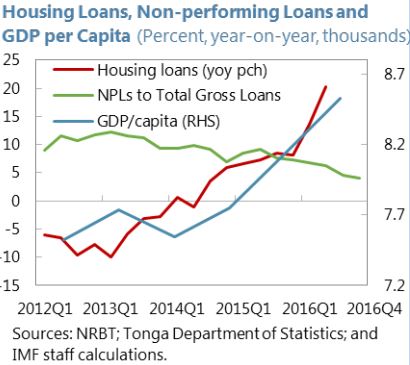
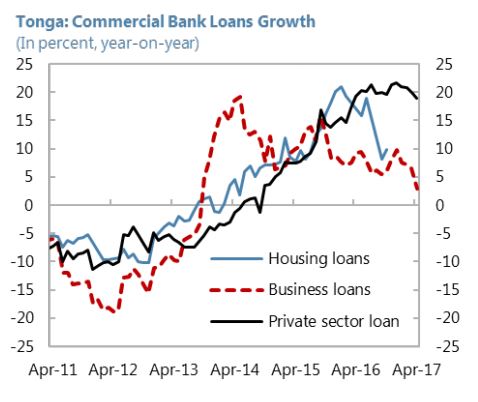
“Housing credit continues to rise supported by lower interest rates and economic growth. A housing bubble is unlikely to develop. Tonga has a rigid land tenure system with lengthy land registration. The secondary market for housing is very small and slow, with approximately 10 house sale transactions per each year. Most bank credit finances construction of owner-occupied dwellings and housing for personal use rather than for investment. The lending to households is collateralized, where land is the only asset that is qualified as collateral by banks. The limited time of land use depreciates its value as collateral over time.
Housing credit continues to rise supported by (i) low lending rates for housing loans; (ii) revision of the Land Act; and (iii) other initiatives. Higher payments for import of construction materials driven partially by removal of custom duty on construction materials also contributed to the increase of housing credit.
The household credit quality is not a clear concern. Although housing credit is growing rapidly, there are no signs of weakening ability of households to service the debt. All loans are salary-based, where loan payments are deducted directly from the salaries. The remittances continue to increase, and consumer confidence and demand are also on the rise. On the supply side, the ratio NPLs continue to decline. In FY2017, the value of collateral held against the delinquent loans reported by banks was at T$40.5 million compared to total NPLs of T$16.9 million, which indicates that banks hold sufficient collateral to cover any shortfall in loan-loss provisions.”
From the IMF’s latest report on Tonga:
“Housing credit continues to rise supported by lower interest rates and economic growth. A housing bubble is unlikely to develop. Tonga has a rigid land tenure system with lengthy land registration. The secondary market for housing is very small and slow, with approximately 10 house sale transactions per each year. Most bank credit finances construction of owner-occupied dwellings and housing for personal use rather than for investment.
Posted by at 5:00 AM
Labels: Global Housing Watch
Subscribe to: Posts