Showing posts with label Profiles of Economists. Show all posts
Tuesday, October 11, 2011
A golden oldie: Nobel Prize winner Tom Sargent on Unemployment
In a seminar at the IMF, Tom Sargent said that when he was in graduate school at Harvard in the 1960s, low European unemployment rates “were viewed as a great success and envied” by Americans. John Kennedy’s May 1961 speech to the U.S. Congress, famous today for its rhetoric about the space race (“this nation should commit itself to . . . launching a man on the moon and returning him safely to earth”), was in fact concerned largely with matters much closer to home. First and foremost on the U.S. president’s mind was his country’s high unemployment: “Large-scale unemployment during a recession is bad enough, but large-scale unemployment during a period of prosperity would be intolerable.” The 1970’s and 1980’s, however, saw a reversal in fortunes as European unemployment rates shot up dramatically. Sargent’s seminar examined why this reversal in fortunes came about. Today, as fears are being expressed about America’s labor market becoming Euro-scelerotic, Sargent’s work on unemployment remains highly relevant.
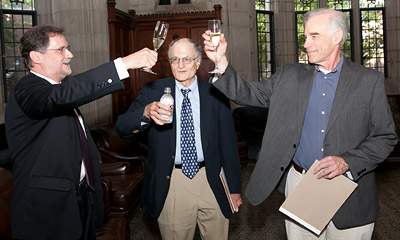
In a seminar at the IMF, Tom Sargent said that when he was in graduate school at Harvard in the 1960s, low European unemployment rates “were viewed as a great success and envied” by Americans. John Kennedy’s May 1961 speech to the U.S. Congress, famous today for its rhetoric about the space race (“this nation should commit itself to . . . launching a man on the moon and returning him safely to earth”),
Posted by at 3:10 PM
Labels: Inclusive Growth, Profiles of Economists
Monday, September 5, 2011
Roubini ups his recession probability from 40% to 60%
The 40% prediction was made in a talk at the IMF in September 2010. Below is what he said a few days ago for the current scenario and few years back:
September 2006 (IMF)
“my view is that the risk of a hard landing is very high for the U.S. economy. I see essentially a recession coming by next year. I give it a very high likelihood. I argue that housing today, like the tech bust in 2000-2001 will have a macro effect; it is not going to be just a sectoral effect. I argue that U.S. consumers are now close to a ‘tipping over’ point given all the vulnerabilities I have discussed. I argue that the Fed easing will occur, so the next move is going to be a cut, but it is not going to prevent a recession. And, finally, I argue that the rest of the world is not going to be able to decouple from the U.S. even if it is not going to experience an outright recession like the United States. So on that cheerful note, I will stop.”
The 40% prediction was made in a talk at the IMF in September 2010. Below is what he said a few days ago for the current scenario and few years back:
August 2011 (Portfolio.com)
“We’ve reached a stall speed in the economy, not just in the U.S., but in the euro zone and the UK. We see probably a 60 percent probability of recession next year, Read the full article…
Posted by at 1:48 AM
Labels: Profiles of Economists
Friday, June 17, 2011
Profile of Economics Nobel: George Akerlof
Akerlof says the topic that has motivated him the most over his 40-year career is unemployment. “I have always thought of unemployment as a terrible thing. In fact that has been the motivation for almost everything I have ever written. A person without a job loses not just his income but often the sense that he is fulfilling the duties expected of him as a human being.” Moreover, he says it has long been his “dream” to have a macroeconomics grounded in the “full range of human emotions and actions: fairness, confidence, greed, identity, procrastination.” To continue reading check the F&D profile.
Also, thanks to Greg Mankiw and Menzie Chinn who featured the profile on their sites.
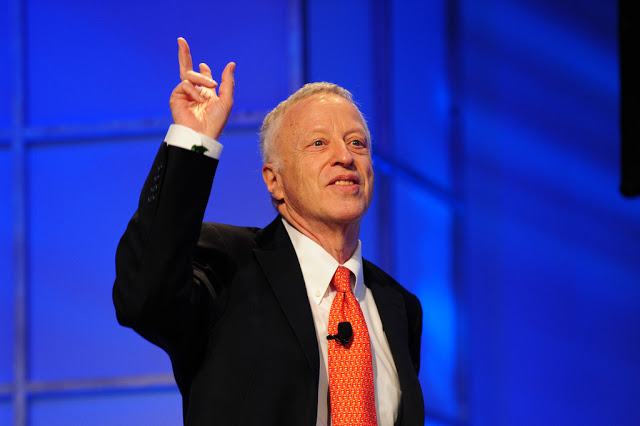
Akerlof says the topic that has motivated him the most over his 40-year career is unemployment. “I have always thought of unemployment as a terrible thing. In fact that has been the motivation for almost everything I have ever written. A person without a job loses not just his income but often the sense that he is fulfilling the duties expected of him as a human being.” Moreover, he says it has long been his “dream” to have a macroeconomics grounded in the “full range of human emotions and actions: fairness,
Posted by at 5:28 PM
Labels: Profiles of Economists
Friday, December 24, 2010
Interview with Joe Stiglitz makes The Globalist’s Top Ten Features
Stiglitz predicts a financial crisis in five years. All the more reason to enjoy the moment. Merry X’Mas and a Happy New Year. Back in 2011.
Stiglitz predicts a financial crisis in five years. All the more reason to enjoy the moment. Merry X’Mas and a Happy New Year. Back in 2011.
Posted by at 8:56 PM
Labels: Profiles of Economists
Monday, December 13, 2010
Nobel-worthy
Avinash Dixit, who many consider deserving of the Economics Nobel Prize, was profiled in an IMF publication. See other IMF profiles of famous economists , including one of Nobel Prize-winner Joseph Stiglitz and an interview with him called “The Vindication of Joe Stiglitz”.
Avinash Dixit, who many consider deserving of the Economics Nobel Prize, was profiled in an IMF publication. See other IMF profiles of famous economists , including one of Nobel Prize-winner Joseph Stiglitz and an interview with him called “The Vindication of Joe Stiglitz”.
Posted by at 4:01 PM
Labels: Profiles of Economists
Subscribe to: Posts