Showing posts with label Global Housing Watch. Show all posts
Saturday, March 15, 2014
House Prices in Malaysia
“House prices have increased rapidly, outpacing income and rental growth, along with strong demand for residential property loans, driven by a robust labor markets and falling lending rates. However, underwriting standards do not appear to have deteriorated, as evidenced by lower default rates by month on book for more recent vintages,” says the annual IMF economic report on Malaysia.
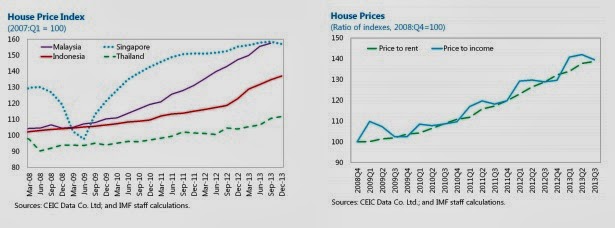
“House prices have increased rapidly, outpacing income and rental growth, along with strong demand for residential property loans, driven by a robust labor markets and falling lending rates. However, underwriting standards do not appear to have deteriorated, as evidenced by lower default rates by month on book for more recent vintages,” says the annual IMF economic report on Malaysia.
Posted by at 4:46 PM
Labels: Global Housing Watch
Wednesday, March 12, 2014
House Prices in Belgium
House prices are overvalued by “5–15 percent” according to a new IMF report on the Belgium economy. The report says that “Risks of a sharp correction of real estate prices appear contained. Property prices have risen by 110 percent in real terms since 2000, and, unlike in other EU countries, continued to increase through the financial crisis. Overvaluation estimates range from 10–60 percent, but valuation estimates based on price-to-income and price-to-rent ratios often miss catch-up effects. A finer assessment (interest-adjusted affordability regression analysis) suggests overvaluation of 5–15 percent. In fact, absolute prices remain moderate by European comparison. High ownership rates (around 70 percent), coupled with persistent housing shortages, are likely to prevent a rapid price decline. Robust household balance sheets, the prevalence of fixed interest rate mortgages, and the recent tightening of capital requirements on mortgage lending should limit the impact of an interest rate and/or unemployment shocks on the quality of the mortgage portfolio. However, the prevalence of fixed-rate mortgages shifts the interest rate risk to banks.”
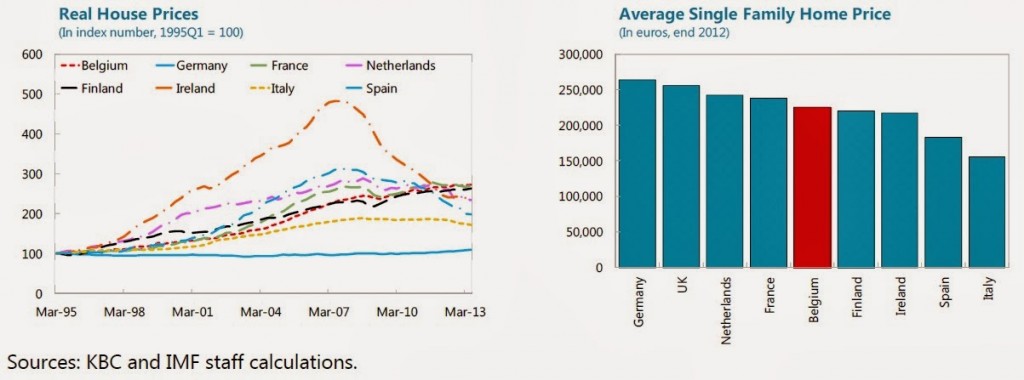
House prices are overvalued by “5–15 percent” according to a new IMF report on the Belgium economy. The report says that “Risks of a sharp correction of real estate prices appear contained. Property prices have risen by 110 percent in real terms since 2000, and, unlike in other EU countries, continued to increase through the financial crisis. Overvaluation estimates range from 10–60 percent, but valuation estimates based on price-to-income and price-to-rent ratios often miss catch-up effects.
Posted by at 5:02 PM
Labels: Global Housing Watch
Thursday, February 20, 2014
House Prices in Spain
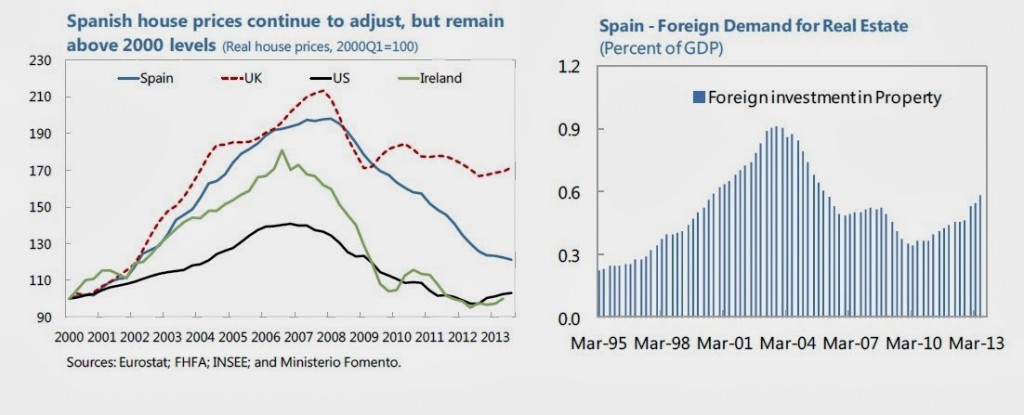
“Although house prices have started to stabilize in the most recent data, further declines are possible as the supply overhang is still large (the stock of vacant new houses equals four years of sales, and the population is falling). On the upside, foreign investor interest in Spanish property has increased noticeably in recent months,” according to a new report from the IMF.
Posted by at 8:25 PM
Labels: Global Housing Watch
Thursday, February 13, 2014
House Prices in Australia
“Reflecting structural factors both shared with many other countries and unique to Australia, real house prices have roughly doubled since 1990 (Figure 1). After growing broadly in line with real GDP per capita from 1960-90, real house price inflation picked up in the 2000s and exceeded income growth for much of the period up to the global financial crisis (Figure 2). As a result, the median house price to income ratio rose sharply from around 3 at the beginning of the 2000s (when based on the authorities’ preferred measure for all dwellings) peaking at just over 4 in 2009 (Figure 3). Since then the price/income ratio has eased back and international comparisons suggest that while Australia’s is on the high side it is not out of line with peers (Figure 4). Rising house prices were also accompanied by increased household borrowing with the debt to income ratio rising from among the lowest at 46 percent in 1990 to around 150 per cent in 2013,” according to the latest IMF’s annual report on Australia.
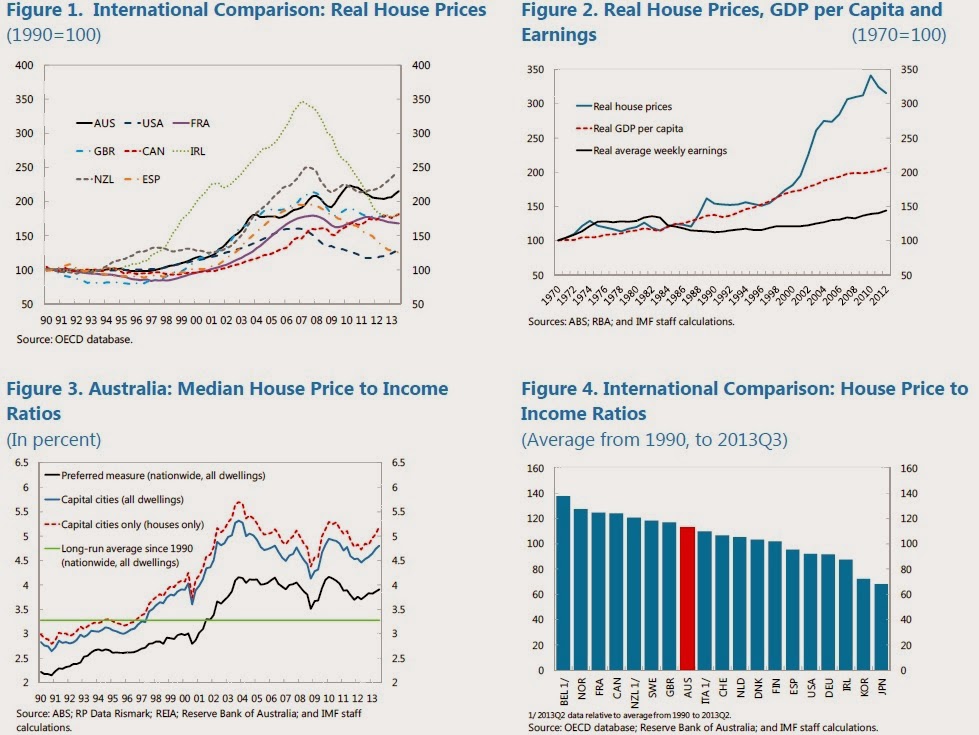
“Reflecting structural factors both shared with many other countries and unique to Australia, real house prices have roughly doubled since 1990 (Figure 1). After growing broadly in line with real GDP per capita from 1960-90, real house price inflation picked up in the 2000s and exceeded income growth for much of the period up to the global financial crisis (Figure 2). As a result, the median house price to income ratio rose sharply from around 3 at the beginning of the 2000s (when based on the authorities’ preferred measure for all dwellings) peaking at just over 4 in 2009 (Figure 3).
Posted by at 6:50 PM
Labels: Global Housing Watch
House Prices in Israel
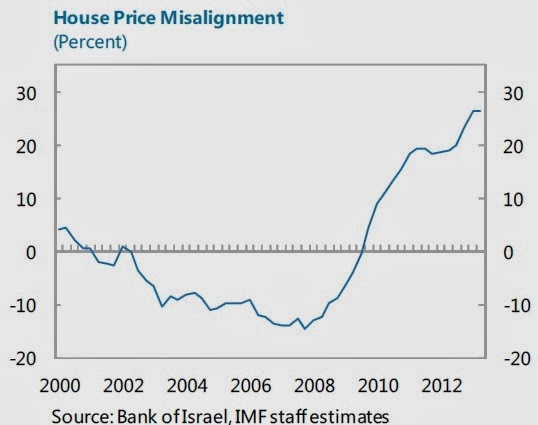
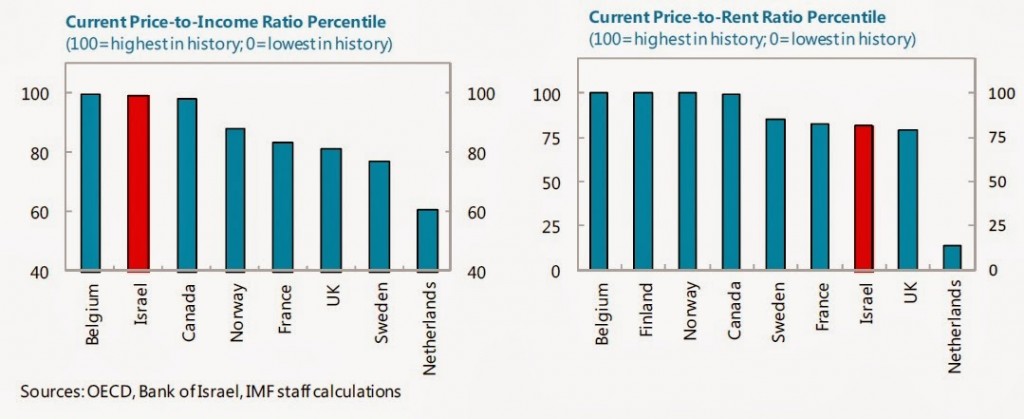
“Property prices in Israel are currently about 25 percent above their equilibrium value, owing largely to low mortgage interest rates and supply shortages. The risk of a sharp correction in house prices, while mitigated by the supply shortages, remains a concern and could have important macro-financial implications. To contain such risks, macroprudential policies should be further tightened. At the same time, concerted efforts should be made to alleviate supply-side constraints,” says IMF’s special issues study on Israel’s housing market. The study talks about the developments in the housing market, Read the full article…
Posted by at 6:19 PM
Labels: Global Housing Watch
Subscribe to: Posts