Showing posts with label Global Housing Watch. Show all posts
Friday, September 18, 2015
Housing Market in Saudi Arabia
The report also “(…) emphasized the need for ensuring that the housing needs of the population are met in a cost-effective way while minimizing the disruption to private real estate and mortgage markets. Housing is appropriately an important policy priority, but the program cost is high and to date it has moved slowly. Measures to expand supply should include a strengthened role for the government acting as a facilitator and regulator rather than a developer to help expand housing supply in a cost effective way. In this context, streamlining regulatory and approval processes to achieve efficiency gains could improve the functioning of private real estate markets. With respect to the support for buyers, financing should be targeted to those who are unable to obtain financing from banks or finance companies, and focus on purchases of new dwellings to avoid bidding real estate prices up further.”
“The government is continuing to implement its program to provide affordable housing. In light of the growing population and reported high house prices in the major cities, this is a considerable challenge. Estimates suggest that 160-180,000 new homes will need to be built each year over the next few years to meet growing demand. The government has allocated SR 250 billion from the budget surplus fund for the program, and the Ministry of Housing is continuing to develop options to support buyers which include the provision of interest-free loans (up to SR 500,000), Read the full article…
Posted by at 9:00 AM
Labels: Global Housing Watch
Wednesday, September 16, 2015
Rising House Prices and Household Debt: A Twin Boom in Norway?
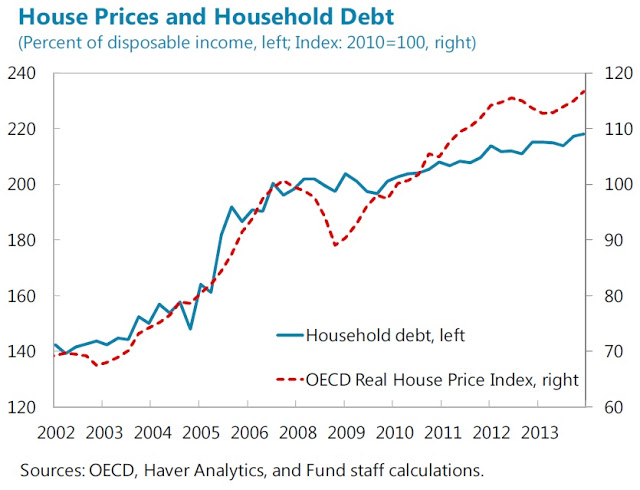
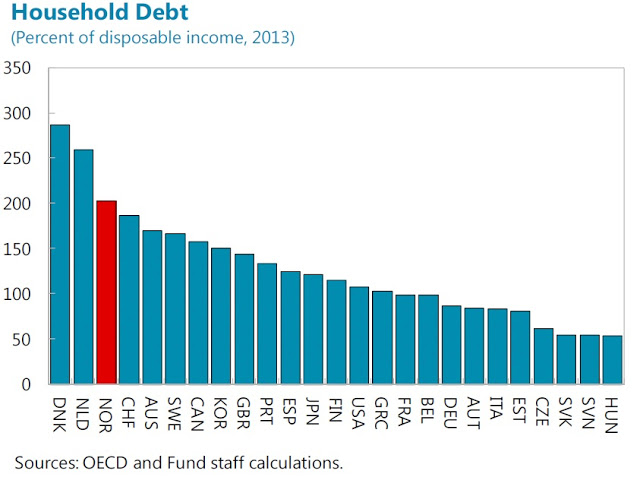
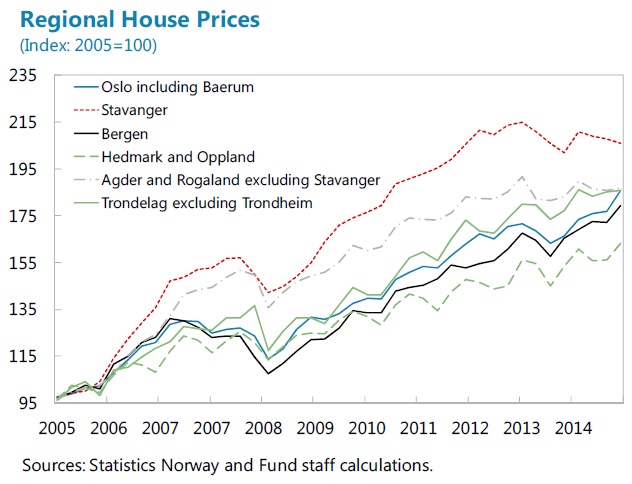
“The Norwegian housing market was only moderately affected by the global financial crisis, and the rising trend of house prices resumed shortly after the crisis. In the meantime, household debt reached more than 200 percent of disposable income, and it is expected to grow further”, a new IMF paper examines the characteristics of household debt and the factors driving the housing boom and debt accumulation. The paper also examines the potential macroeconomic impact of a possible house price correction. Read the full article…
Posted by at 9:00 AM
Labels: Global Housing Watch
Monday, September 14, 2015
Macroprudential Policies in the Philippines
The IMF’s report on the Philippines points out the macroprudential policies that have been implemented. The report says: “In light of the acceleration in credit growth in 2014 and risks of domestic asset price booms, the BSP [Central Bank of Philippines] conducted stress tests on banks’ real estate loan exposures and required corrective actions, enhanced monitoring of banks’ exposures to all types of real estate, and provided guidance on real estate mortgage loans, setting their maximum loan value at 60 percent of the appraised value. These measures have helped to restrain credit growth to the real estate sector. Single borrower limits (set at 25 percent of core capital) should be strictly enforced with the additional 25 percent allowance for exposures to PPPs allowed to lapse.”
The IMF’s report on the Philippines points out the macroprudential policies that have been implemented. The report says: “In light of the acceleration in credit growth in 2014 and risks of domestic asset price booms, the BSP [Central Bank of Philippines] conducted stress tests on banks’ real estate loan exposures and required corrective actions, enhanced monitoring of banks’ exposures to all types of real estate, and provided guidance on real estate mortgage loans,
Posted by at 9:00 AM
Labels: Global Housing Watch
Friday, August 21, 2015
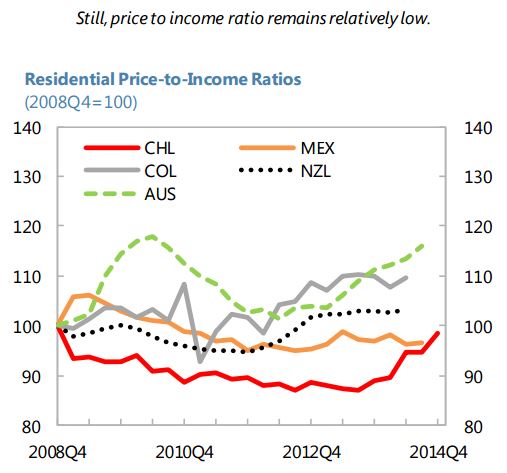
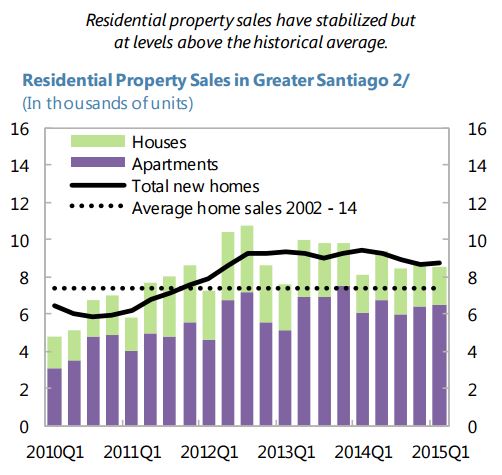
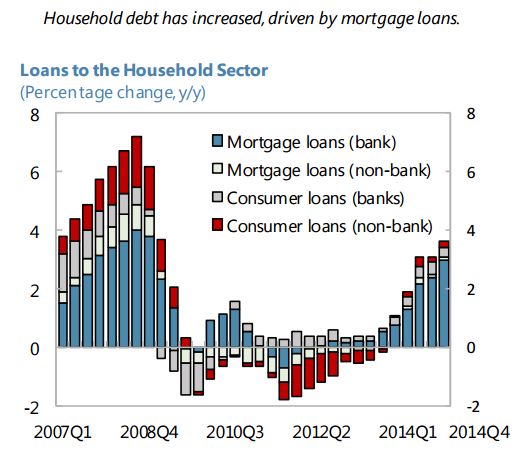
Chile’s Housing Market


Posted by at 9:00 AM
Labels: Global Housing Watch
Wednesday, August 19, 2015
Spain’s Housing Market
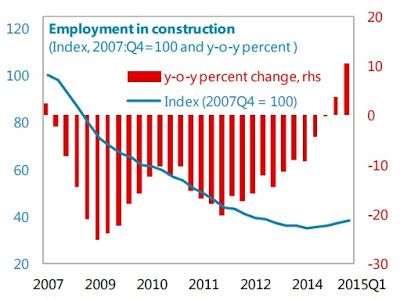

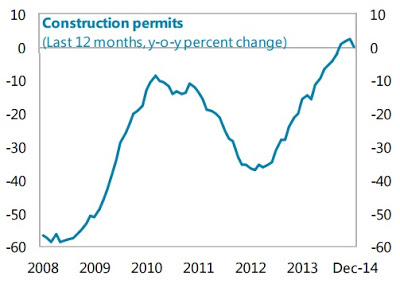
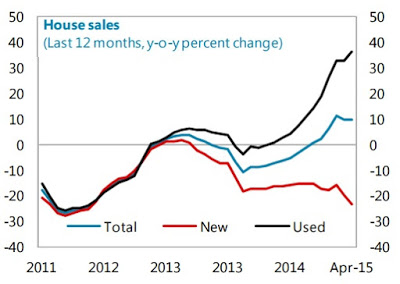

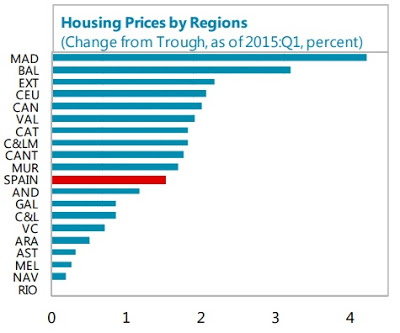
The Spanish housing sector appears to have bottomed out, says the IMF’s new report on Spain. The report notes that the construction activity has started to recover, mostly driven by the non-residential sector. Moreover, construction permits have stopped falling and house sales are picking up. And housing prices started to increase slightly, albeit unevenly across regions.
Below are six charts that show the developments in the housing market in Spain.
Posted by at 9:00 AM
Labels: Global Housing Watch
Subscribe to: Posts