Showing posts with label Global Housing Watch. Show all posts
Friday, October 20, 2017
Housing View – October 20, 2017
On cross-country:
- Risks in International Housing Markets – Reserve Bank of Australia
- Interest rates and house prices in the United States and around the world – Bank for International Settlements
- The State of Housing in the EU 2017 – Housing Europe
- Housing Markets: A European Perspective – Seeking Alpha
- Inclusive City Development: City-Wide Slum Upgrading and Housing Development – World Resource Institute
- International housing policies – CMHC
On the US:
- Paying For Dirt: Where Have Home Values Detached From Construction Costs? – BuildZoom
- First-Time Homebuyers: Toward a New Measure – Federal Reserve Bank of Philadelphia
- Don’t Worry About Inflation. Solve the Housing Shortage. – Bloomberg
- The Barriers Stopping Poor People From Moving to Better Jobs – The Atlantic
- How Historic Racial Injustices Still Impact Housing Today – Zillow
- Reducing Work Disincentives in the Housing Choice Voucher Program: Rent Reform Demonstration Baseline Report – U.S. Department of Housing and Urban Development
On other countries:
- [Canada] Canada’s Bank Regulator Toughens Mortgage Qualifying Rules – Bloomberg
- [Canada] Canadian housing agency says it can withstand severe downturn – Reuters
- [China] Chinese property boom props up Xi’s hopes for the economy – Financial Times
- [China] Chinese Cities Buy Off Housing Glut With Borrowed Money – Wall Street Journal
- [Hong Kong] Nano apartments rise to HK’s housing challenge – Financial Times
- [Sweden] Warning Signs Are Mounting for Sweden’s Once-Hot Housing Market – Bloomberg
- [Sweden] ‘The risks have definitely increased’ – Sweden’s housing boom wobbles – Financial Times
- [United Kingdom] Curbs on UK housing benefit making system ‘irrelevant’, IFS warns – Financial Times

Photo by Aliis Sinisalu
On cross-country:
- Risks in International Housing Markets – Reserve Bank of Australia
- Interest rates and house prices in the United States and around the world – Bank for International Settlements
- The State of Housing in the EU 2017 – Housing Europe
- Housing Markets: A European Perspective – Seeking Alpha
- Inclusive City Development: City-Wide Slum Upgrading and Housing Development – World Resource Institute
- International housing policies – CMHC
Posted by at 5:00 AM
Labels: Global Housing Watch
Friday, October 13, 2017
Housing View – October 13, 2017
On cross-country:
- Global urban house price index records slower growth – Knight Frank
- Global Residential Cities Index – Q2 2017 – Knight Frank
- The State of Housing in the EU 2017 – Housing Europe
- Transparent and efficient social housing – Housing Europe
On the US:
- Sixth annual AEI and CRN conference on housing risk – American Enterprise Institute
- Gentrification and the Amenity Value of Crime Reductions: Evidence from Rent Deregulation – NBER
- What happens to U.S. home prices after Fed rate increase? – Real Estate Decoded
On other countries:
- [Australia] Chinese Investors Keep Pouring Money Into Australian Housing – Bloomberg
- [Canada] Government Eyeing ‘All Options’ to Cool Vancouver Housing Market – Bloomberg
- [United Arab Emirates] Dubai: Premiums Under the Microscope – Reidin
Photo by Aliis Sinisalu
On cross-country:
- Global urban house price index records slower growth – Knight Frank
- Global Residential Cities Index – Q2 2017 – Knight Frank
- The State of Housing in the EU 2017 – Housing Europe
- Transparent and efficient social housing – Housing Europe
On the US:
- Sixth annual AEI and CRN conference on housing risk – American Enterprise Institute
- Gentrification and the Amenity Value of Crime Reductions: Evidence from Rent Deregulation – NBER
- What happens to U.S.
Posted by at 5:00 AM
Labels: Global Housing Watch
Friday, October 6, 2017
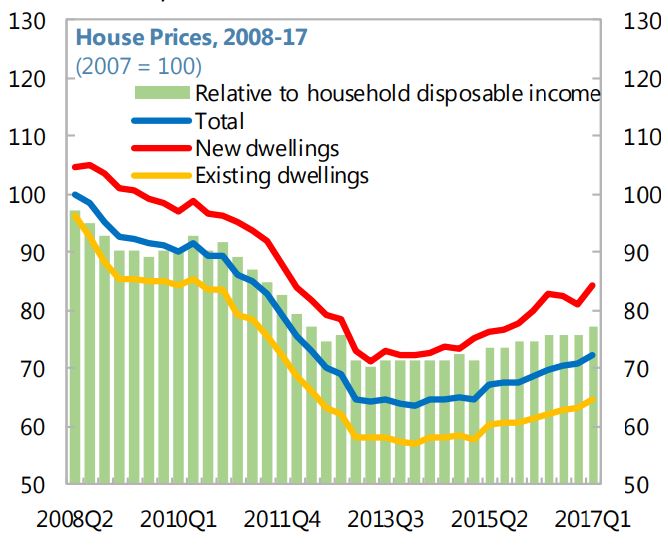
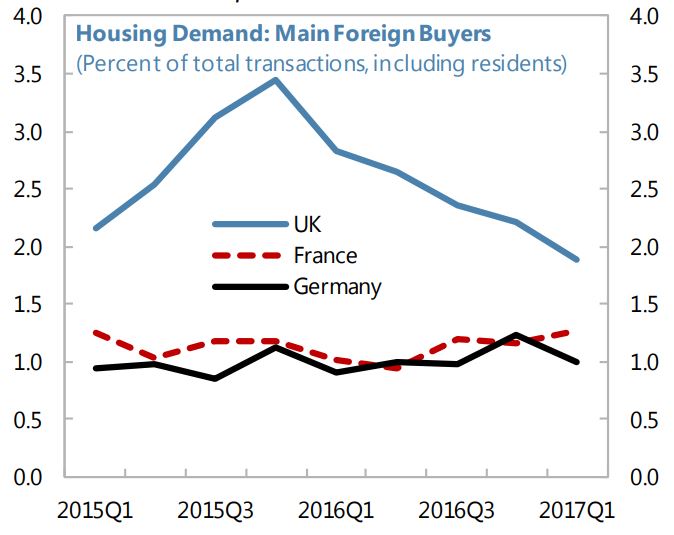
House Prices in Spain
The IMF’s latest report on Spain says that:
- “House prices have started to recover, but are still well below pre-crisis levels.”
- “UK citizens are also the main foreign buyers of houses, but their purchases declined in 2016.”
The IMF’s latest report on Spain says that:
- “House prices have started to recover, but are still well below pre-crisis levels.”
- “UK citizens are also the main foreign buyers of houses, but their purchases declined in 2016.”
Posted by at 11:46 AM
Labels: Global Housing Watch
Housing View – October 6, 2017
On cross-country:
- Finance and housing in Central and Eastern Europe – a demand-side approach – National Bank of Romania
- Affordable housing key for development and social equality, UN says on World Habitat Day – UN
- Quarterly Review of European Mortgage Markets Q2 2017 – European Covered Bond Council
- Hypostat 2017 – European Covered Bond Council
- Ownership rates in Europe – European Covered Bond Council
- Capital flows into European real estate are ‘developing not cooling’ – PropertyEU
On the US:
- The 2017 National Rental Housing Landscape – NYU Furman Center
- July 2017 Market Report: Almost Half of U.S. Homes Are Worth More Now Than Before the Bubble – Zillow
- 15 Favorites From Zillow Group Report on Consumer Housing Trends Report 2017 – Zillow
- A More Timely House Price Index – The Review of Economics and Statistics
- The real cause of the America’s housing bubble was foreign money – Financial Times
- The Negative (and Positive) Spillovers of Concentrated Foreclosure Activity in New York City – Harvard Joint Center for Housing Studies
- Overregulation Is the Main Block to Affordable Housing – Wall Street Journal
- Why Fall Should Be Hunting Season for Starter Home Buyers – Trulia
- Land-Use Regulations, Property Values, and Rents: Decomposing the Effects of the California Coastal Act – Federal Reserve Bank of Philadelphia
- Housing as a Safety Net – Urban Land Institute
- Housing as an Asset Class – Urban Land Institute
On other countries:
- [Canada] A novel approach to affordable housing in Canada – CMHC
- [Canada] Too Many Bedrooms, Not Enough Housing? – University of B.C.
- [China] China steps up battle against runaway property prices – Financial Times
- [Germany] Assessing Recent House Price Developments in Germany: An Overview – Monetary Policy, Financial Crises, and the Macroeconomy
- [Ireland] Irish House Price Report Q3 2017 – Daft.ie
- [Israel] A Housing Plunge Doesn’t Concern Israel’s Top Economic Adviser – Bloomberg
- [Macau] Macau’s amazing, incredible, soaring property prices – Global Property Guide
- [United Kingdom] Rent control could deepen the housing crisis in UK’s most expensive cities – Centre for Cities
- [United Kingdom] Britain’s Housing Crunch – Bloomberg
Photo by Aliis Sinisalu
On cross-country:
- Finance and housing in Central and Eastern Europe – a demand-side approach – National Bank of Romania
- Affordable housing key for development and social equality, UN says on World Habitat Day – UN
- Quarterly Review of European Mortgage Markets Q2 2017 – European Covered Bond Council
- Hypostat 2017 – European Covered Bond Council
- Ownership rates in Europe – European Covered Bond Council
- Capital flows into European real estate are ‘developing not cooling’
Posted by at 10:04 AM
Labels: Global Housing Watch
Friday, September 29, 2017
Housing View – September 29, 2017
On cross-country:
- Will house prices continue to rise forever? – ING
- Q2 2017: Europe’s boom continues, but sharp slowdown in the Middle East, Latin America, New Zealand and some parts of Asia – Global Property Guide
- Chinese Money Is Still Leaking Into the World’s Housing Markets – Bloomberg
- UBS Global Real Estate Bubble Index – UBS
On the US:
- Anti-vagrancy laws are not the best way to reduce homelessness – Economist
- Flood Risk Belief Heterogeneity and Coastal Home Price Dynamics: Going Under Water? – NBER
- Apartment Demand for the Next 15 Years: Can We Meet the Need? – U.S. Department of Housing and Urban Development
- 2017 Global Real Estate Portal Report – Mike DelPrete
- Pending Home Sales Dive: Economists Miss the Boat by Over 2 Percentage Points! – MishTalk
- Land Use Regulation and Good Intentions – Journal of Land Use & Environmental Law
On other countries:
- [Canada] 2017 Housing Finance Symposium – CMHC
- [China] Chinese property developers’ shares hit by new house sales curbs – Financial Times
- [China] Chinese Developers Plunge After Officials Tighten Housing Curbs – Bloomberg
- [France] Housing Europe expresses concern about the housing strategy presented by the French government – Housing Europe
- [Sweden] House price responses to a national property tax reform – SSRN
- [United Kingdom] Priced Out? The affordability crisis in London – The Progressive Policy Think Tank
- [United States] Policy changes make landlords wary of the UK housing market – Global Property Guide
On cross-country:
- Will house prices continue to rise forever? – ING
- Q2 2017: Europe’s boom continues, but sharp slowdown in the Middle East, Latin America, New Zealand and some parts of Asia – Global Property Guide
- Chinese Money Is Still Leaking Into the World’s Housing Markets – Bloomberg
- UBS Global Real Estate Bubble Index – UBS
On the US:
- Anti-vagrancy laws are not the best way to reduce homelessness – Economist
- Flood Risk Belief Heterogeneity and Coastal Home Price Dynamics: Going Under Water?
Posted by at 11:18 AM
Labels: Global Housing Watch
Subscribe to: Posts