Showing posts with label Global Housing Watch. Show all posts
Tuesday, February 12, 2019
Housing Market in the Netherlands
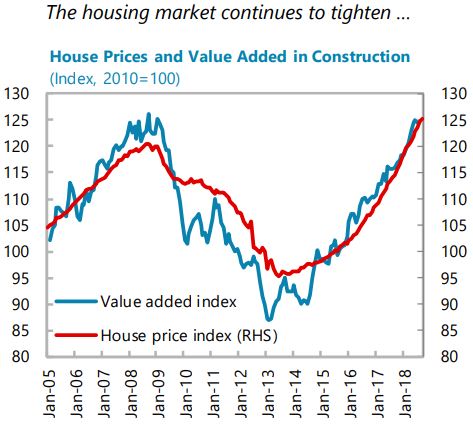
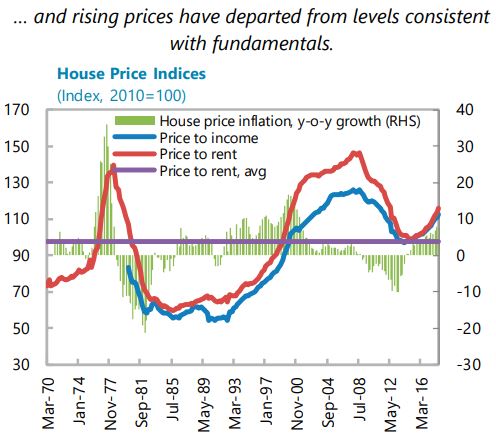
From the latest IMF report on the Netherlands:
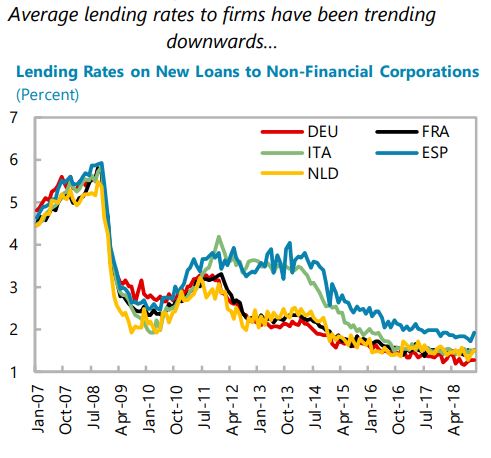
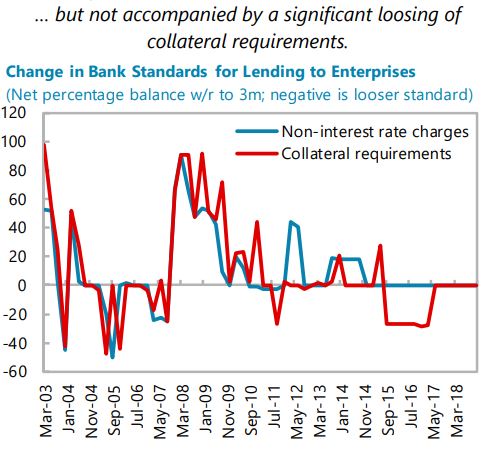
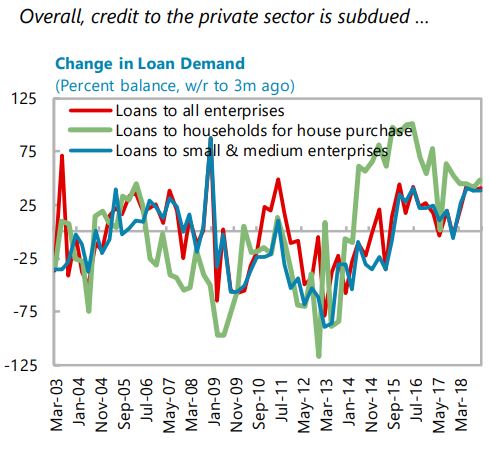
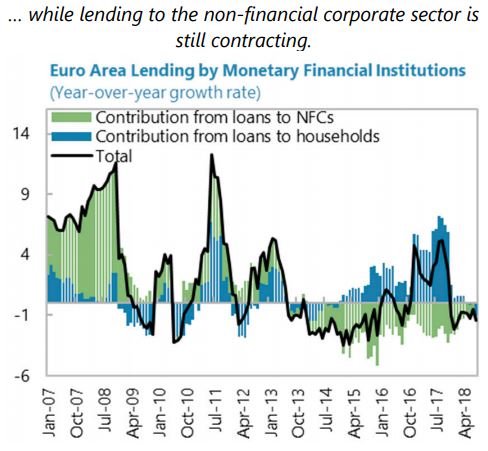
“The housing market is dominated by social housing (with a wait time exceeding a decade in some cases) and owner-occupied houses with significant shortages. The absence of a robust private rental market leaves young households, in particular, with little alternative to purchasing owner-occupied housing with high leverage and thin financial buffers. Rent controls, regulations, and inadequate means-testing result in long waiting lists for social housing. Elevated demand for owner-occupied houses was encouraged by generous mortgage interest deductibility (MID) in the past, which also boosted house prices. As macro-prudential policies were tightened recently, households’ debt has stabilized at about 250 percent of net disposable income, but it remains the second highest among OECD countries. Overborrowing on mortgages has contributed to the accumulation of household debt. When housing prices declined sharply after the global financial crisis (GFC), many mortgages were underwater and private consumption contracted sharply as households attempted to rebuild their net worth. Nevertheless, household overborrowing on mortgages is not a significant source of systemic risk in the financial sector even though it is a threat to the macro-economy
To reduce household debt and improve housing affordability, it is necessary to increase housing supply, tighten macro-prudential policies, and further reduce the debt bias in the tax system. Liberalizing rent controls for higher-income households and improving means-testing for social housing would help optimize allocation and improve housing supply. In addition, private investment should be encouraged by relaxing restrictions on zoning plans and simplifying administrative procedures for building permits. Lowering the maximum loan-to-value (LTV) ratio to no more than 90 percent (from 100 percent currently) and capping the debt service to income (DSTI) ratio to limit its procyclicality should be considered. The authorities plan to accelerate the phasing down of MID by 3 percentage points per year starting from 2020 until the basic rate of 37.05 percent is reached is a welcome step. Further phasing down of MID, to bring it at a neutral level compared with taxation of investment in other type of assets, would not only generate additional revenues but also help address the current debt bias of households.
The authorities emphasized that the focus is currently on increasing housing supply, while giving due consideration to possible tighter macro-prudential policies. To increase supply, the authorities are taking actions to improve coordination among the main stakeholders, including the relevant ministries, subnational governments, and private investors to reduce building preparation time, stimulate the transformation of suitable areas like outdated industrial areas for housing, and increase the amount of new construction plans. The authorities noted that the coalition agreement does address previous IMF recommendations to lower the MID but does not follow the previous IMF and Financial Stability Committee (FSC) recommendation to further lower LTV limits beyond the 100 percent ratio. The authorities noted that a lower LTV limit would make it more difficult, especially for younger households, to buy a house, while the middle-range rental market is already tight. The Dutch Central Bank and the Financial Market Authority noted that the current DSTI framework has procyclical elements. Increasing risk weights on mortgages in banks’ balance sheets and activating the countercyclical buffer could be considered if household debt continues to rise due to further tightening of the housing market.”
From the latest IMF report on the Netherlands:
“The housing market is dominated by social housing (with a wait time exceeding a decade in some cases) and owner-occupied houses with significant shortages. The absence of a robust private rental market leaves young households, in particular, with little alternative to purchasing owner-occupied housing with high leverage and thin financial buffers. Rent controls, regulations, and inadequate means-testing result in long waiting lists for social housing.
Posted by at 2:27 PM
Labels: Global Housing Watch
Friday, February 8, 2019
Housing View – February 8, 2019
On cross-country:
- European Mortgage Markets – European Mortgage Federation
- Romano Prodi: “We can show leadership in Europe now in support of affordable housing” An interview with the former European Commission President – Housing Europe
- An action plan for affordable housing in the EU – Housing Europe
- The Sharing Economy and Housing Affordability: What Impact? What Solutions? – Housing Europe
On the US:
- Dynamism Diminished: The Role of Housing Markets and Credit Conditions – University of Chicago
- Zoning Reform Alone Won’t Make Housing More Affordable – Bloomberg
- How Affordable Housing Can Improve the American Economy – Citylab
- No, Zoning Reform Isn’t Magic. But It’s Crucial. – Citylab
- Fewer Homes for Median Earners – New York Times
- Perspectives on Housing Supply and Affordability – NYU Furman Center
- The Airbnb Effect: It’s Not Just Rising Home Prices – Citylab
- Does Upzoning Boost the Housing Supply and Lower Prices? Maybe Not. – Citylab
- Mortgage Risk Since 1990 – Federal Housing Finance Agency
- In my back yard: Neighbourhood spillovers in mortgage foreclosure – VoxEU
- The Airbnb Effect: It’s Not Just Rising Home Prices – Citylab
- Upzoning Chicago: Impacts of a Zoning Reform on Property Values and Housing Construction – Urban Affairs Review
- Federal Reserve policy and housing: A goal too far – Economic Analysis and Policy
- What Modern-Day Housing Discrimination Looks Like: A Conversation with the National Fair Housing Alliance – Zillow
- How Minimum Zoning Mandates Can Improve Housing Markets and Expand Opportunity – The Aspen Institute
- To overcome its housing crisis, Calfornia needs YIMBY to become the new NIMBY – Los Angeles Times
- Mortgage rates fall on worries about global economy – MarketWatch
On other countries:
- [Australia] Australia’s Housing Downturn Deepens as Prices Hit 2016 Levels – Bloomberg
- [Australia] RBA Seen Riding Out Australia Property Slump If Jobs Stay Robust – Bloomberg
- [Australia] Australia Keeps Rates on Hold Despite Pressure from Property Slump – Bloomberg
- [Canada] Canada’s banking regulator says mortgage stress test must be monitored – Reuters
- [Netherlands] Dutch banks see market share in home mortgage lending stabilize – De Nederlandsche Bank
- [New Zealand] The New Zealand real estate problem, with reference to Palmerston North – Marginal Revolution
- [Nigeria] Land grabbers resurgence in Lagos threatens homeownership – The Guardian
- [Panama] Panama’s property prices are booming – Global Property Guide
- [United Kingdom] Would rent controls work in London? – Financial Times

Photo by Aliis Sinisalu
On cross-country:
- European Mortgage Markets – European Mortgage Federation
- Romano Prodi: “We can show leadership in Europe now in support of affordable housing” An interview with the former European Commission President – Housing Europe
- An action plan for affordable housing in the EU – Housing Europe
- The Sharing Economy and Housing Affordability: What Impact? What Solutions? – Housing Europe
Posted by at 5:00 AM
Labels: Global Housing Watch
Wednesday, February 6, 2019
House Prices in Italy
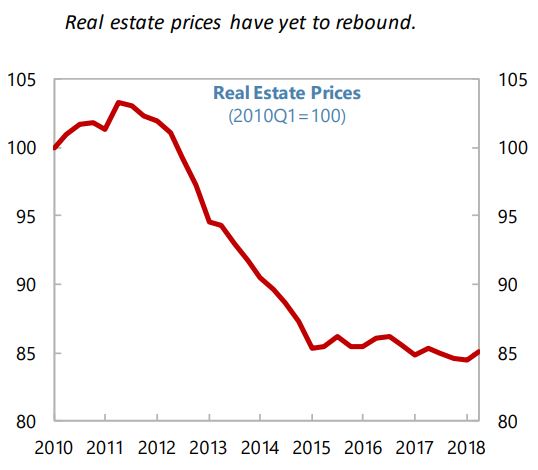
From the IMF’s latest report on Italy:
Posted by at 11:29 AM
Labels: Global Housing Watch
Housing Market in Poland
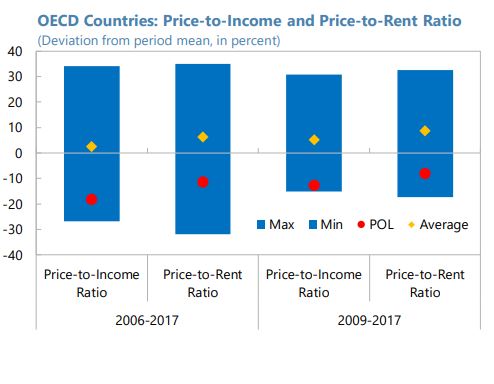
From the IMF’s latest report on Poland:
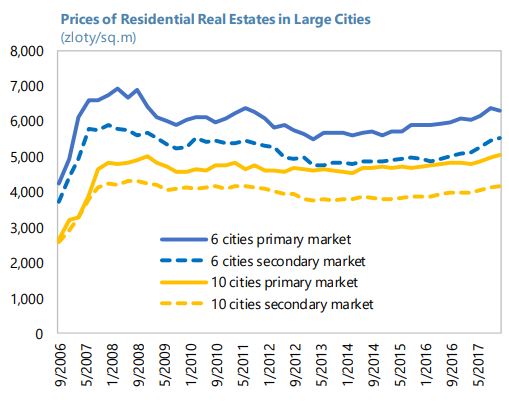
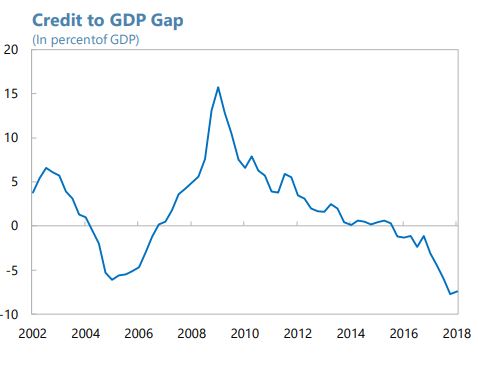
“Current strong housing demand is financed to a greater extent than before the GFC with buyers’ own resources. Rising construction costs have slowed the supply of new housing, and nominal house prices in some regions have risen to pre-GFC levels. Nonetheless, affordability remains comfortable owing to strong growth of household incomes.”
From the IMF’s latest report on Poland:
“Current strong housing demand is financed to a greater extent than before the GFC with buyers’ own resources. Rising construction costs have slowed the supply of new housing, and nominal house prices in some regions have risen to pre-GFC levels. Nonetheless, affordability remains comfortable owing to strong growth of household incomes.”

Posted by at 9:29 AM
Labels: Global Housing Watch
Sunday, February 3, 2019
Housing Market in the United Arab Emirates
From the IMF’s latest report on UAE:
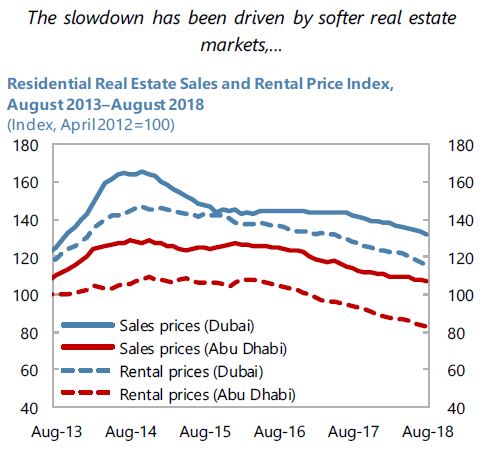
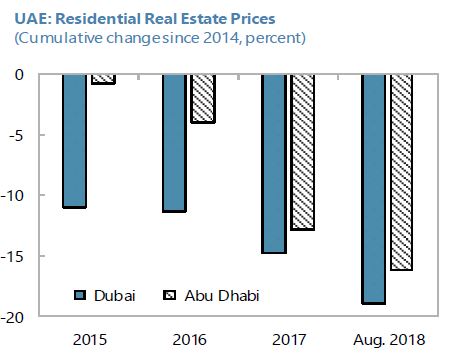
“A sharp deepening in the real estate downturn and weakening asset quality could constrain bank lending, which in turn could hold back the recovery.”
“Given the risk of spillovers from declining real estate prices, staff urged the CBU to resist calls for relaxing prudential limits on real estate lending. The authorities are preparing to develop a new bank resolution regime; in the meantime, staff encouraged the CBU to discuss contingency plans for banks in case of an abrupt tightening of financial conditions or other adverse shocks.”
From the IMF’s latest report on UAE:
“A sharp deepening in the real estate downturn and weakening asset quality could constrain bank lending, which in turn could hold back the recovery.”
“Given the risk of spillovers from declining real estate prices, staff urged the CBU to resist calls for relaxing prudential limits on real estate lending. The authorities are preparing to develop a new bank resolution regime; in the meantime,
Posted by at 8:09 AM
Labels: Global Housing Watch
Subscribe to: Posts