Showing posts with label Global Housing Watch. Show all posts
Monday, June 3, 2019
Qatar: Property Market Update
From the IMF’s latest report on Qatar:
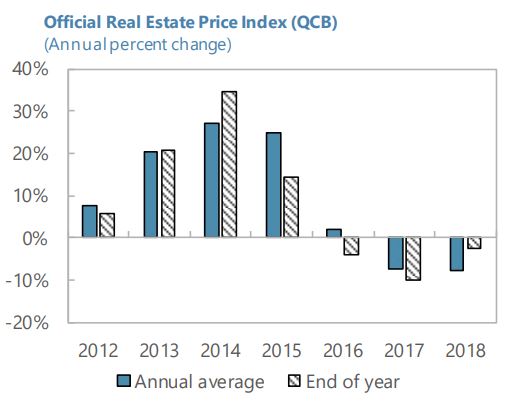
“After a period of rapid growth, real estate prices in Qatar are adjusting to new levels. According to the real estate price index developed by QCB, following an 82 percent increase during 2012–16, real estate prices fell by 15 percent during 2017–18. Data produced by the Ministry of Justice indicate the following trends:
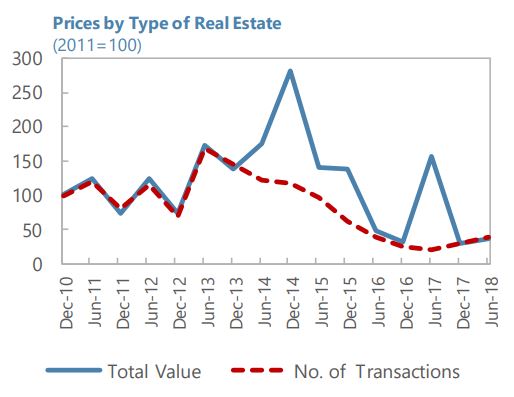
- Both the volume and number of transactions are down since 2013–2014 peak. As prices have decreased, some owners seem to be holding off to their properties rather than selling at depressed prices.
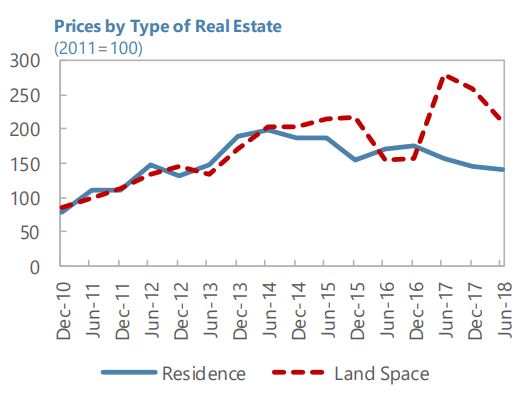
- Land prices are holding up better than properties with a rebound in prices during 2017 before adjustment in 2018. Residence prices have been on a declining trend since mid-2014, though there are signs that the slowdown is flattening.
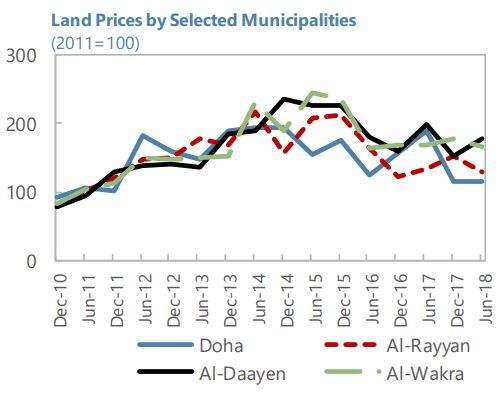
- In terms of regions, land prices in Al Daayen are holding on better which could be due to the active development of Lusail City and 2022 World Cup projects. Similarly, land prices in Al Wakra have been stable in the past years due to major infrastructural projects.”
From the IMF’s latest report on Qatar:
“After a period of rapid growth, real estate prices in Qatar are adjusting to new levels. According to the real estate price index developed by QCB, following an 82 percent increase during 2012–16, real estate prices fell by 15 percent during 2017–18. Data produced by the Ministry of Justice indicate the following trends:
- Both the volume and number of transactions are down since 2013–2014 peak.
Posted by at 10:51 AM
Labels: Global Housing Watch
Friday, May 31, 2019
Housing View – May 31, 2019
On cross-country:
- Financial Stability Review, May 2019 – European Central Bank
- How Housing Supply Became the Most Controversial Issue in Urbanism – CityLab
- Impacts of urban renewal on neighborhood housing prices: predicting response to psychological effects – Journal of Housing and the Built Environment
- “The ‘housing question’ is no longer simply about housing” – Housing Europe
On the US:
- The Fair Housing Act at 50 – Cityspace
- After Amazon HQ2: New York and D.C. Offer a Tale of Two Housing Markets – Yahoo
- Have Changes in Financing Contributed to the Loss of Low-Cost Rental Units and Rent Increases? – Harvard Joint Center for Housing Studies
- Regulations And Failed Governance Are The Root Causes Of California’s Housing Crisis – Hoover Institution
- Monkkonen Guides Discussion of L.A.’s Housing Needs – UCLA
On other countries:
- [Canada] RBC Sidesteps Canada’s Housing Slump With Mortgage Growth – Bloomberg
- [China] Understanding China’s ‘One-Way Bet’ Property Market – Washington Post
- [Hong Kong] Hong Kong Property Back in Bubble Territory, Reinhart Says – Bloomberg
On cross-country:
- Financial Stability Review, May 2019 – European Central Bank
- How Housing Supply Became the Most Controversial Issue in Urbanism – CityLab
- Impacts of urban renewal on neighborhood housing prices: predicting response to psychological effects – Journal of Housing and the Built Environment
- “The ‘housing question’ is no longer simply about housing” – Housing Europe
On the US:
- The Fair Housing Act at 50 – Cityspace
- After Amazon HQ2: New York and D.C.
Posted by at 5:00 AM
Labels: Global Housing Watch
Friday, May 24, 2019
Housing View – May 24, 2019
On cross-country:
- Debate Over Lunch: How Architecture Brings Us Together – OECD
- Identifying booms and busts in house prices under heterogeneous expectations – Journal of Economic Dynamics and Control
- The housing cycle: What role for mortgage market development and housing finance? – Loughborough University
On rent control:
- Housing Supply Dynamics under Rent Control: What Can Evictions Tell Us? – American Economic Association
- Spatial Misallocation and Rent Controls – American Economic Association
- The Effects of Second-Generation Rent Control on Land Values – American Economic Association
- Who Pays for Rent Control? Heterogeneous Landlord Response to San Francisco’s Rent Control Expansion – Stanford University
On the US:
- Press Briefing on the Evolution and Future of Homeownership – Federal Reserve Bank of New York
- An expert’s 7 principles for solving America’s housing crisis – Vox
- Monetary Policy, Housing Rents, and Inflation Dynamics – Federal Reserve Board
- The Great Recession, education, race, and homeownership – Economic Policy Institute
- Why Isn’t The Black Homeownership Rate Higher Today Than When The 1968 Fair Housing Act Became Law? – Forbes
- ‘Fairbnb’ Wants to Be the Unproblematic Alternative to Airbnb – Citylab
- Trump Administration Wants To Cut Funding For Public Housing Repairs – NPR
- California Today: Lawmakers Shelve a Potential Remedy to the Housing Crisis – New York Times
- 3 Top REITs With High Dividend Yields Above 5% And Secure Payouts – Seeking Alpha
- Labor Demand Shocks and Housing Prices Across the United States: Does One Size Fit All? – Economic Development Quarterly
- Undersupply in Housing Inventory – CoreLogic
- Spain’s Richest Person Bets Billions on Prime U.S. Real Estate – Bloomberg
- Despite Resistance, Cities Turn to Density to Tackle Housing Inequality – CityLab
- Special Incentive for Property Buyers: A Foreign Passport – New York Times
- Shortage of cheaper houses stifles U.S. homes sales – Reuters
- California’s big housing bill tanked. Newsom is partly to blame – Los Angeles Times
- How Do Mortgage Refinances Affect Debt, Default, and Spending? – Harvard Joint Center for Housing Studies
On other countries:
- [Canada] Real estate prices and banking performance: evidence from Canada – Journal of Economics and Finance
- [India] Affordable Housing as Human Right – Yale University
- [Portugal] The impact of Airbnb on residential property values and rents: evidence from Portugal – Ideas
- [United Kingdom] UK housing: Resilient in the face of turmoil – ING
On cross-country:
- Debate Over Lunch: How Architecture Brings Us Together – OECD
- Identifying booms and busts in house prices under heterogeneous expectations – Journal of Economic Dynamics and Control
- The housing cycle: What role for mortgage market development and housing finance? – Loughborough University
On rent control:
- Housing Supply Dynamics under Rent Control: What Can Evictions Tell Us?
Posted by at 5:00 AM
Labels: Global Housing Watch
Friday, May 17, 2019
Housing View – May 17, 2019
On cross-country:
- House Prices Are Up: Should We Be Happy? – IMF
- How real-estate barons have ridden the tech boom – The Economist
- “Housing affordability is a key determinant of individual well-being and overall economic growth” The World Bank Look at Housing, Mobility and Welfare – Housing Europe
- This Land is whose Land? Picking the Housing Europe annual conference theme – Housing Europe
- European Summer School for young professionals 2019 – Housing Europe
On the US:
- California’s Rent Control Advocates Are About To Get What They Want, Good and Hard – Reason
- Special briefing on new construction, housing supply, and home prices – American Enterprise Institute
- Proposed Rule Could Evict 55,000 Children From Subsidized Housing – NPR
- Chipping away at the mortgage deduction – Brookings Institute
- The Capital Region needs more housing – Brookings Institute
- AEI Housing Center announces 10 best and worst metro areas to live in for science, technology, engineering, and math (STEM) jobs – American Enterprise Institute
- A great choice by the Federal Housing Finance Agency – American Enterprise Institute
- Second Home Buyers and the Housing Boom and Bust – Federal Reserve Board
- When Airbnb Listings in a City Increase, So Do Rent Prices – Harvard Business Review
- Chinese nationals purchase more U.S. residential real estate than buyers from any other foreign country, but Trump’s trade war could soon end that – MarketWatch
On other countries:
- [Canada] Combatting Money Laundering in BC Real Estate – CityNews
- [Canada] Poloz Underestimates Housing Slump, Capital Economics Says – Bloomberg
- [China] The Demand for Reverse Mortgages in China – VoxChina
- [Netherlands] Amsterdam Parliament Seeks Three-Year Freeze for Housing Resales – Bloomberg
- [Singapore] Do Real Estate Agents Have Information Advantages in Housing Markets? – Journal of Financial Economics
On cross-country:
- House Prices Are Up: Should We Be Happy? – IMF
- How real-estate barons have ridden the tech boom – The Economist
- “Housing affordability is a key determinant of individual well-being and overall economic growth” The World Bank Look at Housing, Mobility and Welfare – Housing Europe
- This Land is whose Land? Picking the Housing Europe annual conference theme – Housing Europe
- European Summer School for young professionals 2019 – Housing Europe
Posted by at 5:00 AM
Labels: Global Housing Watch
Monday, May 13, 2019
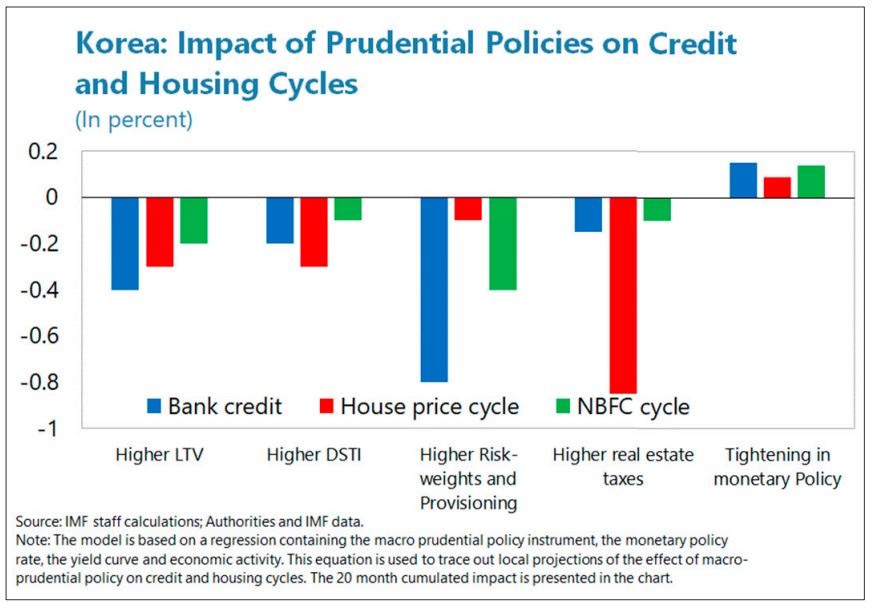
Evolution of Macroprudential Policies in Korea
From the IMF’s latest report on Korea:
“Evidence for Korea suggests that financial stability will not necessarily materialize as a natural by-product of a so-called appropriate monetary policy stance. Although the effects of monetary and macroprudential instruments may overlap, they are not perfect substitutes. Empirical evidence for Korea shows that macroprudential policy have made two active contributions to limit financial risks to the wider economy:
- Preempting aggregate weakness by limiting the buildup of risk, thereby reducing the occurrence of crises. Macroprudential policies can reduce the procyclical feedback between asset prices and credit.
- Reducing the systemic vulnerability by increasing the resilience of the financial system. By building buffers, macroprudential policy helps maintain the ability of the financial system to provide credit to the economy, even under adverse conditions.
Policymakers should be mindful that macroprudential policy is not free of costs and that there may be trade-offs between the stability and the efficiency of financial systems. For instance, when policymakers impose high capital and liquidity requirements on financial institutions, they may enhance the stability of the system, but they also drive up the price of credit. For macroprudential policy to contribute to financial stability and social welfare, its objectives need to be defined clearly and in a manner that can form the basis of a strong accountability framework.”
From the IMF’s latest report on Korea:
“Evidence for Korea suggests that financial stability will not necessarily materialize as a natural by-product of a so-called appropriate monetary policy stance. Although the effects of monetary and macroprudential instruments may overlap, they are not perfect substitutes. Empirical evidence for Korea shows that macroprudential policy have made two active contributions to limit financial risks to the wider economy:
- Preempting aggregate weakness by limiting the buildup of risk,
Posted by at 3:33 PM
Labels: Global Housing Watch
Subscribe to: Posts